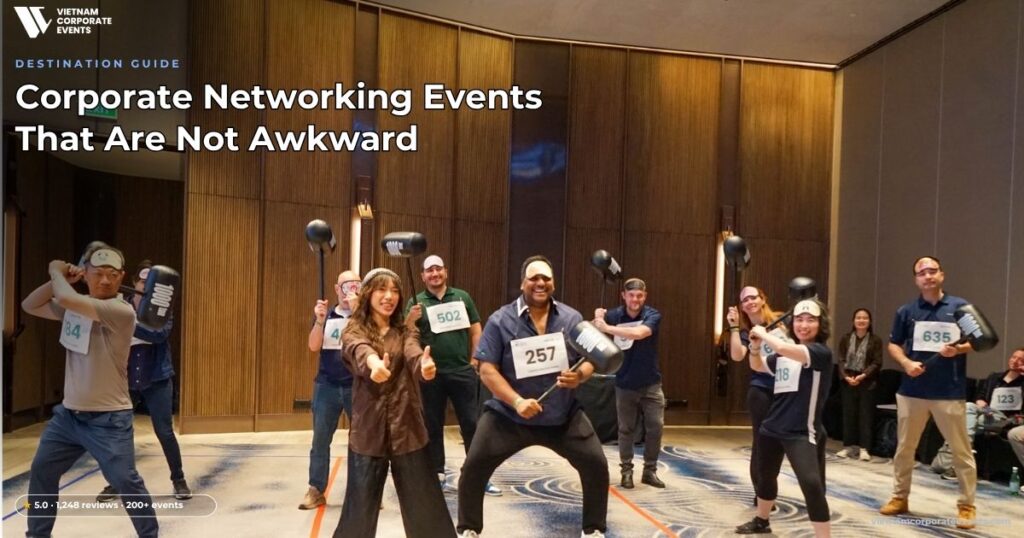
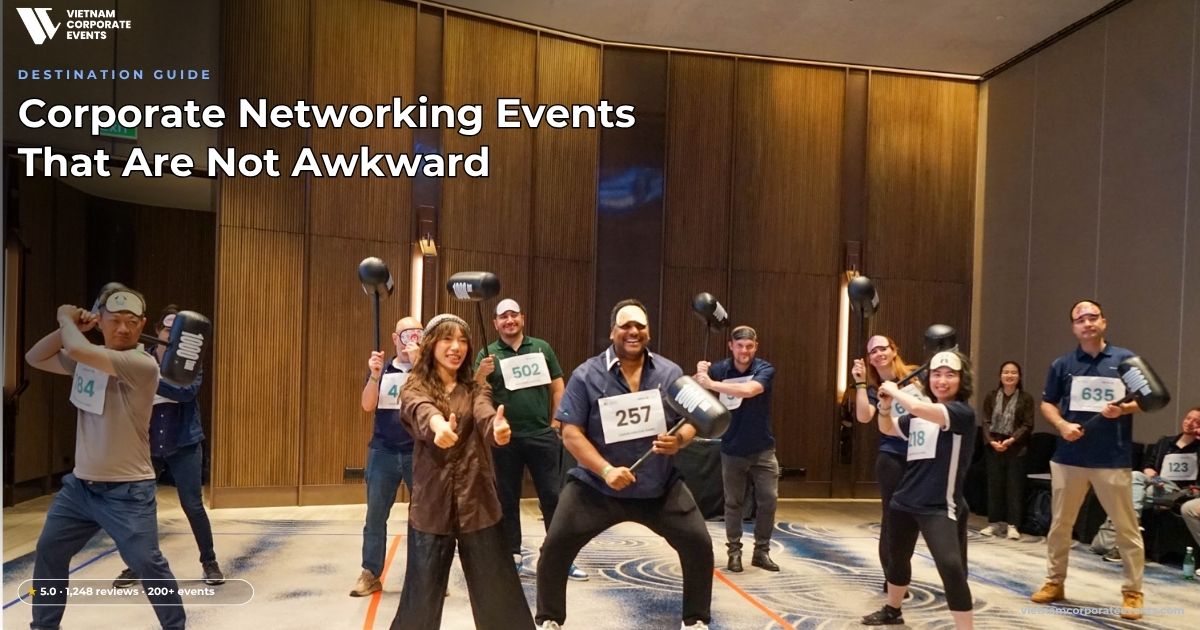
Corporate Networking Events That Are Not Awkward
Put eighty professionals in a room with drinks and no structure, and within ten minutes you have twelve conversations between people who already knew each other and about thirty people looking at their phones near the wall.
The corporate networking event ideas that actually produce connections all do the same thing: they remove the burden of starting a conversation from the guest and put it on the format. Nobody should have to be brave to network.
This guide covers formats, structured introductions, venue and layout, guest mix, timing and follow-up.
Why do most networking events fail?
Because most corporate networking event ideas assume the hard part is the venue when it is the opening line.
Approaching a stranger and starting a conversation is genuinely uncomfortable for most people, including confident ones. An unstructured room asks every guest to do that repeatedly, and most will do it once, fail to find a natural exit, and then stop.
The second failure is guest mix. A room of people who all do the same thing at similar companies produces polite conversation and no useful connections. The SHRM research links professional connection to engagement and development, and the connections that matter are usually across a difference rather than within a similarity.
What formats remove the awkwardness?
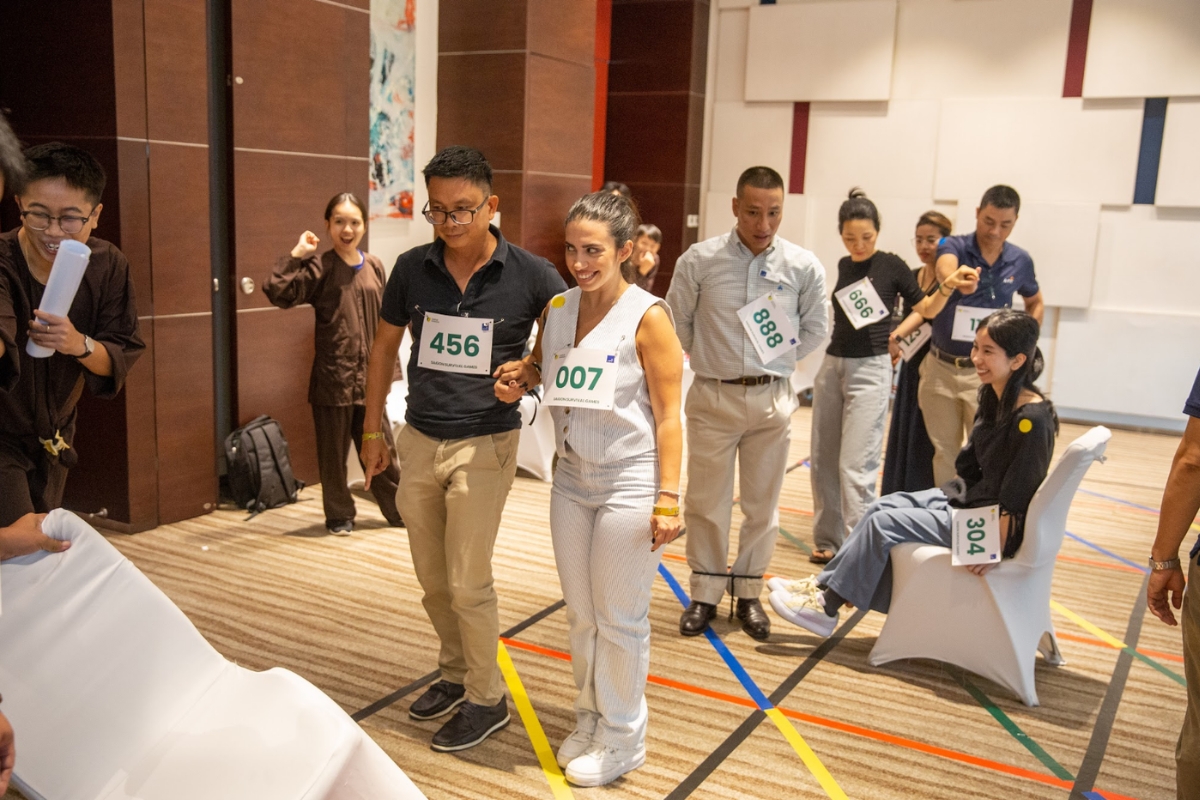
Six corporate networking event ideas that give people a reason to speak:
- Speed networking. Timed rotations of five to seven minutes with a bell. Artificial, effective, and everyone meets ten people without approaching anyone.
- Structured tables. Assigned seating for a meal, mixed deliberately, with a discussion question at each table.
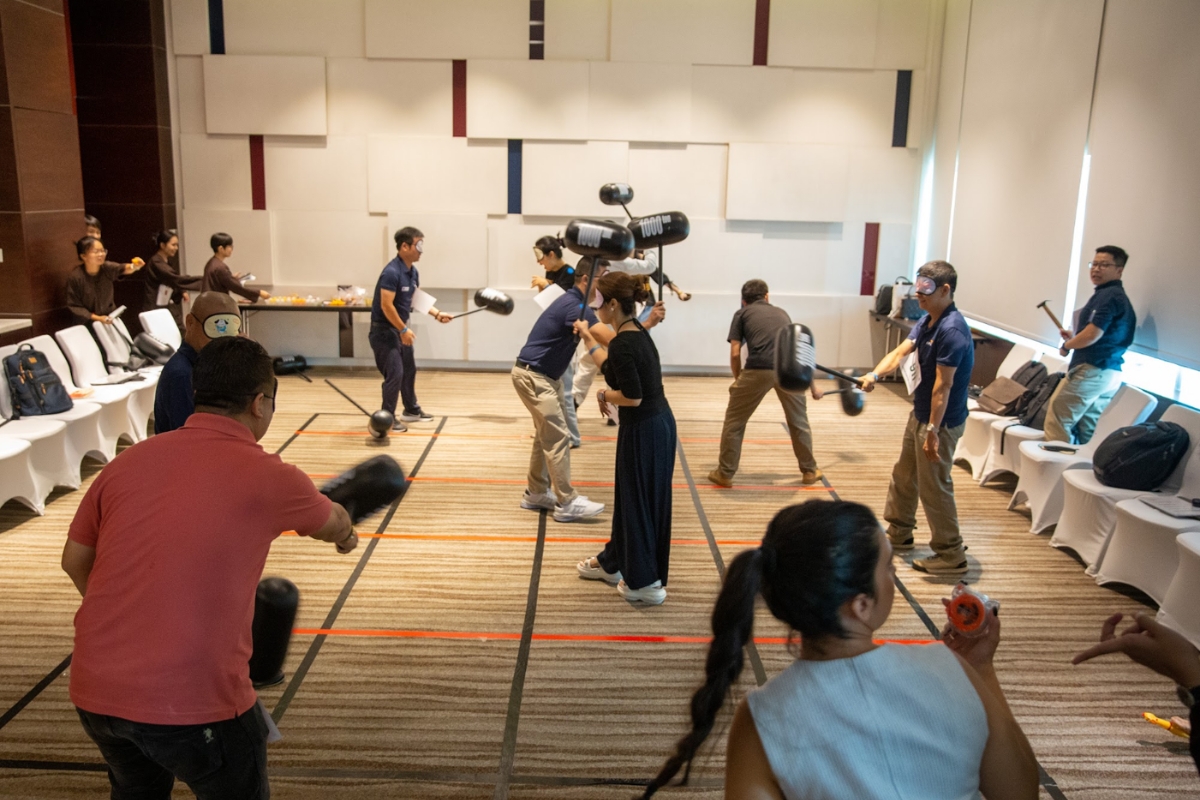
- Activity-based networking. A cooking class, a tasting, a workshop — the activity carries the conversation; see cooking sessions.
- Roundtable discussions. Small groups on a stated topic with a facilitator, which suits senior audiences.
- The panel plus reception. Content first gives everyone a shared reference to discuss afterwards.
- Themed stations. Areas by topic or interest, so people self-select into a conversation already in progress.
Speed networking is the most reliable and the most resisted by organisers, who find it inelegant. Guests consistently rate it well, because it solves their actual problem.
How do you handle introductions?
Actively, and this is the highest-value role at any networking night ideas event.
Assign hosts whose explicit job is to introduce people to each other — not to network themselves. A good host knows who is in the room, spots someone standing alone, and makes a two-sentence introduction that gives both people a reason to continue.
The introduction should include a hook rather than a job title. “Minh, this is Trang — she ran the supply chain project you were asking about” produces a conversation. “Minh, this is Trang from operations” produces a handshake and silence.
Brief hosts in advance with the guest list and a few connections worth making. See our staffing guide.
How should the room be set up?
Corporate networking event ideas work in rooms broken into smaller spaces, since people join small groups more readily than large ones.
- Multiple focal points rather than one open floor — a bar, food stations, a photo point, seating clusters.
- High tables in groups of three or four, which people gather around naturally.
- No rows of chairs, which produce an audience rather than a room.
- Circulation space so nobody is trapped in a corner conversation.
- Somewhere to put a glass down, which sounds trivial and determines whether people can exchange cards or shake hands.
The glass point is real. A guest holding a drink and a plate cannot do anything else, which is why food should be either seated or bite-sized.
Who should be in the room?
Corporate networking event ideas depend on a guest list mixed deliberately, with a reason for the mix.
The most useful client networking event corporate guest lists combine people who can help each other: clients with prospects, senior with junior, one industry with an adjacent one. A room where everyone wants the same thing from each other produces competition rather than connection.
Size matters too. Under thirty feels intimate and everyone meets everyone. Thirty to eighty is the working range for a structured event. Above a hundred, most guests will meet a small fraction of the room and the format needs to compensate.
Publish the attendee list in advance where appropriate. People arrive with a plan rather than a hope, and it materially improves the quality of conversation.
How long should it run?
Two hours, and finishing while it is still busy.
Ninety minutes is enough for a structured format; two hours suits a reception with content. Beyond that, the energy drops and the people who stay are the ones who were already comfortable.
Early evening — six to eight — works better than later starts, since guests can attend without committing their whole evening and can go on somewhere afterwards if the conversation warrants it.
End deliberately with a closing word rather than letting it fade, and say clearly what happens next.
What content works alongside?
Corporate networking event ideas benefit from something short that gives the room a shared reference.
A fifteen-minute talk, a three-person panel, or a customer story provides a subject everyone can open with, which removes the “what do you do” problem entirely. It also justifies the invitation for people who would not attend a pure drinks event.
Keep it brief. Corporate networking event ideas fail when the content becomes a conference and the networking becomes an afterthought squeezed into twenty minutes at the end.
What about name badges?
Worth doing properly, since they do real work.
Print them large enough to read from a metre away, with the first name largest and the company below. Add a single line of context where the format allows — a topic interest, a question they want answered, or what they are working on.
That third line is the difference between a badge that identifies and a badge that starts conversations. It gives anyone approaching an immediate opening that is not the weather.
How do you help introverts?
By designing corporate networking event ideas for them rather than expecting them to adapt.
Structured formats do most of the work. Beyond that: publish the guest list so people can prepare, provide seating so nobody has to stand in the open, give quieter guests a role such as helping at a station, and make it acceptable to leave early.
Avoid formats that require volunteering in front of the room or performing in any way. A networking event where the confident thrive and everyone else endures has reached half its audience.
How do you handle a bilingual room?
A common situation in Vietnam and one that shapes the format more than most organisers plan for.
Where a room mixes Vietnamese and international guests, unstructured networking splits along language lines within minutes and stays that way. Structured formats prevent this: assigned tables mixing languages, speed rotations, and activity-based sessions all force the mix that a free-flowing room will not produce.
Practical measures: brief hosts to make cross-language introductions specifically, seat at least two bilingual people at each table, and choose an activity or discussion topic that does not depend on idiomatic fluency.
Content delivered in one language with the other on screen works better than alternating, which doubles the length. See our speech guide for the approach.
How should follow-up work?
Within 48 hours, and with something useful attached.
Send a short note thanking guests, with the attendee list where permission allows, any content from the talk, and photographs. That gives people a reason to reconnect with someone they met and a prompt to do it while the memory is fresh.
For a client networking event corporate teams host, follow-up should be individual rather than bulk — the relationship owner writing personally to the people they spent time with. A generic thank-you from an events address undoes the personal impression the evening created.
A short example: when a company replaced its open-floor reception with assigned tables of six, a discussion question at each and a rotation halfway through, the post-event survey question “did you meet someone useful” went from a minority to a large majority. The venue, food and guest list were unchanged.
What about internal networking?
The same principles apply, and internal events benefit even more from structure.
Colleagues who have worked together remotely, across sites, or in different functions face exactly the problem external networking does — they have no natural opening and default to whoever they already know. Assigned mixed tables and a rotation solve it identically.
Where internal differs is that you know the guest list completely, which allows deliberate pairing. Seating the person who files the tickets beside the engineer who resolves them produces a conversation both find useful and neither would have started.
See our cross-department guide for formats that build on this.
What does it cost?
Modest compared with a gala, since there is no production and catering is lighter.
The cost drivers are venue, canapés and beverages, any speaker fee, badges and printing, and staffing for hosts. A rooftop or private restaurant space for sixty people is a fraction of a seated dinner at the same headcount.
Where it is worth spending: hosts who make introductions, and a venue with the right layout. Where it is not: elaborate catering that guests cannot eat while standing. See our catering guide and rooftop venues.
Frequently asked questions about corporate networking events
Why do most networking events fail?
Because they assume the hard part is the venue when it is the opening line. An unstructured room asks every guest to approach strangers repeatedly, and most stop after one attempt.
What format works best?
Speed networking with timed rotations is the most reliable. Structured tables with discussion questions, activity-based sessions and panels followed by receptions also work well.
How should introductions be handled?
Assign hosts whose only job is introducing people, briefed with the guest list. Introduce with a hook rather than a job title so both people have a reason to continue.
How should the room be laid out?
Multiple focal points rather than one open floor, high tables in groups of three or four, no rows of chairs, circulation space, and somewhere to put a glass down.
How long should a networking event run?
Ninety minutes to two hours, finishing while it is still busy. Early evening starts work better than late ones.
What makes a good name badge?
Large first name readable from a metre, company below, and a single line of context – a topic interest or what they are working on – which gives people an opening.
How do you make it work for introverts?
Structured formats, a published guest list so people can prepare, seating so nobody stands in the open, a role for quieter guests, and permission to leave early.
How should follow-up work?
Within 48 hours with the attendee list where permitted, content and photographs. For client events, individual notes from the relationship owner rather than a bulk send.
Plan your networking event
Want corporate networking event ideas built into a format that actually produces conversations rather than a room of strangers? Request a free proposal — or explore our corporate events service and past success stories.