Corporate Event Catering in Vietnam
The single most common complaint after a company event is not the venue, the programme or the entertainment. It is that the main course arrived cold, forty minutes late, halfway through the CEO’s speech.
That is almost never a chef problem. It is a capacity and timing problem, decided months earlier when nobody asked how many covers the kitchen could plate at once.
This guide covers corporate event catering Vietnam options by service style, kitchen capacity, dietary and halal requirements, tastings, cost and the failures that recur.
What service styles are available?
Corporate event catering Vietnam comes in five formats, each suiting a different event type:
- Plated set menu. The standard for a gala — controlled timing, consistent presentation, and the format that supports a programme.
- Buffet. Flexible and efficient for conferences and large groups, with queue management as the main variable.
- Live stations. Chefs cooking to order across several points — good energy, works for standing formats.
- Family style. Shared dishes at each table, which suits Vietnamese dining culture and encourages table conversation.
- Canapés and bowl food. For standing receptions and cocktail-format events.
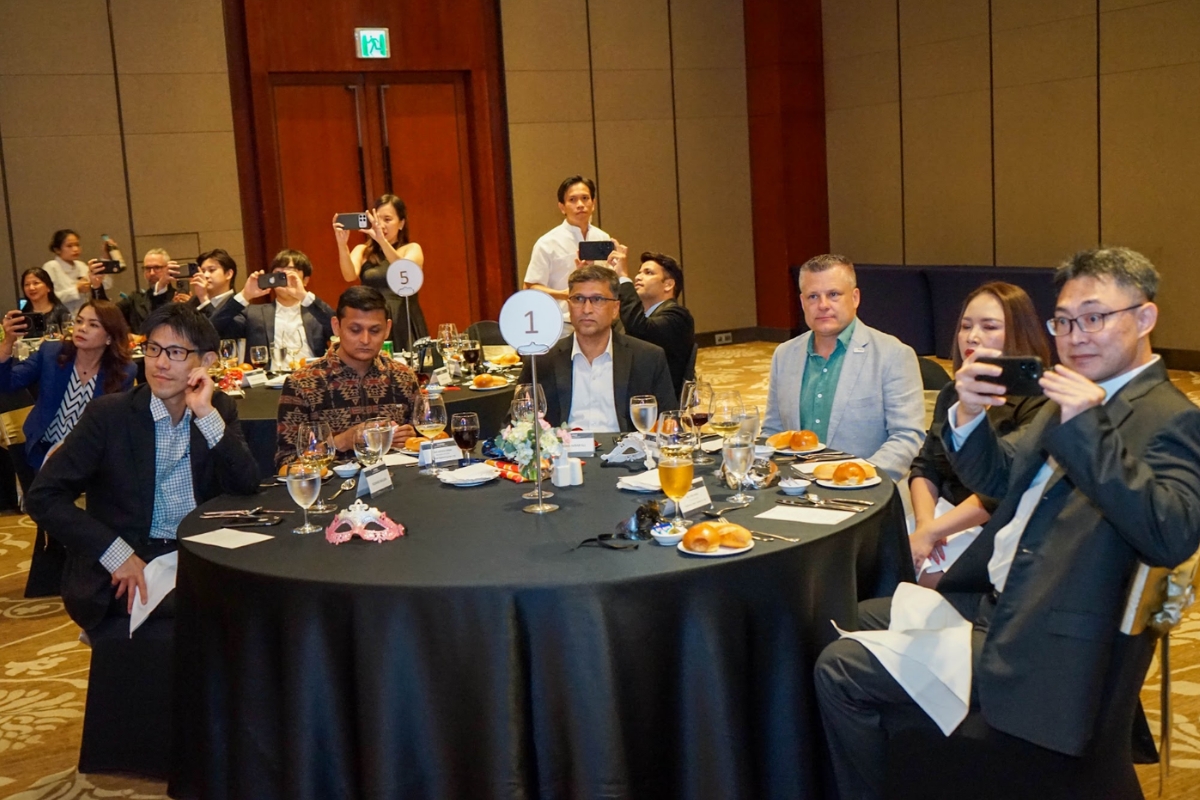
For a seated gala with speeches and awards, plated service is almost always correct — buffet catering company event organisers choose for a formal programme produces a room where a third of guests are queuing while a speech happens.
Should you choose plated or buffet?
The corporate event catering Vietnam decision that most affects how the evening runs.
Plated gives predictable timing that a run sheet can be built around, a consistent experience for every guest, and a formal register. It requires kitchen capacity and more service staff.
Buffet handles large numbers efficiently, gives choice and accommodates dietary variety easily. It fragments timing — 300 people cannot be seated and eating simultaneously — which makes precise programme scheduling harder.
The workable compromise for large events is a plated starter and dessert with a buffet main, which keeps the programme anchored at both ends while easing the kitchen’s peak load.
Why does kitchen capacity matter so much?
Because kitchen capacity is the corporate event catering Vietnam constraint nobody asks about and the one that determines whether the food arrives hot.
The question to ask every venue is specific: how many covers can you plate hot within twenty minutes? Not how many the room seats — those are different numbers, and a ballroom seating 400 with a kitchen plating 250 will serve a late, cold main course.
Ask what they served last week and at what size. A banquet catering corporate Vietnam operation that regularly handles 300 covers will answer immediately; vagueness is the clearest warning available.
For external caterers at non-hotel venues, the equivalent question concerns the temporary kitchen: what equipment, what power, what water, and where. See our unique venues guide.
How do you handle dietary requirements?
Corporate event catering Vietnam dietary handling should be collected early, communicated directly, and confirmed by seat.
Collect through the RSVP form using a free-text field rather than tick boxes, since boxes for vegetarian and halal miss allergies. An allergy discovered at the table is a medical situation rather than an inconvenience.
Then brief the kitchen directly rather than passing the list through a supplier chain, and give them a table-by-table map so special meals arrive at the right seat without the guest having to explain themselves.
Confirm in writing. Event catering services Vietnam suppliers handle dietary requirements competently when they have accurate information in good time, and poorly when a list arrives the day before. See our invitation guide for collection.
What about halal and religious requirements?
Worth specific attention, because provision in Vietnam is less standard than in Malaysia or Singapore.
Halal food is available at international hotels and in the major cities, but it is not a default and certification varies. For a group with Muslim colleagues or delegates, confirm halal sourcing in writing rather than accepting a verbal assurance, and ask specifically about separate preparation.
Vegetarian provision is generally good given Vietnamese Buddhist dining traditions, though strict vegan requirements need clearer specification. Beef-free requirements for Hindu guests should be flagged explicitly.
Getting this right is noticed by the people it affects. Getting it wrong is noticed considerably more, and it undoes a great deal of what an inclusive event was meant to build.
Should you insist on a tasting?
Yes — for any corporate event catering Vietnam booking above roughly 100 guests, and with two conditions.
The tasting should involve the chef who will actually cook on the night, not a demonstration by the banqueting manager. And it should cover the dishes as they will be served at scale, rather than a plated showcase that bears little relation to 300 covers leaving a kitchen at once.
Use the tasting to agree portion sizes, confirm spice levels for an international group, and check that the vegetarian option is a designed dish rather than the main course with the protein removed — which is the most common catering disappointment at corporate events.
How is catering priced?
Usually per head, with the structure varying by venue type.
Hotels typically quote a per-head food and beverage minimum with the room included, so menu tier drives the cost and the room is effectively free. Independent venues charge hire plus external catering, priced per head with staffing and equipment sometimes separate.
The variables are menu tier, number of courses, beverage package, service staff ratio, and whether equipment must be brought in. Corporate event catering Vietnam typically represents the largest single share of an event budget — often half the total.
Ask whether quotes are gross or net of service charge and VAT. That single question changes comparisons more than any menu difference. See our gala cost guide.
How do you manage the beverage package?
With a cap, in writing, agreed before the event rather than discovered on the invoice.
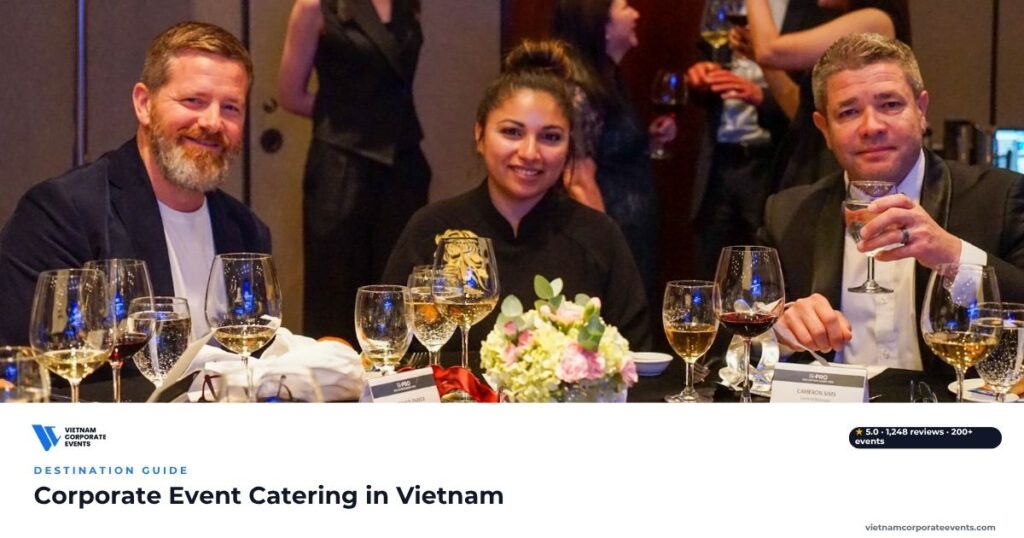
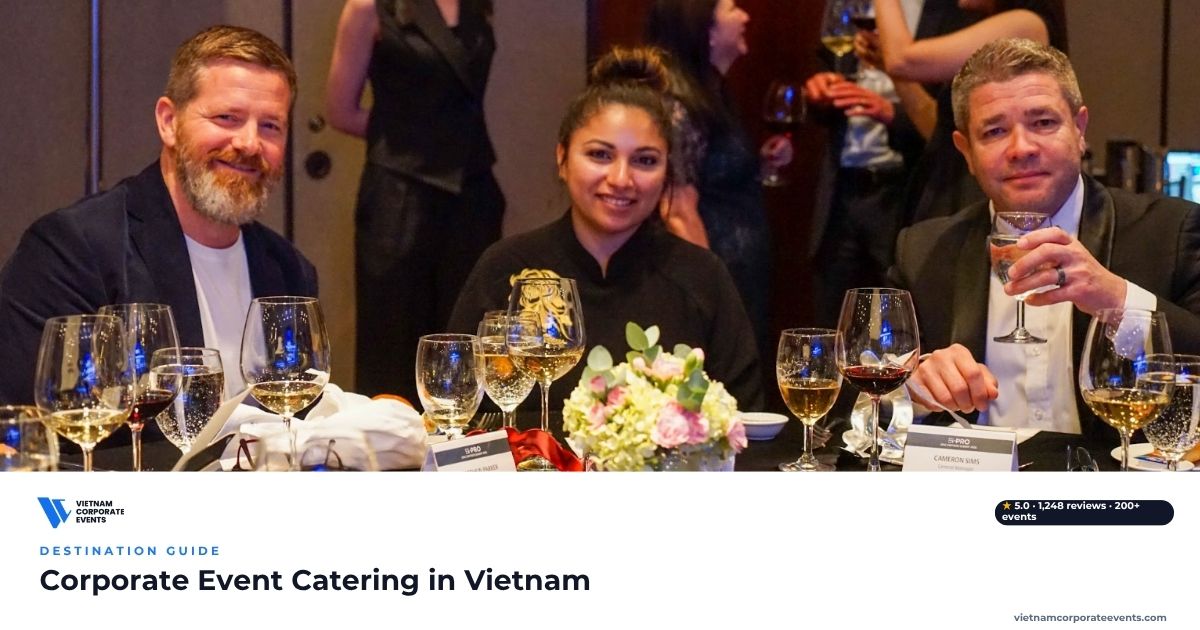
Options are a fixed package for a set duration, consumption billed per bottle, or a hybrid with a cap. Open bars with no ceiling are where budgets go, and they also produce behaviour that a corporate event does not need.
A curated selection — two wines, local and international beer, a signature cocktail and a genuine non-alcoholic option — outperforms an unlimited bar on both cost and guest experience. The non-alcoholic option should be designed rather than an afterthought, since a meaningful share of any workforce does not drink.
If bringing your own wine, check corkage first. It is frequently high enough to erase the saving entirely.
How does catering interact with the programme?
Closely, and this is where most events go wrong.
The banqueting manager should be present when the run sheet is written, not handed it afterwards. Service timing and speech timing have to be reconciled — a course arriving during a speech is a failure of coordination rather than of either party.
Build the run sheet with kitchen cues explicit: when each course leaves, when clearing happens, when service pauses. Then hold a five-minute verbal walk-through with the banqueting manager on the day. See our run sheet template.
How many service staff do you need?
A ratio question that determines whether plated service works, and one venues do not always volunteer.
For plated service at a formal gala, roughly one server per ten to twelve guests is the working standard, plus dedicated staff for beverage service. Below that, service stretches and courses arrive across a twenty-minute spread rather than together.
Buffet formats need fewer servers but more station staff and clearing crew, since plates accumulate faster than at a plated dinner. Live stations need a chef per station plus support.
Ask for the staffing ratio in the quote rather than assuming it. A venue quoting noticeably below the market on a plated gala is frequently doing it by understaffing the floor, which is invisible on paper and obvious in the room.
What goes wrong most often?
Six corporate event catering Vietnam failures that recur:
- Kitchen capacity below the guest count, producing late, cold food.
- Service colliding with speeches because the kitchen was never in the run sheet.
- Dietary lists arriving too late for the kitchen to prepare properly.
- Choice menus at scale, which slow service dramatically.
- Beverage overage with no agreed cap.
- Under-designed vegetarian options.
The SHRM research links recognition events to engagement, and a room distracted by a cold meal is not receiving the recognition the event was staged to deliver.
A short example: when a Ho Chi Minh City company moved from a choice menu to a set menu with one alternative for a 340-person gala, service time for the main course fell from thirty-eight minutes to under twenty. The menu was otherwise unchanged.
What about Vietnamese versus international menus?
Both work in corporate event catering Vietnam, and the choice should follow the audience.
For an international group, a Vietnamese menu is part of the experience and consistently well received — particularly a family-style format, which mirrors how the food is actually eaten. For a domestic corporate audience at a formal gala, an international or fusion menu often reads as more special precisely because it is less everyday.
Mixed groups are best served by a menu that includes both, with clear labelling so nobody is guessing. And for any international audience, moderate the spice level by default with condiments available separately.
Frequently asked questions about corporate event catering in Vietnam
Should a corporate gala use plated or buffet service?
Plated for a seated gala with speeches and awards, since it gives predictable timing. A plated starter and dessert with a buffet main is the compromise for large events.
What is the most important catering question?
How many covers the kitchen can plate hot within twenty minutes, and what they served last week. Room capacity and kitchen capacity are different numbers.
How should dietary requirements be collected?
Through a free-text RSVP field rather than tick boxes, then briefed directly to the kitchen with a table-by-table map so special meals reach the right seat.
Is halal catering available in Vietnam?
At international hotels and in major cities, but it is not a default and certification varies. Confirm sourcing and separate preparation in writing rather than verbally.
Should you insist on a tasting?
Yes above roughly 100 guests, with the chef who will actually cook, covering dishes as served at scale rather than a plated showcase.
How is catering priced?
Usually per head. Hotels quote a food and beverage minimum with the room included; independent venues charge hire plus external catering. Always ask whether figures are gross or net.
How should the beverage package be managed?
With a written cap. A curated selection of two wines, beer, a signature cocktail and a designed non-alcoholic option outperforms an unlimited open bar.
Why do courses arrive during speeches?
Because the banqueting manager was handed the run sheet rather than being present when it was written. Kitchen cues need to be explicit and reconciled with programme timing.
Plan your event catering
Want corporate event catering Vietnam venues can actually deliver, matched to your headcount and programme timing? Request a free proposal and we will confirm kitchen capacity and reconcile service against your run sheet — or explore our corporate events service and past success stories.