”
Rooftop Event Venues for Corporate Nights
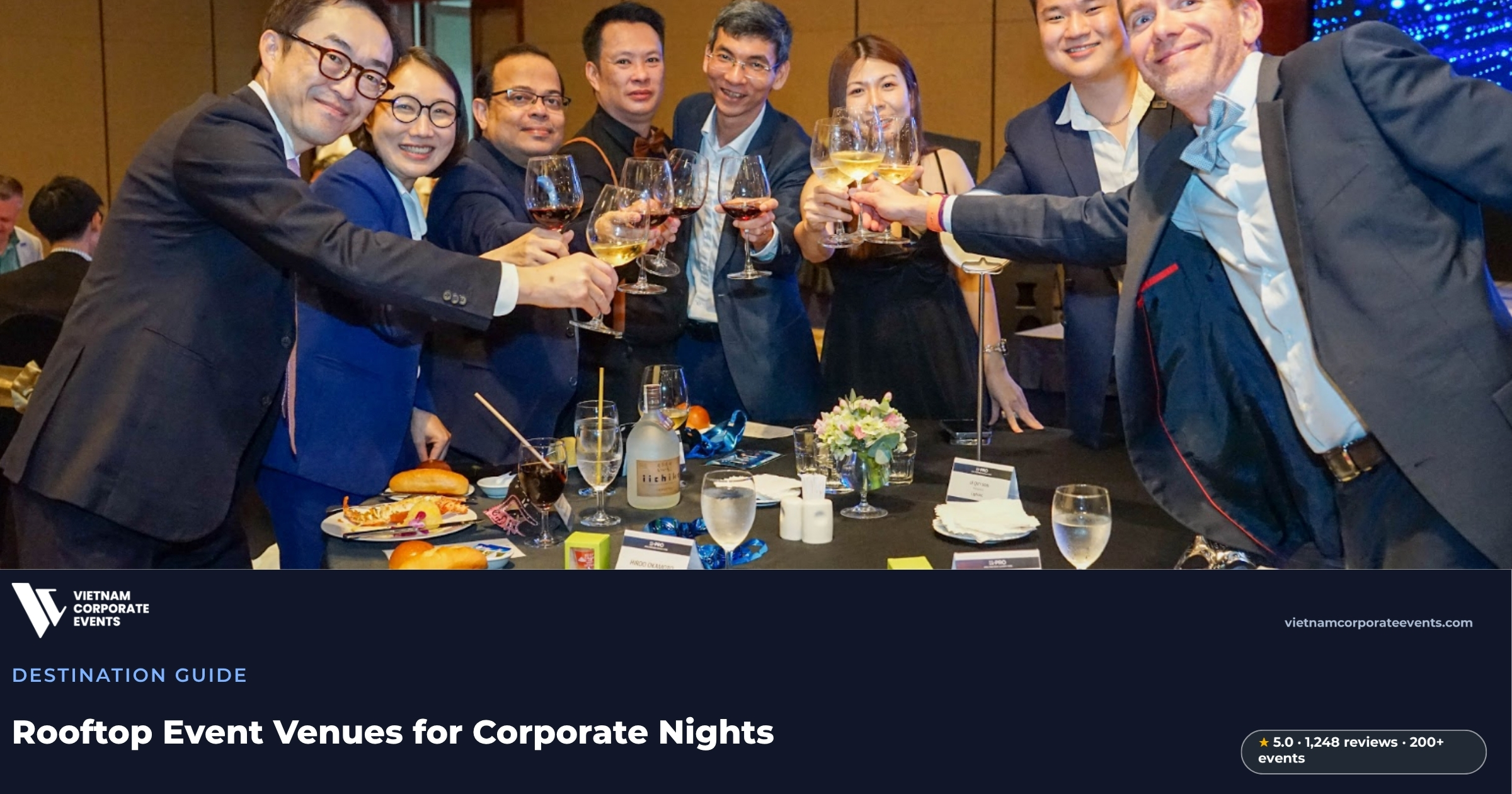
A ballroom looks the same in every city on earth. Twenty floors up, with the skyline behind the speeches and the traffic reduced to a distant hum, an ordinary company drinks reception becomes something people photograph.
A rooftop event venue Vietnam offers is the fastest way to make a corporate evening feel like an occasion without spending anything on decoration. The view does the work that staging and styling would otherwise have to.
This guide covers what rooftops suit, capacity realities, the weather and wind planning nobody does until it goes wrong, costs and the practical checks worth making.
Why choose a rooftop for a corporate event?

Three reasons to choose a rooftop event venue Vietnam offers, and the first is simply economic.
A rooftop event venue Vietnam provides comes with its own atmosphere. A ballroom needs lighting, drapes and centrepieces to feel special; a rooftop at dusk needs almost nothing, which shifts budget from decoration to food, drink and entertainment.
The second is memorability. Skyline views produce the photographs that end up on internal channels and recruitment pages, and a sky bar corporate event is rarely confused with last year’s.
The third is informality. Standing receptions encourage circulation in a way seated dinners do not, which suits networking events, launches and celebrations where mixing is the point.
What events suit a rooftop venue?
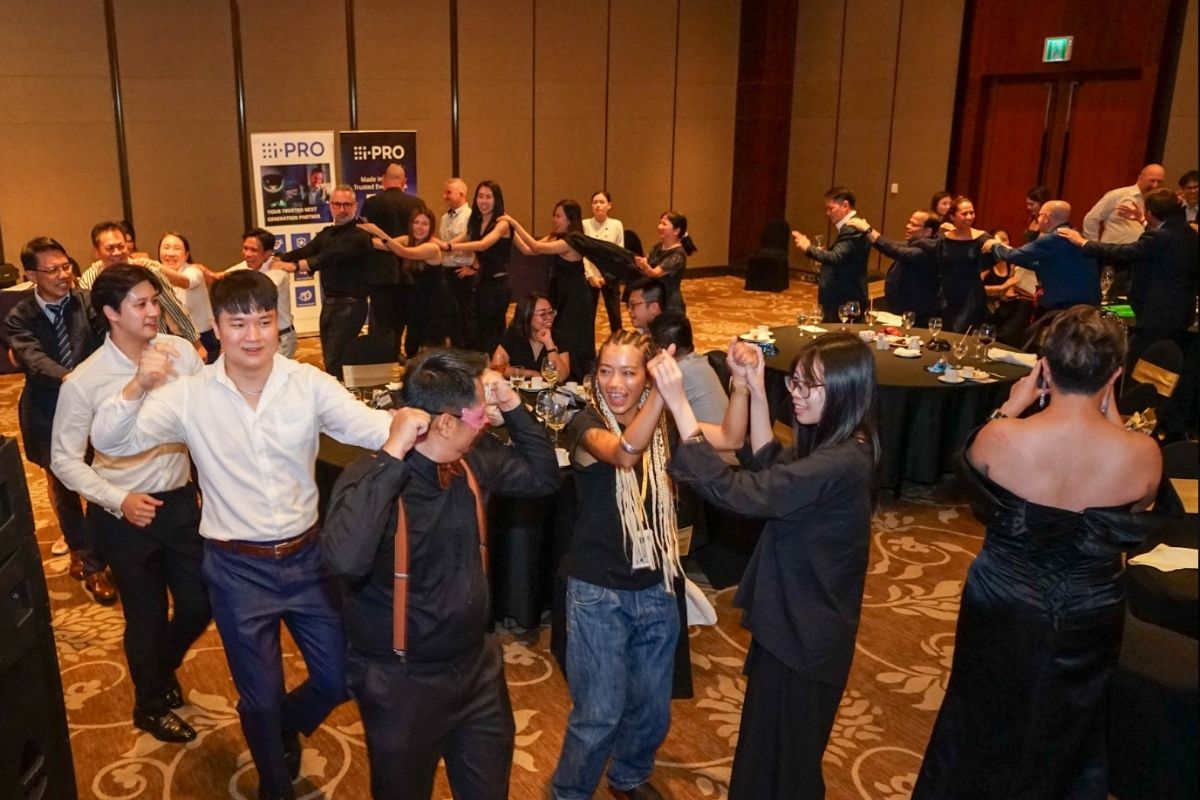
A rooftop event venue Vietnam suits some formats excellently and others genuinely poorly:
- Cocktail receptions. The natural fit — standing, circulating, informal.
- Product launches. The view provides the wow moment; see product launch events.
- Client entertaining. Impressive without appearing extravagant.
- Team celebrations and year-end parties. Informal, social and photogenic.
- Awards receptions. Where the ceremony is short and the socialising long.
What rooftops handle badly: full conferences, anything needing a projected presentation in daylight, seated dinners for large numbers, and events where audio clarity is critical — ambient wind and open-air acoustics work against speeches.
What capacity can a rooftop actually take?
Rooftop event venue Vietnam capacity is where expectations most often outrun reality.
Most rooftop venues quote a standing capacity considerably higher than their comfortable seated one. A space listing 200 standing may seat only 80 to 100 with tables, and that gap catches out planners working from a website figure.
Typical ranges: 30 to 80 for intimate rooftop bars and terraces, 80 to 200 for hotel rooftop spaces, and 200 to 400 at the largest dedicated venues. Above 400, a rooftop party venue Saigon or Hanoi becomes difficult, since evacuation routes and lift capacity impose hard limits.
Always ask for seated capacity with your actual table configuration rather than accepting the headline number.
How do you plan for weather and wind?
Weather is the single biggest rooftop risk, and the one most frequently underestimated. Outdoor events carry genuine safety considerations, and the ISO 20121 event management framework covers risk planning for exactly these situations.
Wind at height is materially stronger than at street level. Table settings, menus, floral arrangements and lightweight signage all move, and a printed seating plan on an easel becomes a projectile. Weighted linens, low centrepieces and secured signage are basic requirements rather than refinements.
Rain is the second factor. A rooftop event venue Vietnam without a covered section or a contracted indoor backup is a gamble, particularly in the wetter months — and “”we’d move it inside”” is not a plan unless the alternative space is written into the contract with equivalent capacity.
Heat matters too. An early-evening rooftop in the hot months can be uncomfortable until sunset, so start times should follow the light rather than convention.
Where are the best rooftop venues?
For a rooftop event venue Vietnam shortlist, the two major cities dominate, with coastal options offering a different character:
- Ho Chi Minh City. The deepest choice by far — District 1 sky bars and hotel rooftops with river and skyline views. The default for a rooftop gala dinner HCMC brief; see HCMC venues.
- Hanoi. Rooftops over the Old Quarter and West Lake, generally smaller and more characterful; see Hanoi venues.
- Da Nang. Beach-facing rooftops combining skyline and sea; see Da Nang venues.
- Nha Trang. Bay-view terraces at the taller beach-strip hotels; see Nha Trang venues.
Ho Chi Minh City is where the category is strongest, simply because the density of tall buildings creates the skyline that makes the format work.
What should you check before booking?
A rooftop event venue Vietnam inspection needs to happen in the evening, not at eleven in the morning:
- Wind conditions at your actual event time, on the terrace itself.
- Lift capacity. How long does it take to move 150 people to the twentieth floor?
- Contracted wet-weather backup of equivalent capacity, in writing.
- Noise restrictions and curfew. Many rooftops have amplified-sound limits and hard end times.
- Kitchen distance. Food travelling several floors affects service quality.
- Power and rigging points for AV and lighting.
- Sunset timing on your date, since the view peaks in a narrow window.
The curfew point catches people out regularly. Residential neighbours mean many venues must cut amplified music at a fixed hour, which shapes the whole programme.
How do you time a rooftop event?
Timing matters more here than at any indoor venue, because the venue’s main asset changes through the evening.
Build the programme around sunset. Guests should arrive around forty-five minutes before, so the reception peaks as the light turns and the skyline lights come on — which is when the photographs happen.
Put speeches and any formal moment immediately after that peak, while attention is high and before the group settles into drinking. Save the informal socialising for later, when the view has become a backdrop rather than an event.
A rooftop event venue Vietnam booked for a 6pm start in June and a 6pm start in December will deliver completely different experiences, so check actual sunset time for your date rather than defaulting to a standard start.
What does a rooftop venue cost?
Rooftop event venue Vietnam pricing usually follows one of two models, and the difference matters.
Hotel rooftops typically price on a per-head food and beverage minimum, with the space included. Independent sky bars more often charge venue hire plus a minimum spend, and may require exclusive buy-out for a private event — which is where costs escalate, since you are covering the venue’s normal trading revenue.
The savings come from production. Because a rooftop event venue Vietnam supplies its own atmosphere, decoration budgets are typically a fraction of a ballroom equivalent, which offsets a higher venue cost.
Model the full picture with our event planning guide.
A short example: when Brightlane moved its year-end party from a hotel ballroom to a District 1 rooftop, the venue cost rose but the total budget fell — because the ballroom had needed twelve thousand dollars of lighting and drapes to achieve an atmosphere the rooftop had for free at sunset.
What are the drawbacks?
Worth being straight about, because rooftops are not the right answer for every event:
- Weather dependency. The defining risk, and it never fully goes away.
- Capacity limits. Hard ceilings from lifts and evacuation routes.
- Audio challenges. Open air and ambient noise make speeches harder.
- Curfews. Many venues cut music earlier than a ballroom would.
- Accessibility. Some older rooftops have steps or narrow access.
- Seated dining limits. Large formal dinners rarely work well.
For a formal seated gala of 300 with a full production, a ballroom remains the better answer. For a reception, launch or celebration, a sky bar corporate event usually wins.
How do you handle audio on a rooftop?
Sound is the technical challenge that most often disappoints, and it needs planning rather than hoping.
Open air offers no reflective surfaces, so speech carries poorly and ambient city noise competes constantly. A system adequate for an indoor room of the same capacity will sound thin and distant outdoors.
The practical answers are more speakers positioned closer to guests rather than fewer at higher volume, handheld or headset microphones instead of lectern-mounted ones, and keeping formal speeches short — five minutes outdoors feels considerably longer than fifteen indoors.
Where noise curfews apply, the volume ceiling is fixed regardless of what the system can do, so a rooftop event venue Vietnam with a residential neighbour may simply not support a speech-heavy programme.
What catering works on a rooftop?
Menu design should follow the format, and rooftops favour some approaches strongly over others.
Canapés and roaming service suit standing receptions, keeping guests circulating rather than anchoring them to tables. Live cooking stations work well where space allows and add visual interest without needing decoration.
What works poorly is elaborate plated service. Food travelling several floors from a kitchen arrives at a different temperature than it left, and multi-course plated dinners on a rooftop frequently disappoint for exactly this reason.
Wind affects presentation too — light garnishes, delicate plating and anything stacked will not survive an exposed terrace, so brief the caterer on conditions rather than assuming they will ask.
Frequently asked questions about rooftop event venues in Vietnam
What events suit a rooftop venue?
Cocktail receptions, product launches, client entertaining, team celebrations and awards receptions. Rooftops handle full conferences, daylight presentations and large seated dinners poorly.
How many people can a rooftop venue hold?
Typically 30 to 80 for intimate terraces, 80 to 200 for hotel rooftops and 200 to 400 at the largest venues. Seated capacity is usually far lower than the quoted standing figure.
What happens if it rains?
Only what your contract specifies. A rooftop booking without a written wet-weather backup of equivalent capacity is a genuine risk, particularly in the wetter months.
How do you handle wind on a rooftop?
Weighted linens, low centrepieces and secured signage as standard, since wind at height is materially stronger than at street level and lightweight items become hazards.
When should a rooftop event start?
Around forty-five minutes before sunset on your actual date, so the reception peaks as the light turns and the skyline lights come on. Check the specific date rather than assuming a standard time.
Are there noise restrictions on rooftops?
Frequently. Residential neighbours mean many venues must cut amplified music at a fixed hour, which shapes the programme and should be confirmed before contracting.
Are rooftop venues more expensive?
Venue cost is often higher, particularly for exclusive buy-outs, but total budgets are frequently lower because the setting removes most of the decoration and lighting spend a ballroom requires.
How do you handle sound on a rooftop?
More speakers positioned closer to guests rather than higher volume, handheld or headset microphones, and short speeches – five minutes outdoors feels far longer than fifteen indoors.
What catering suits a rooftop event?
Canapés, roaming service and live stations. Elaborate plated dinners disappoint because food travelling several floors arrives at a different temperature than it left.
Find your rooftop event venue
Ready to shortlist a rooftop event venue Vietnam has for your reception, launch or celebration? Request a free venue proposal and we will match the space, capacity and weather plan to your event — or explore our corporate events service and past success stories.
“