”
Team Building Ideas by Department (Sales, HR, Tech)
Booking the same activity for the sales floor and the engineering team is the corporate equivalent of prescribing the same medicine for a broken arm and a headache. Both departments will attend. Only one will benefit.
Department team building ideas work when they match how a function actually operates — its natural dynamics, its typical friction, and what it is already good at. A competitive format energises a sales team and can genuinely alienate a technical one.
This guide covers what suits each major function, what to avoid, and how cross-functional sessions differ from single-department ones.
Why does department matter?
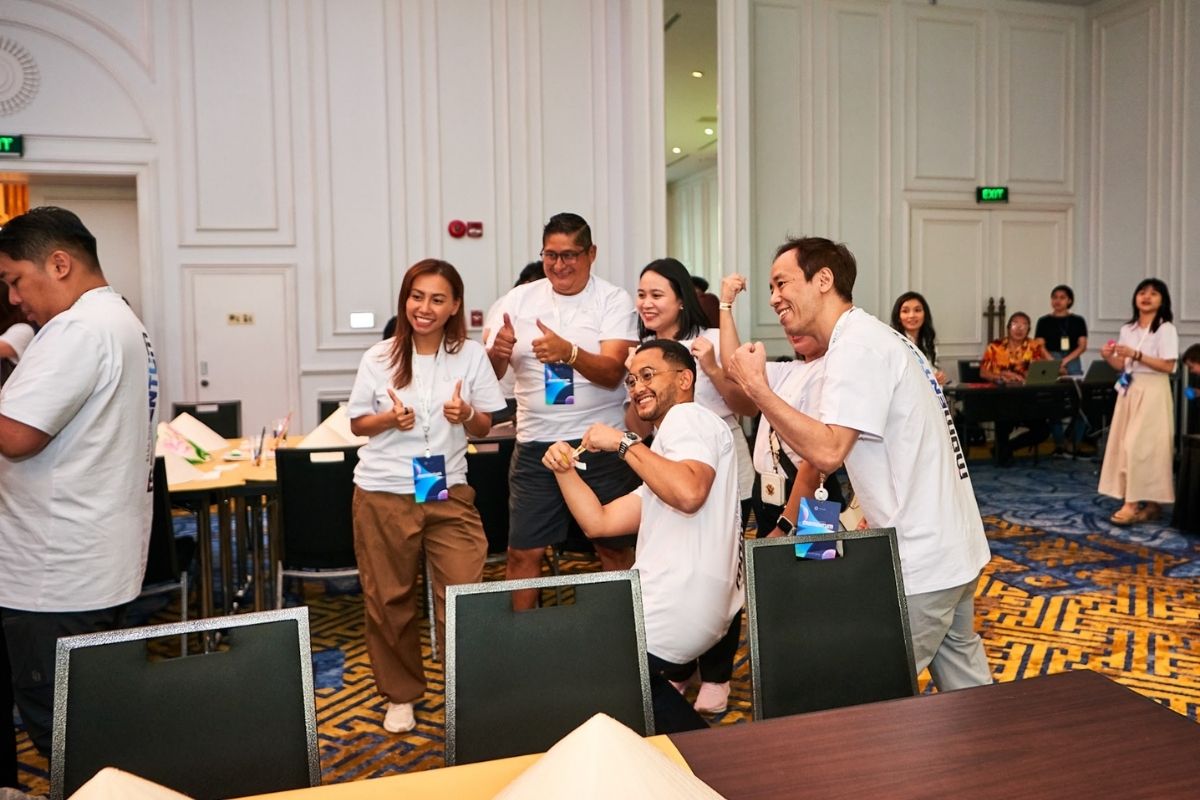
Because department team building ideas must account for distinct functional cultures, and those cultures determine what an activity does in the room.
A sales team is usually already competitive and externally focused, so competition adds little and may sharpen existing rivalries. An engineering team is often collaborative but insular, so the useful intervention is exposure rather than more collaboration.
Choosing department team building ideas by function rather than by novelty is what turns a pleasant afternoon into something that addresses an actual dynamic. The SHRM research links structured shared experiences to stronger engagement, and structure includes choosing the right structure for the group.
What works for sales teams?
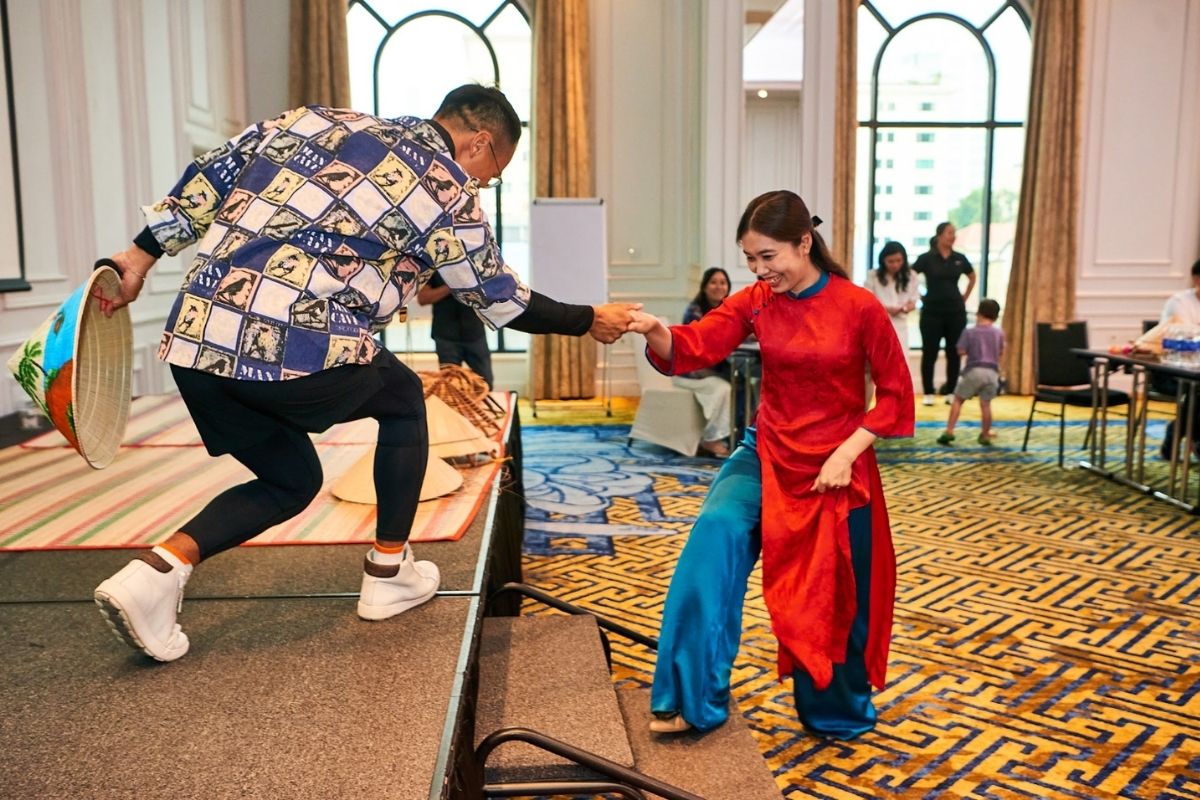
Among department team building ideas, sales needs the most care – these teams are competitive by selection and incentive design, which shapes what they need.
The counterintuitive point is that heavily competitive activities often reinforce the individualism that already makes internal collaboration difficult. The more useful sales team building activities require the team to win together.
- Team-scored challenges where individual performance cannot carry the group.
- Amazing race formats that reward planning over pace; see Amazing Race.
- Storytelling and pitch workshops that develop a genuinely transferable skill.
- Reward-led incentive trips where recognition is the point; see incentive travel ideas.
- Physical high-energy formats that match the group’s natural pace, such as paintball or laser tag.
What to avoid: purely individual leaderboards, which simply reproduce the sales dashboard, and low-energy reflective formats, which most sales floors experience as tedious.
What works for technical and engineering teams?
Technical department team building ideas must account for teams that are analytically strong, collaborative within the team, and often uncomfortable with performance-based social activities.
The useful design principle is that the challenge should be genuinely difficult. Technical groups disengage quickly from activities that feel trivial, and engage seriously with problems that have real constraints.
- Complex problem-solving challenges with tight constraints; see problem-solving activities.
- Escape rooms and code-breaking, which play to existing strengths while requiring coordination; see escape rooms.
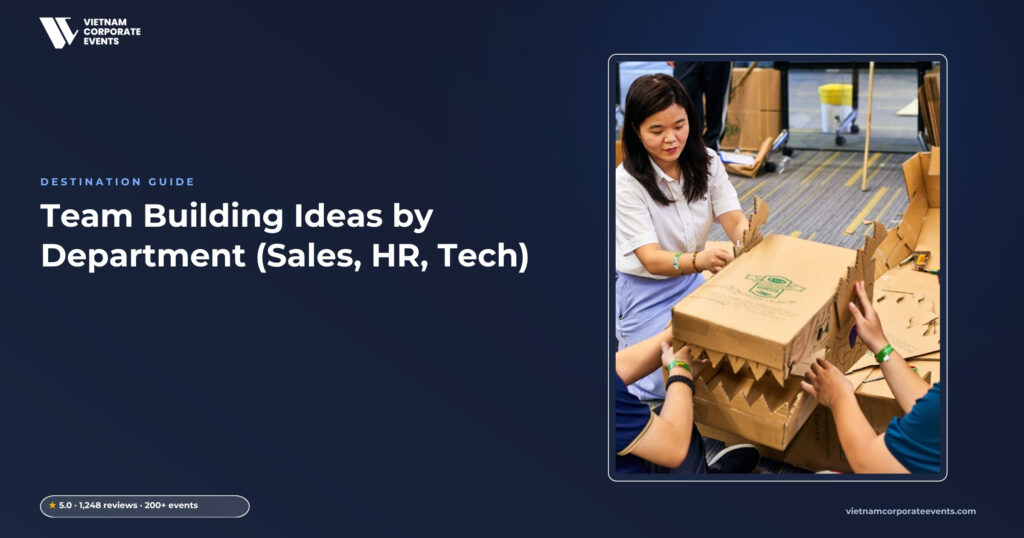
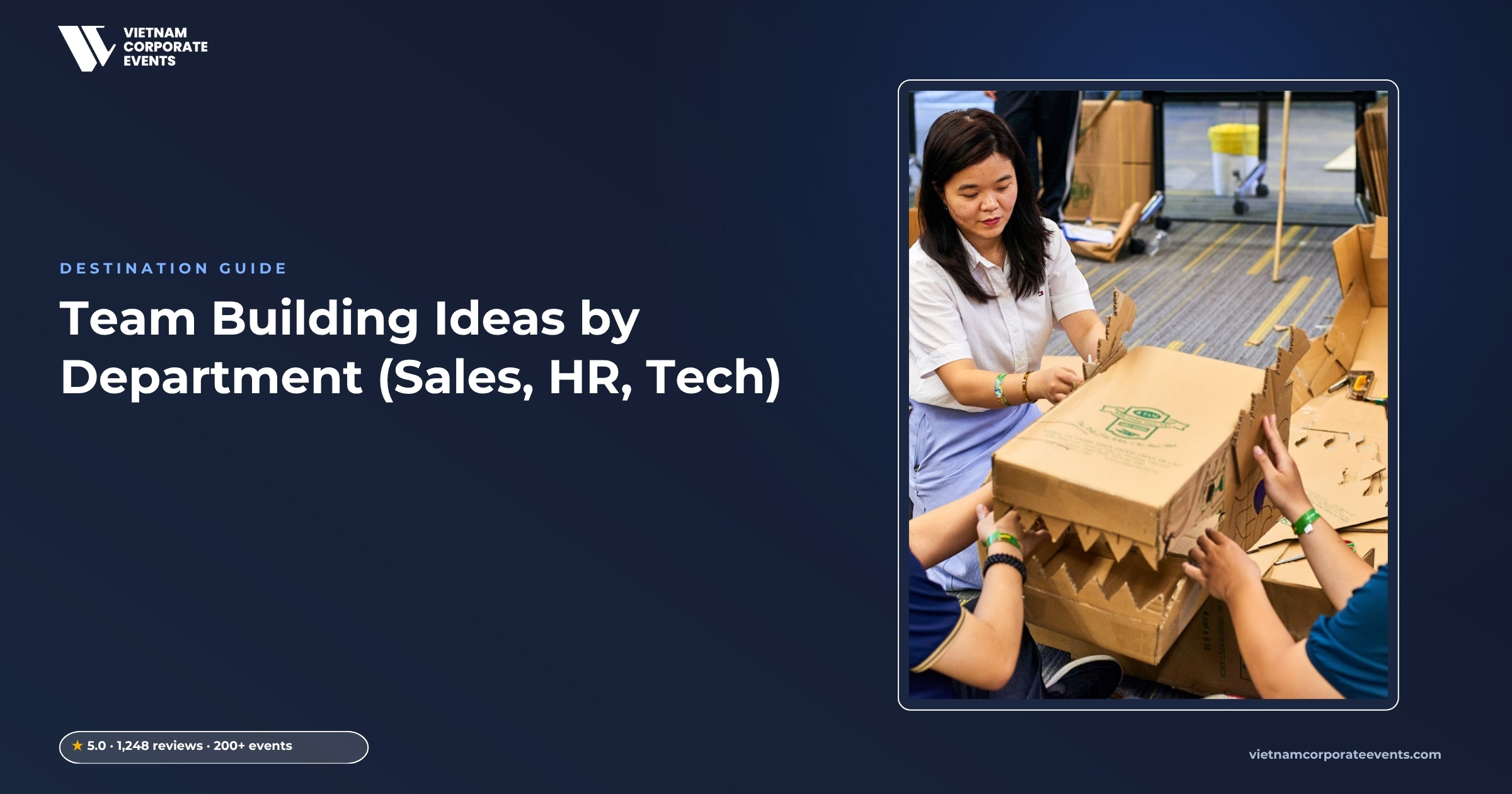
- Build challenges — bridges, towers, contraptions with a load test at the end.
- Outdoor navigation and orienteering, combining planning with physical activity.
- Cross-functional exposure, which addresses the more common insularity problem.
- Onboarding sessions for new technical hires; see team building for new employees.
What to avoid: improv, singing, forced fun and anything requiring public performance. These formats reliably produce compliance rather than engagement in technical groups.
What works for HR and people teams?
HR department team building ideas face an unusual problem – these teams occupy a position — they organise everyone else’s team building and rarely receive their own.
The most valuable thing for an HR team building Vietnam session is that somebody else runs it. Being a participant rather than an organiser is genuinely restorative for a function that spends its year facilitating.
- Externally facilitated sessions so nobody from the team is working.
- Wellbeing and restorative formats — retreats, nature days, wellness programmes.
- Creative workshops such as cooking or craft, low-pressure and shared.
- Peer-level networking with HR teams from other organisations.
What to avoid: asking the HR team to co-design their own session, which defeats the purpose entirely.
What works for finance and operations?
Finance and operations department team building ideas suit process-oriented groups, detail-focused and often working under sustained deadline pressure at period ends.
Timing matters more here than format. Scheduling a finance team’s activity during month-end or year-end close is a planning failure regardless of how good the activity is.
- Strategy and simulation games that reward analysis.
- Structured challenges with clear rules — ambiguity is less enjoyable for these groups.
- Post-close celebrations timed as genuine recognition after an intense period.
- Cross-functional sessions that build relationships with the teams they serve.
Operations teams often include shift-based staff, which makes scheduling the binding constraint. Running two identical sessions is usually better than one that half the department cannot attend.
What works for marketing and creative teams?
Creative department team building ideas have the widest range, since these teams are comfortable with expression and collaboration, which widens the options considerably.
- Creative challenges — film-making, photography, design competitions.
- Cultural and craft experiences such as lantern-making or cooking; see Hoi An cultural team building.
- Immersive and unusual settings, which these teams appreciate more than most.
- Improv and storytelling formats, which work here where they would fail elsewhere.
The consideration for creative teams is that they often produce the company’s internal content, so a session where they are also expected to photograph and write it up is not a break.
What about cross-functional team building?
Cross-functional formats solve a different problem, and it is usually the more valuable one.
Most organisational friction sits between departments rather than within them. Sales and operations, engineering and marketing, finance and everyone — these are the relationships where misunderstanding costs the most.
Effective cross functional team building deliberately mixes teams rather than seating them together. The activity matters less than the composition: any decent challenge with mixed groups outperforms a spectacular one where departments stay in their silos.
- Mixed-team problem challenges requiring different kinds of thinking.
- Process mapping sessions where two functions map their actual handoffs.
- Large-group formats with deliberately assigned mixed tribes; see survivor team building.
- Shared CSR activities, where a common external purpose overrides internal divisions.
How do you choose between single-department and mixed?
The answer follows the problem you are trying to solve.
Choose single-department when the issue is within the team — new team members, internal friction, a capability gap, or recognition after an intense period.
Choose cross-functional when the issue is between teams — handoff problems, misunderstanding of each other’s constraints, or simply that people who need to collaborate have never met.
Most companies over-index on department sessions because they are easier to organise. If the honest answer to “”where does work actually get stuck?”” is “”between functions,”” then department team building ideas are the wrong tool that month.
How do you handle mixed seniority?
Any department session includes a hierarchy, and it affects behaviour whether acknowledged or not.
Activities where seniority provides no advantage are the most effective levellers — physical challenges, creative tasks and games where nobody’s job title helps. Technical or business-simulation formats can inadvertently advantage senior participants, which reinforces rather than dissolves the hierarchy.
The other lever is behavioural. A department head who participates fully, loses cheerfully and does not direct their team through the activity gives everyone permission to engage genuinely.
What does department team building cost?
Department team building ideas carry higher per-head costs, since facilitation and equipment do not scale down proportionally.
A department of thirty will pay more per person than a company event of three hundred at the same standard. Against that, department sessions are shorter and simpler — often a half-day rather than a full programme — so the absolute cost is modest.
Running several department sessions across a year usually costs less in total than one large company event, and addresses specific dynamics more precisely. Model the numbers with our team building cost guide.
A short example: when Meridian Pay ran separate sessions for its sales and engineering teams rather than one combined day, the engineering session used a constrained build challenge and the sales session used a planning-heavy race. Both groups rated their session substantially higher than the previous year’s shared event, which neither had enjoyed.
How do you diagnose what a department needs?
Before choosing an activity, work out what is actually wrong — or whether anything is.
Three questions usually surface it. Where does work get stuck, and is that within the team or at its edges? What does this team complain about informally? And when did they last have a genuinely positive shared experience?
The answers point in different directions. Internal friction suggests a facilitated session rather than an activity. Edge friction suggests a cross-functional format. A team that simply has not had a break suggests something restorative with no development agenda at all.
Skipping this diagnosis is why so many department team building ideas get chosen on novelty. The activity that sounds most interesting in a proposal is rarely the one that addresses what the team actually needs.
How often should departments run their own sessions?
Two to three times a year is a workable rhythm for most functions, alongside whatever company-wide programme exists.
The natural timing follows each department’s own calendar rather than the company’s. Finance benefits from a session after year-end close, sales after a major quarter, and operations during a quieter production period.
Aligning to the department’s cycle rather than a corporate schedule means people attend genuinely rather than resentfully, and it makes the session read as recognition of their specific effort.
Short half-day sessions run regularly outperform one annual full day. The cumulative effect of department team building ideas applied consistently is considerably stronger than a single event, and the smaller format is easier to schedule around real workloads.
Frequently asked questions about department team building
Why does team building differ by department?
Because functions develop distinct cultures that determine what an activity does in the room. Competition energises a sales floor and can alienate a technical team.
What works best for sales teams?
Team-scored challenges where individual performance cannot carry the group, planning-led race formats, pitch and storytelling workshops, and recognition-led incentive trips.
What works best for engineering teams?
Genuinely difficult problem-solving with tight constraints, escape rooms, build challenges with a load test, and outdoor navigation. Avoid improv and performance-based formats.
What should an HR team’s session look like?
Externally facilitated, so nobody from the team is working. Restorative and creative formats work well, and asking HR to co-design their own session defeats the purpose.
When should you run cross-functional sessions?
When friction sits between teams rather than within them — handoff problems, misunderstanding of constraints, or people who must collaborate but have never met.
How do you handle seniority within a department?
Choose activities where job titles provide no advantage, and rely on the department head participating fully and losing cheerfully to give everyone permission to engage.
Is department team building more expensive per person?
Yes, since facilitation does not scale down, but sessions are usually shorter. Several department sessions across a year often cost less in total than one large company event.
Plan your department session
Ready to match department team building ideas to how your functions actually work? Request a free consultation and we will design sessions around each team’s dynamics — or explore our team building service and past success stories.
“