”
Mai Chau Eco-Lodge Team Building & Offsites
Book a five-star hotel and your team stays in the same bubble they left. Put them in a stilt house in a valley where the loudest sound is a bicycle bell, and something genuinely different happens by the second evening.
Mai Chau team building uses a green valley in Hoa Binh province — home to White Thai communities, rice fields and traditional stilt-house lodges — as the setting for an offsite that feels a world away from Hanoi, yet is only a few hours by road.
We run northern valley programmes regularly, so this guide covers why Mai Chau works, the activities, lodges, group sizes, logistics and costs.
Why choose Mai Chau for team building?
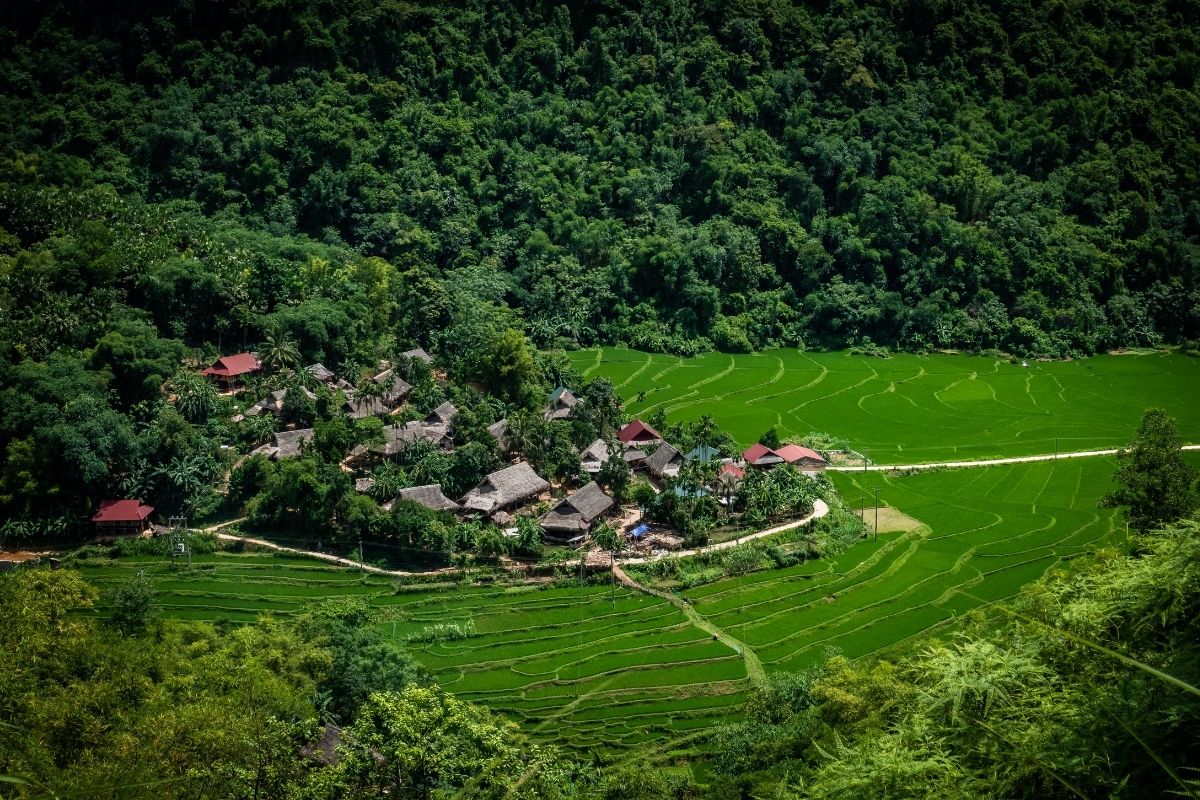
Because the accommodation itself changes the dynamic. Staying in a communal stilt house or an eco-lodge rather than separate hotel rooms means a team shares space, meals and evenings in a way conventional venues prevent.
The valley setting supports that. Flat rice fields ringed by limestone hills make Mai Chau team building easy to run on foot or by bicycle, without the demanding terrain of Sapa.
Its cultural depth is the third draw. White Thai villages, traditional dance and local cuisine give a Mai Chau corporate retreat genuine authenticity rather than staged experience.
What can you do on a Mai Chau programme?
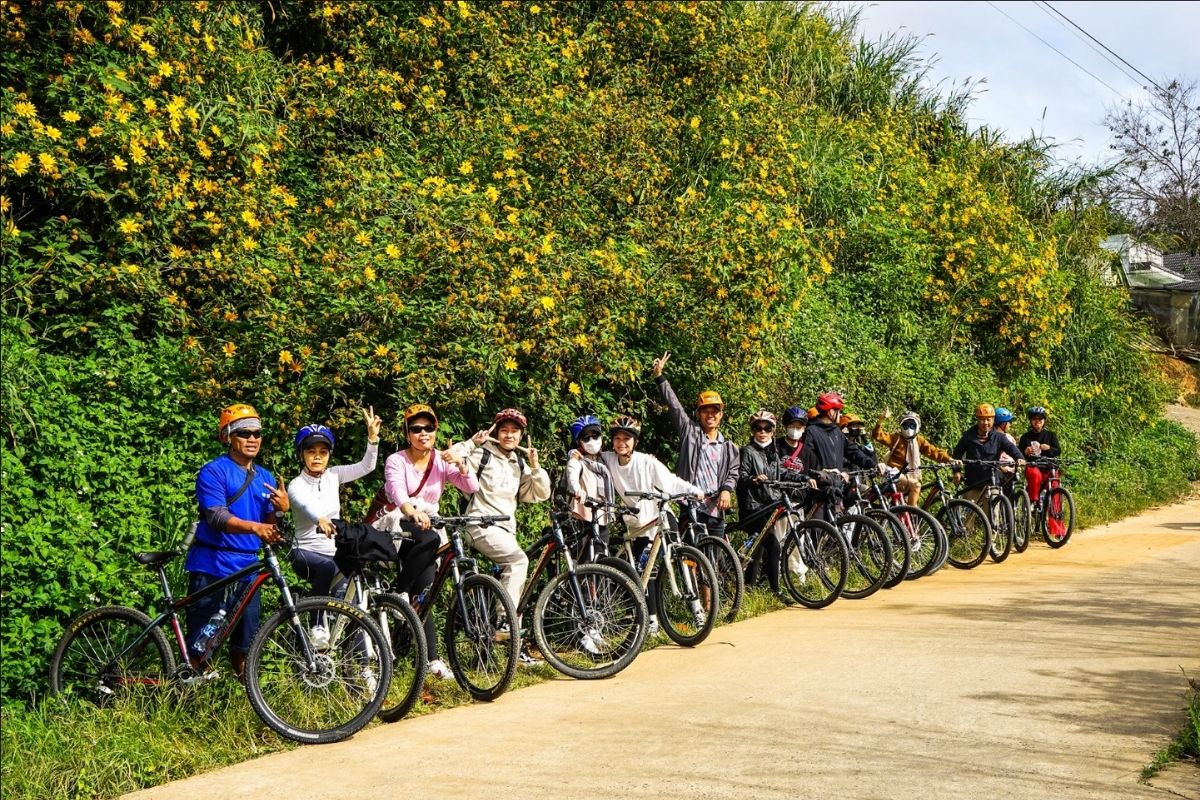
The valley, the villages and the lodges are the programme. The strongest days combine them:
- A cycling treasure hunt. Flat lanes through rice fields and villages with clue-based tasks.
- A village discovery challenge. Cultural tasks with local White Thai communities.
- Trekking to hill viewpoints. Moderate walks with team tasks along the route.
- A cooking and craft session. Local dishes and weaving with village hosts.
- An evening cultural exchange. Traditional dance and shared dinner at the lodge.
A good Mai Chau team building day is gentler than a highland adventure programme, which makes it well suited to mixed-ability groups and reflective offsites.
What accommodation suits a Mai Chau offsite?
The valley’s lodging is its differentiator:
- Eco-lodges. Comfortable, sustainably built bases with meeting space and valley views.
- Traditional stilt houses. Communal accommodation that bonds a group fast.
- Boutique valley resorts. Higher-standard options for premium programmes.
- Village homestays. The most immersive choice for smaller teams.
An eco lodge offsite Vietnam programme in Mai Chau typically mixes these — lodge comfort for meetings, stilt-house evenings for the shared experience.
What group sizes suit Mai Chau?
The valley is best for small and mid-size groups. Teams of 10 to 50 fit the lodges and village activities comfortably.
Groups of 50 to 120 work with several lodges and rotating village activities. Larger numbers stretch the valley’s accommodation capacity, so a Mai Chau company trip above that size needs careful planning across multiple properties.
How do the logistics work?
The main planning factor is the journey. The essentials:
- Transfers. Roughly three to four hours by coach from Hanoi through winding hill roads.
- Duration. Two nights minimum, so the travel is justified by time on the ground.
- Lodge booking. Early, since valley capacity is limited.
- Community coordination. Village activities arranged respectfully with local hosts.
A local partner manages transfers, lodges and community relationships, which is what makes Mai Chau team building run smoothly rather than intruding on village life.
When is the best time to visit Mai Chau?
The valley reads differently by season. September and October bring golden ripening rice, the most photogenic period of the year.
Spring from March to May offers green fields and comfortable cycling weather. Northern winters are cool and can be misty, which suits fireside evenings, while summer is hot and wetter with heavier rain.
For a first Mai Chau corporate retreat, the autumn harvest or spring window gives the most reliable balance of scenery and outdoor comfort.
How does Mai Chau compare with Sapa or Ninh Binh?
All three are northern nature destinations solving different briefs:
- Versus Sapa. Sapa is more dramatic and more demanding; Mai Chau is gentler, flatter and better for mixed-ability groups.
- Versus Ninh Binh. Ninh Binh is far closer to Hanoi with more spectacular karst scenery; Mai Chau offers deeper cultural immersion and communal lodging.
- Versus a beach. The coast rewards; Mai Chau connects, through shared space and village life.
For a team wanting authenticity and togetherness over spectacle, Mai Chau team building is the strongest of the three. See our nature team building guide for the full comparison.
What does a Mai Chau programme cost?
Costs are moderate and often lower than resort equivalents, since eco-lodges and homestays are considerably cheaper than four or five-star hotels.
The main spend is transfers, accommodation, activities, community fees and catering. Because the activities are largely low-tech — cycling, walking, cooking, cultural exchange — a Mai Chau company trip delivers strong value.
Model the numbers with our team building cost and company trip budget guides.
A short example: when Sakura Components took its 35-person team to Mai Chau, the turning point was the second evening — the whole group eating together on the floor of a stilt house, with no phone signal and no private rooms to retreat to. The client described it as the most connected the team had felt in two years.
How do you run a programme that respects the community?
Cultural tourism can easily tip into extraction, and employees notice when it does. Three principles keep a programme genuine.
Work through local hosts rather than around them, so village families are partners and beneficiaries rather than a backdrop. Keep group sizes proportionate to the village, since forty people in a small community is participation and two hundred is disruption.
Finally, treat cultural sessions as exchange rather than performance — teams that cook, weave and eat alongside hosts have a different experience from those who watch a show. Our purpose-driven team building guide covers this in more depth.
What does a sample Mai Chau itinerary look like?
A typical two-night programme lets the valley’s rhythm do the work rather than packing the schedule.
Day one travels from Hanoi in the morning, arriving for lunch at the lodge and an orientation cycle through the nearest villages. An opening session runs late afternoon, followed by a welcome dinner in the stilt house.
Day two is the core: a cycling treasure hunt through the rice fields in the morning, a village cooking and craft session after lunch, then a cultural exchange evening with local hosts. Day three closes with a short trek to a viewpoint and a working session before the return journey.
The communal evenings are what people remember, so Mai Chau team building programmes should protect them rather than filling every hour with activity.
What outcomes does a Mai Chau programme deliver?
The distinctive outcome is genuine familiarity. Shared sleeping and eating space removes the hotel-room escape hatch, so colleagues spend far more unstructured time together than on a conventional trip.
Cultural exchange adds perspective. Working alongside village hosts tends to reset how a team thinks about its own routines, and the UN Global Compact principles on respecting local communities are a useful frame for designing that exchange responsibly.
Teams return noticeably closer and, because the activities are gentle, without the physical fatigue that follows an adventure programme. Mai Chau team building is about connection rather than challenge.
Is the journey from Hanoi worth it?
It depends entirely on the length of the programme, and it is worth being straight about that.
For a single overnight, probably not. Three to four hours each way through hill roads consumes too much of a short trip, and Ninh Binh delivers comparable value at a fraction of the travel time.
For two nights or more, the maths changes completely. The journey itself becomes part of the separation from work, and by the second evening the group has settled into the valley’s pace in a way a one-night trip never achieves.
Mai Chau team building rewards teams who commit to the format rather than squeezing it, which is why we rarely recommend it for anything shorter than two nights.
What should teams expect from village accommodation?
Setting expectations honestly is what turns rustic lodging from a complaint into a highlight, and it takes one paragraph in the pre-trip email.
Stilt houses are comfortable but communal. Sleeping is typically on mattresses in a shared open space, bathrooms are shared, and air conditioning is not universal — though eco-lodges in the valley offer private rooms for teams who prefer them.
What people get in exchange is the thing they remember: evenings where nobody disappears to their room, conversations that run long because there is nowhere else to go, and a genuine sense of having stayed somewhere rather than merely slept there.
Most groups mix the two, using lodge rooms for those who want privacy and stilt-house nights for the shared experience. Framed properly in advance, Mai Chau team building accommodation becomes the story rather than the sticking point.
Frequently asked questions about Mai Chau team building
Is Mai Chau good for corporate team building?
Yes, particularly for teams wanting cultural immersion and communal accommodation. Its flat valley, villages and eco-lodges suit gentle, connection-focused offsites rather than adventure programmes.
How far is Mai Chau from Hanoi?
Around three to four hours by coach through hill roads, which makes it best suited to a two-night programme rather than a single overnight.
What activities can you do in Mai Chau?
Cycling treasure hunts through rice fields, village discovery challenges, moderate treks to viewpoints, cooking and craft sessions, and evening cultural exchanges at the lodge.
How many people can a Mai Chau programme take?
It suits groups of 10 to 50 best, with up to around 120 possible across several lodges. Larger numbers stretch the valley’s accommodation capacity.
When is the best time to visit Mai Chau?
September and October for golden rice, or March to May for green fields and comfortable cycling. Winter is cool and misty; summer is hot with heavier rain.
Is Mai Chau easier than Sapa?
Yes. Mai Chau’s flat valley makes activities accessible to mixed fitness levels, whereas Sapa’s mountain terrain is more demanding and more dramatic.
What makes stilt-house accommodation worthwhile?
Sharing communal space, meals and evenings removes the retreat-to-your-room dynamic of hotels, which is often what makes the group feel noticeably closer by the second day.
How long should a Mai Chau programme be?
Two nights minimum, given the three-to-four-hour transfer from Hanoi. Three days allows a fuller programme without the trip feeling rushed at either end.
Is Mai Chau suitable for a leadership retreat?
Yes. Its calm valley setting and communal lodging suit reflective sessions, though teams wanting dramatic scenery may prefer Sapa or Ninh Binh.
Plan your Mai Chau team building trip
Ready to trade hotel rooms for a valley and a stilt house with Mai Chau team building? Request a free proposal and we will design the programme, lodges and community activities around your group — or explore our team building service and past success stories.
“