”
Buon Ma Thuot Coffee-Country Corporate Retreats
Vietnam is the world’s second-largest coffee producer, and almost all of it grows within an hour of one city most companies have never considered for an offsite. That is a strange thing to overlook.
A Buon Ma Thuot corporate retreat puts a team in the heart of Dak Lak’s coffee country — red-earth plantations, Ede ethnic villages, waterfalls and the still water of Lak Lake — at an altitude where the air stays comfortable year-round.
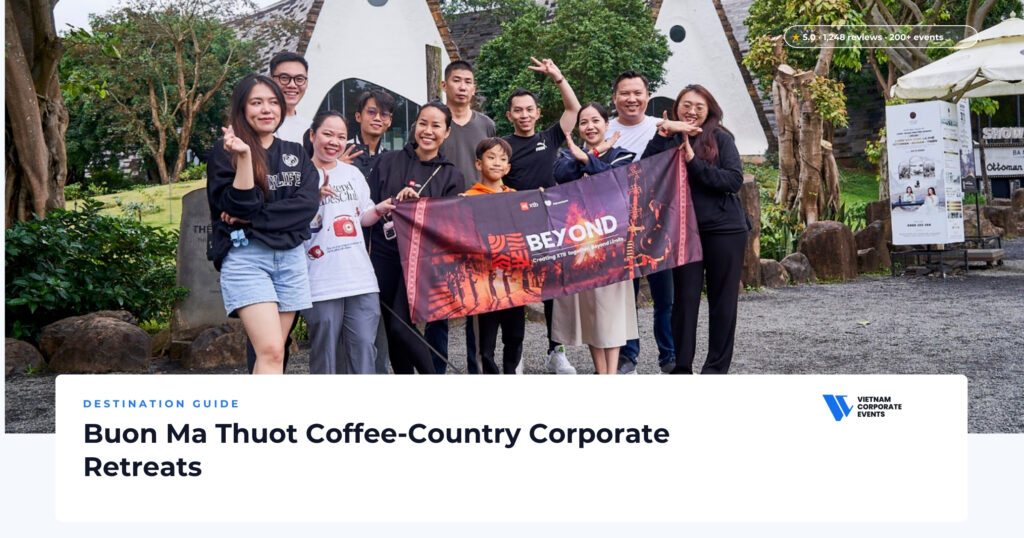
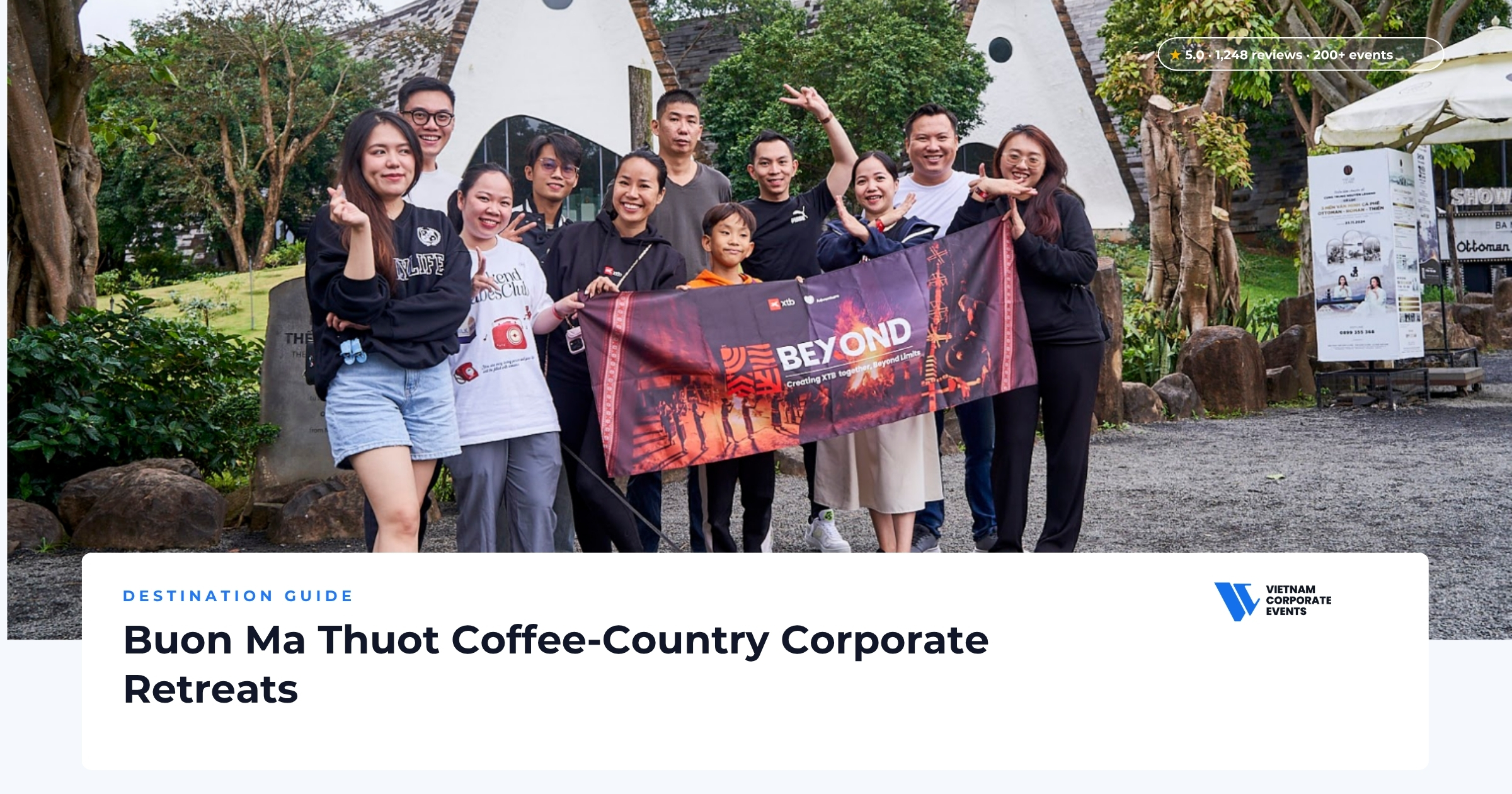
We run Central Highlands programmes regularly, including a three-day retreat here for a 12-person team, so this guide covers why it works, the activities, venues, group sizes, logistics and costs.
Why choose Buon Ma Thuot for a corporate retreat?
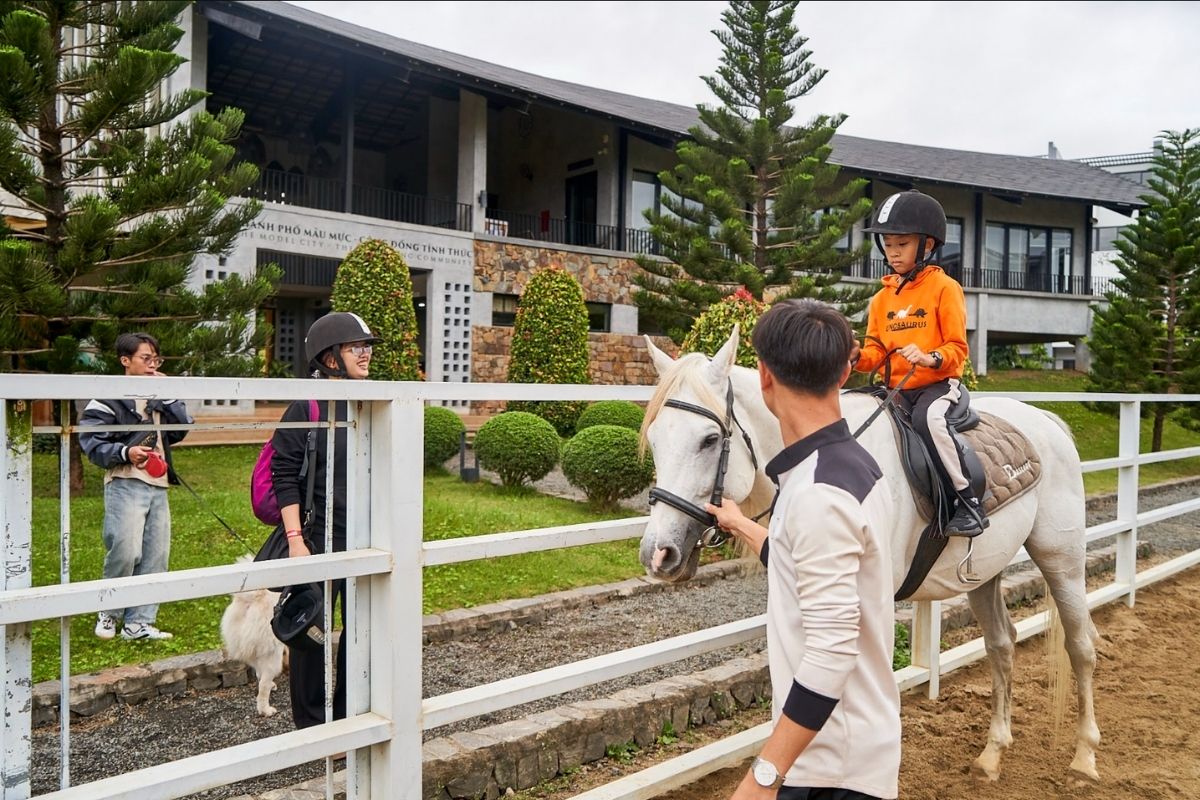
Because it offers something no coastal destination can: a genuine working landscape with a story attached. Coffee is not a backdrop here, it is the local economy, and that gives a programme real substance.
The Central Highlands setting adds comfort and calm. At elevation, a Buon Ma Thuot corporate retreat avoids the coastal heat, and the region’s low tourist density means a team is not competing with holidaymakers for space.
Cultural depth completes it. Ede and M’nong communities, longhouse architecture and gong culture give a Dak Lak company trip an authenticity that a resort programme cannot manufacture. See the Buon Ma Thuot destination page for the wider picture.
What can you do on a Buon Ma Thuot retreat?
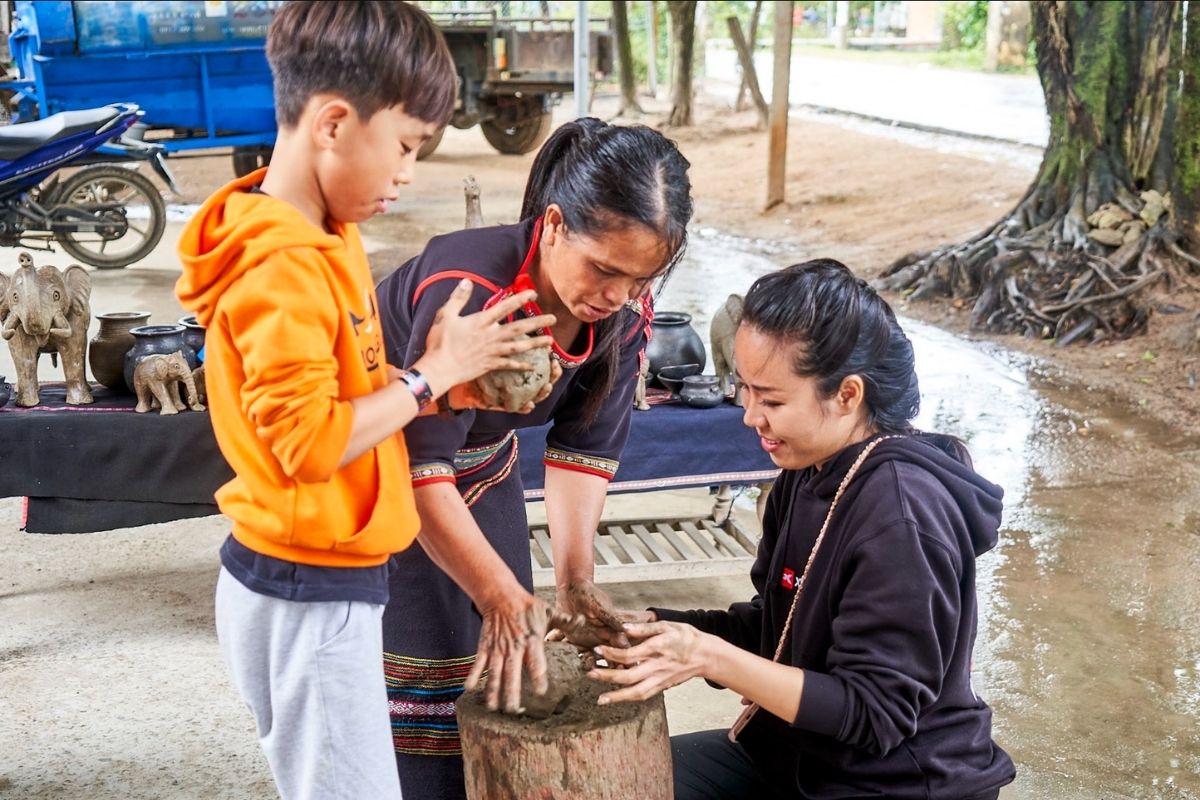
Coffee, lake and culture are the three pillars. The strongest programmes use all three:
- A coffee farm challenge. Harvest, roast and cup together — the signature coffee farm team building activity.
- Lak Lake boat racing. Traditional dugout races on the region’s largest natural lake.
- A village cultural exchange. Longhouse visits, gong performance and shared cooking with Ede hosts.
- Waterfall treks. Guided walks to the region’s cascades with team tasks along the route.
- A CSR activity. Community work with local schools or farms; see CSR team building.
- Strategy and reflection sessions. Working blocks framed by highland calm.
A well-designed Buon Ma Thuot corporate retreat balances one hands-on activity with one reflective session each day.
Why does the coffee element work so well?
Because it is genuinely participatory. Picking cherries, sorting beans, roasting and cupping is a full production chain a team can move through together in a morning — with a tangible result at the end.
That structure makes coffee farm team building unusually effective. Each stage requires different skills, so people who are quiet in a meeting often turn out to be excellent at sorting or tasting, which visibly reshuffles a group.
It also carries a business lesson worth having. Seeing the labour behind a commodity most teams consume daily tends to prompt genuinely useful conversations about value chains and sustainability.
What venues suit a Central Highlands programme?
The region’s options are smaller-scale but characterful:
- City hotels in Buon Ma Thuot. Conventional meeting facilities as a practical base.
- Lakeside resorts at Lak Lake. Scenic, calm settings ideal for reflective retreats.
- Coffee estate stays. Immersive bases on working plantations.
- Longhouse and village accommodation. The most authentic option for smaller teams.
Central Highlands team building capacity is modest compared with the coast, so venues should be confirmed early for anything above fifty people.
What group sizes suit Buon Ma Thuot?
The region is strongest for small and mid-size groups. Teams of 10 to 40 fit the farms, boats and village activities perfectly — and small groups get the most from the hands-on sessions.
Groups of 40 to 100 work with rotating activity waves across farms and lake activities. Larger numbers are possible from city hotels, but the signature immersive experiences lose their intimacy at scale.
How do the logistics work?
Access is easier than most people assume. The essentials:
- Access. Direct flights to Buon Ma Thuot Airport from Ho Chi Minh City and Hanoi.
- Ground transport. Coaches between the city, farms and Lak Lake, roughly an hour apart.
- Duration. Three days is ideal to cover coffee, lake and culture without rushing.
- Community coordination. Village activities arranged respectfully through local partners.
A local operator handles farms, community relationships and transfers, which is what makes a Dak Lak company trip feel seamless in a region with less tourism infrastructure.
When is the best time to visit?
The dry season from roughly November to April offers the most reliable weather for outdoor activities and lake sessions.
The coffee harvest, typically running from late in the year into the early months, is the most compelling window for a coffee-focused programme — teams can join genuine picking rather than a demonstration.
The wetter months bring green landscapes and fuller waterfalls, with showers usually manageable around a flexible schedule.
What does a Buon Ma Thuot retreat cost?
Costs are moderate and generally better value than coastal equivalents, since the region is less commercialised and accommodation is more modest.
Flights, ground transport, farm and community fees, activities and catering are the main drivers. A Buon Ma Thuot corporate retreat typically delivers more distinctive experience per unit of budget than a resort programme, precisely because the activities are authentic rather than packaged.
Model the numbers with our team building cost and company trip budget guides.
Our own work here makes the point: a three-day highlands retreat across Buon Ma Thuot and Lak Lake for a 12-person team blended coffee culture, boat racing, meditation, a branded year-end party and a CSR activity with local children. You can read the full XTB Buon Ma Thuot case study for how the programme was built.
Is it better for small teams than large ones?
Honestly, yes — and that is a feature rather than a limitation. The region’s value lies in hands-on, intimate experiences: cupping coffee around one table, sharing a longhouse meal, racing dugouts across a lake.
Those experiences dilute at scale. A hundred people cannot meaningfully participate in a single roasting session, whereas twenty can.
For a leadership team, a department or a small high-value group, Central Highlands team building offers a depth that larger coastal programmes rarely achieve. For a 300-person incentive, the coast remains the better answer.
What does a sample Buon Ma Thuot itinerary look like?
A three-day programme covers the region’s three pillars without rushing any of them.
Day one flies in and settles at a city or lakeside base, with an opening session and a welcome dinner featuring local cuisine. Day two is the coffee day — a morning on a working plantation harvesting and sorting, an afternoon roasting and cupping session, then a reflective evening.
Day three moves to Lak Lake for dugout racing and a village cultural exchange, with a CSR activity or closing session before departure.
That sequencing matters: the coffee day works best early, because the shared production-chain experience gives the group a common reference point for everything that follows in the Buon Ma Thuot corporate retreat.
How does the CSR element work here?
The Central Highlands has genuine need and genuine community structures, which makes CSR here substantive rather than decorative.
Programmes typically work with local schools or farming families — practical support arranged through partners who already have relationships in the community, rather than a one-off visit staged for photographs.
Aligning that work to the UN Sustainable Development Goals gives a reportable framework, so a Buon Ma Thuot corporate retreat can contribute to sustainability reporting as well as team cohesion. Our CSR event guide covers how to structure this properly.
What makes the Central Highlands different from the coast?
The contrast is sharper than most planners expect, and it comes down to what the destination asks of a team.
A coastal programme is fundamentally about reward. The beach requires nothing of participants beyond enjoying it, which is exactly right for an incentive trip or a celebration.
The highlands ask for engagement. Harvesting coffee, racing a dugout, sharing a longhouse meal — these are participatory rather than passive, so a Buon Ma Thuot corporate retreat produces a different kind of memory.
The climate difference reinforces it. At elevation the air stays comfortable year-round, so activities happen through the middle of the day rather than being pushed to dawn and dusk as they are on the coast in summer.
What should teams know before travelling?
The Central Highlands is straightforward to visit, but a short briefing removes the small frictions that otherwise surface on day one.
Altitude keeps the region comfortable, though evenings turn cool enough to want a light layer — a genuine surprise for teams flying up from Ho Chi Minh City. Farm activities involve red earth that stains, so old clothes and closed shoes are sensible for the coffee day.
- A light jacket for cool highland evenings.
- Clothes you do not mind staining for plantation work.
- Closed shoes for farms, trails and boats.
- An open attitude to strong coffee, which arrives constantly and is genuinely excellent.
With those covered, local guides and partners handle farms, boats and community coordination, so a Buon Ma Thuot corporate retreat runs smoothly in a region with lighter tourism infrastructure than the coast.
Frequently asked questions about a Buon Ma Thuot corporate retreat
Is Buon Ma Thuot good for a corporate retreat?
Yes, especially for small and mid-size teams. Coffee farms, Lak Lake and Ede village culture give a programme genuine authenticity, with a comfortable highland climate year-round.
How do you get to Buon Ma Thuot?
By direct flight to Buon Ma Thuot Airport from Ho Chi Minh City or Hanoi, followed by short coach transfers to the farms, city venues or Lak Lake.
What activities can you do in the Central Highlands?
Coffee farm harvest-and-roast challenges, Lak Lake dugout racing, Ede village cultural exchanges, waterfall treks, CSR activities and reflective strategy sessions.
How many people can a Buon Ma Thuot retreat take?
It suits groups of 10 to 40 best, with up to around 100 possible using rotating waves. The signature hands-on experiences lose intimacy above that.
When is the best time for a coffee-focused programme?
During the harvest, which typically runs from late in the year into the early months, so teams can join genuine picking rather than a staged demonstration.
Is the Central Highlands cooler than the coast?
Yes. Its elevation keeps temperatures comfortable year-round, which makes outdoor activities far more pleasant than a lowland or coastal programme in the hot months.
Can a Buon Ma Thuot retreat include CSR?
Yes, and it fits naturally. Community work with local schools or farming families pairs well with the region’s cultural programmes, as in our XTB retreat.
How long should a Buon Ma Thuot retreat be?
Three days is ideal, allowing a full coffee day, a Lak Lake and culture day, and working sessions without compressing any element of the programme.
Is Buon Ma Thuot suitable for large groups?
It is strongest for 10 to 40 people. The hands-on coffee and cultural experiences lose their intimacy above roughly 100, where the coast becomes the better choice.
Plan your Buon Ma Thuot corporate retreat
Ready to take your team into coffee country with a Buon Ma Thuot corporate retreat? Request a free proposal and we will design the farms, culture and logistics around your group — or explore our team building service and past success stories.
“