”
Nature & Eco Team Building in Vietnam
A hotel ballroom makes people behave like employees. A forest trail, a river cave or a mangrove channel makes them behave like people — and that shift is the entire point of taking a team outside.
Nature team building in Vietnam uses the country’s mountains, forests, rivers and coastlines as the venue, replacing conference-room exercises with genuine shared challenge. It also carries a sustainability dimension that increasingly matters to boards and employees alike.
This guide is the complete picture: why nature works, the best activities, where to run them, group sizes, costs and how to build a programme that delivers more than photographs.
Why does nature team building work?
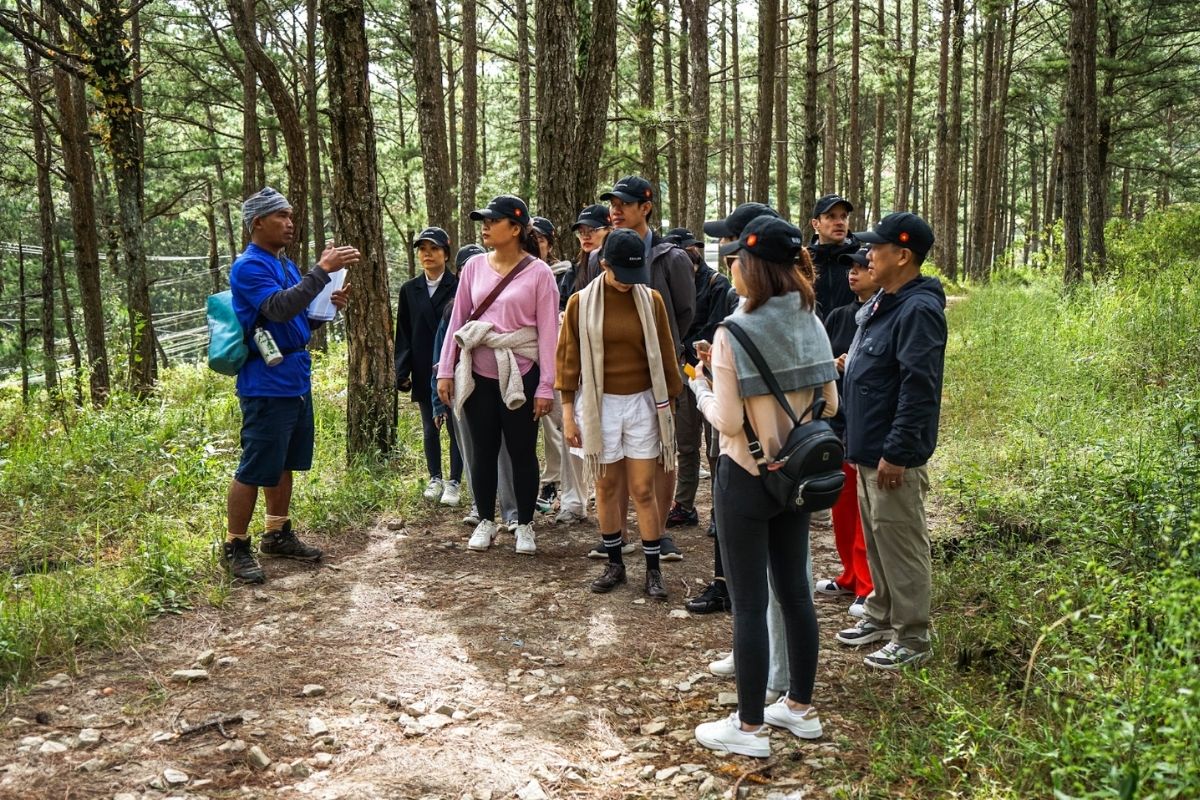
Because unfamiliar environments dissolve hierarchy. On a trail or a river, job titles stop being useful and practical competence takes over, which reshuffles a group in ways an office activity never can.
Shared mild adversity does the rest. Weather, terrain and physical effort give a team a common obstacle rather than a manufactured one, and nature team building Vietnam programmes convert that into genuine trust.
There is a wellbeing argument too. The World Health Organization highlights the role of natural environments and physical activity in mental health, which is why outdoor programmes tend to leave teams visibly restored rather than merely entertained.
What are the best nature team building activities?
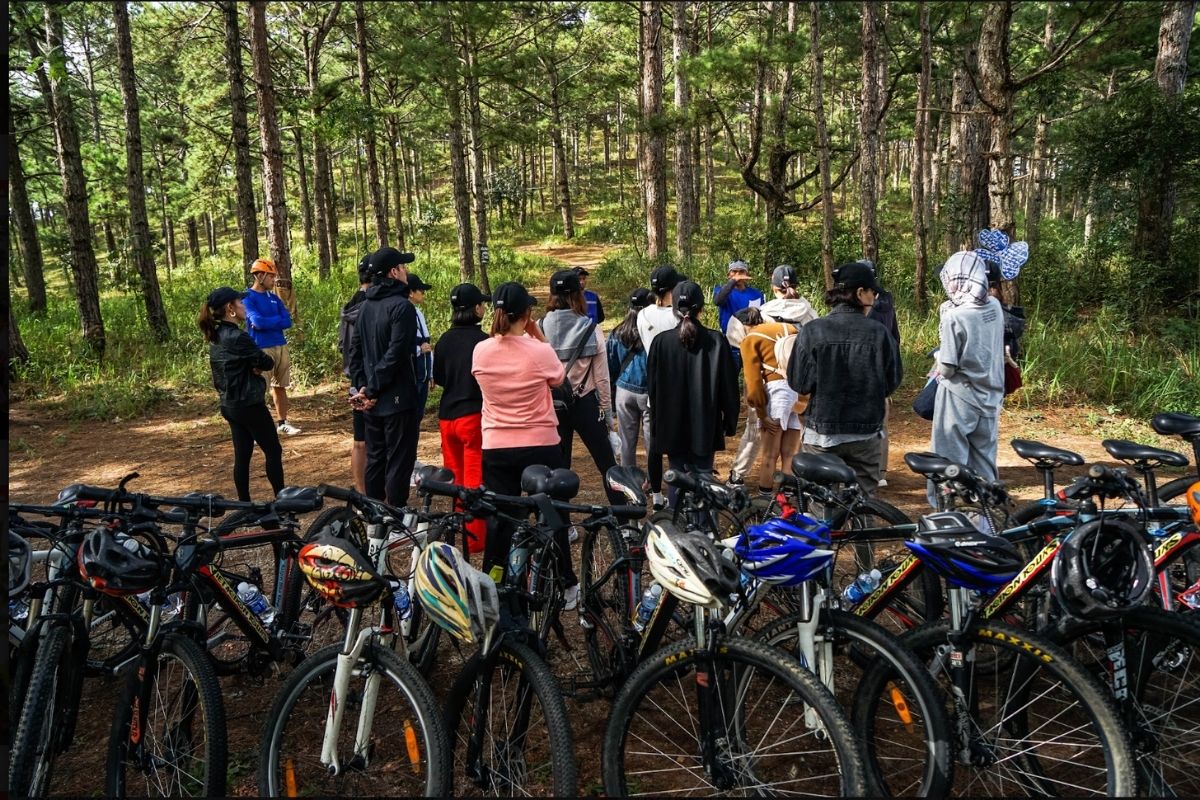
The strongest nature team building Vietnam activities pair physical challenge with collaboration:
- Forest trekking and orienteering. Navigation tasks that force planning and shared decisions.
- Kayaking and rafting. Paired paddling where coordination beats individual effort.
- Canyoning and abseiling. High-trust challenges, strongest at Datanla Falls in Da Lat.
- Caving and cave exploration. Genuine novelty and shared nerve.
- Cycling treasure hunts. Village and paddy-field routes with clue-based tasks.
- Survival and shelter challenges. Fire, shelter and signal tasks in a controlled setting.
- Mangrove or reef conservation. Planting and clean-up work that leaves something behind.
A good forest team building day mixes one demanding activity with one reflective one, rather than stacking exertion until people stop enjoying it.
Where can you run nature team building in Vietnam?
Nature team building Vietnam benefits from an unusual geographic range within short domestic hops:
- Da Lat. Pine forests, waterfalls and canyoning in a cool climate; see Da Lat team building.
- Ninh Binh. UNESCO karst landscapes and river caves; see Ninh Binh retreats.
- Sapa and the north. Rice terraces and mountain treks; see Sapa retreats.
- Son Tra, Da Nang. Jungle and coast minutes from the city; see Son Tra.
- The Mekong Delta. Rivers, canals and orchards; see Mekong team building.
- Can Gio, near HCMC. A mangrove biosphere reserve within ninety minutes of the city.
Choosing between them is mostly a question of travel time and climate, which the planning section below unpacks.
How do you choose the right destination?
Work backwards from three constraints rather than from scenery.
Travel time comes first — a one-day programme cannot absorb a flight, so nature team building Vietnam for a short format means somewhere within a couple of hours by road.
Climate comes second. Highland destinations stay comfortable when the lowlands are punishing, which matters enormously for physically demanding activities in summer.
Group size decides the rest. Trails, boats and caves have hard capacity limits, so large groups need destinations with space for parallel activity waves rather than a single spectacular route.
What group sizes suit an outdoor programme?
Nature team building Vietnam imposes constraints that a ballroom does not. Small teams of 10 to 40 can do almost anything, including canyoning and cave routes.
Mid-size groups of 40 to 120 work well with rotating waves, so different teams hit different activities at different times. Large groups above 120 need either open terrain — beaches, wide valleys, parks — or a resort base from which smaller waves rotate out.
The common mistake is booking a spectacular narrow trail for two hundred people and discovering the queue is the experience.
How do you make an eco programme genuinely sustainable?
The gap between real and performative is easy for employees to spot. Three things separate them.
First, the activity should leave a measurable result — trees planted, waste collected by weight, a habitat surveyed. Second, it should be run with a local partner or community organisation rather than staged for photographs. Third, it should connect to the company’s actual commitments rather than existing as an isolated day out.
Programmes aligned to the UN Sustainable Development Goals give a reportable framework, which turns a nature team building Vietnam day into something the sustainability report can genuinely reference. Our purpose-driven team building guide goes deeper on getting this right.
What does nature team building cost?
Nature team building Vietnam is often better value than resort equivalents, because the venue — a forest, a river, a beach — costs little or nothing.
The spend concentrates on guides, safety equipment, transfers and catering. Adventure activities such as canyoning or caving carry higher costs because they require qualified instructors and technical kit, and rightly so.
Against that, an outdoor adventure retreat Vietnam programme typically delivers stronger memories per unit of budget than an indoor one. Model the numbers with our team building cost and company trip budget guides.
A short example: when Coastline Mutual ran a mangrove planting day for 70 people near Ho Chi Minh City, the team logged the number of saplings planted and returned the following year to see them. That second visit is what turned a nice day out into a genuine part of the company’s story.
How do you keep an outdoor programme safe?
Safety is where amateur nature team building Vietnam programmes fail, and it is non-negotiable. Four requirements cover most of the risk:
- Qualified guides for every technical activity — water, height or cave.
- Proper equipment including life jackets, helmets and harnesses where relevant.
- A weather plan with clear thresholds for postponing or switching activities.
- Medical cover and a briefed evacuation route for remote sites.
Any credible operator will volunteer this information before being asked. If safety details are vague in a proposal, that is the proposal to reject.
What outcomes should you expect?
Well-run nature team building Vietnam programmes deliver three things reliably.
The first is trust, built through shared physical challenge rather than discussion. The second is cross-department connection, because outdoor teams are usually mixed and the terrain forces cooperation. The third is restoration — people return with energy rather than the flatness that follows a day of conference-room exercises.
The SHRM research links structured shared experiences to stronger engagement, and the outdoors provides that structure with an intensity an indoor session rarely matches.
How do you structure a nature programme across a day?
Sequencing matters more outdoors than indoors, because heat, light and fatigue all move against you as the day progresses.
The reliable pattern front-loads the demanding activity into the cooler morning, uses the middle of the day for water or shaded sessions, and saves the reflective or social element for late afternoon. Reversing that order is how groups end up exhausted and irritable by three o’clock.
Debriefing deserves its own slot. A twenty-minute structured conversation about what happened during the challenge is what converts a fun day into a learning one, and it is the step most programmes skip.
Well-run nature team building Vietnam programmes treat that debrief as part of the activity rather than an optional extra.
What should teams bring to an outdoor programme?
A short pre-trip briefing prevents most discomfort, and the list barely changes between destinations:
- Proper footwear — trainers or walking shoes, never sandals, for trails and rocks.
- Sun protection — hat, sunscreen and eyewear for exposed terrain and water.
- A change of clothes for anything involving water or mud.
- A light layer for highland destinations, where evenings turn cool quickly.
- A refillable water bottle, which also keeps single-use plastic off the site.
The organiser supplies technical equipment, guides and safety cover, so the group needs only personal essentials and a willingness to get slightly dirty.
How does nature team building compare with indoor formats?
The honest comparison is that each does something the other cannot, and choosing wrongly wastes the budget.
Indoor formats give control and precision. Weather is irrelevant, facilitation is tight, and a specific behaviour — decision-making, communication under pressure — can be isolated and worked on deliberately. That precision is valuable for a targeted development objective.
Outdoor formats give intensity and memory. The lessons are less controlled but land harder, because they emerge from real consequences rather than a designed exercise. Nature team building Vietnam programmes also deliver a restorative effect that no meeting room can match.
For most companies the answer is both, alternated across the year. See our indoor team building and outdoor games guides for the specific formats in each.
Frequently asked questions about nature team building in Vietnam
What is nature team building?
It uses outdoor environments — forests, rivers, mountains, coastlines — as the venue for structured team activities, replacing conference-room exercises with genuine shared physical challenge.
What are the best nature team building activities?
Forest trekking and orienteering, kayaking and rafting, canyoning, caving, cycling treasure hunts, survival challenges and conservation work such as mangrove planting or reef clean-ups.
Where is best for nature team building in Vietnam?
Da Lat for pine forests and canyoning, Ninh Binh for karst landscapes, Sapa for mountain treks, Son Tra for jungle and coast, the Mekong Delta for rivers, and Can Gio for mangroves.
How many people can do an outdoor programme?
From 10 to 120 comfortably using rotating activity waves. Groups above 120 need open terrain such as beaches or wide valleys, or a resort base with smaller waves rotating out.
Is nature team building suitable for mixed fitness levels?
Yes, when programmes are graded. Gentle options such as village cycling, boat activities and conservation work run alongside demanding ones like canyoning, so everyone participates.
How do you make an eco programme genuinely sustainable?
Ensure it leaves a measurable result, run it with a local community partner rather than staging it, and connect it to the company’s real commitments and reporting frameworks.
Is outdoor team building more expensive than indoor?
Usually less, since the natural venue costs little. Budget goes to guides, safety equipment and transfers, with technical activities such as canyoning carrying higher instructor costs.
Should you debrief after an outdoor activity?
Yes – it is the step that converts a fun day into a useful one. Twenty minutes of structured conversation while the experience is fresh outperforms a workshop discussion a week later.
What is the biggest risk with an outdoor programme?
Weather and inadequate safety cover. Both are managed by choosing an operator with qualified guides, proper equipment, clear weather thresholds and a briefed alternative plan.
Plan your nature team building programme
Ready to take your team outside with nature team building in Vietnam? Request a free proposal and we will match the destination, activities and safety plan to your group — or explore our team building and CSR services and past success stories.
“