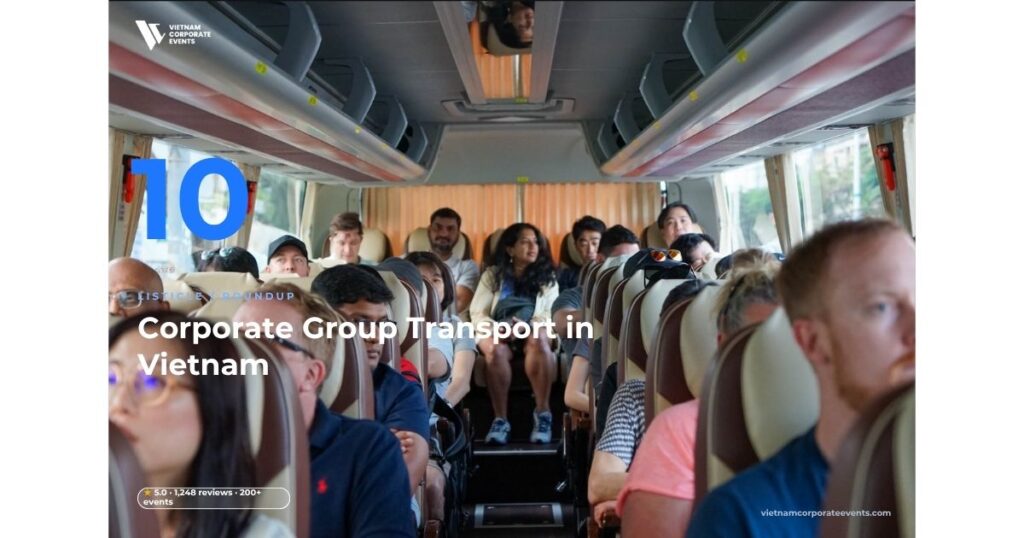
Corporate Group Transport in Vietnam
Transport is the least interesting line in an event budget and the one most likely to cost you an hour of programme. A group that leaves twenty minutes late, arrives at a venue with nowhere to unload, and returns in two waves has lost most of an afternoon to something nobody planned.
Corporate group transport Vietnam programmes rely on is straightforward to arrange and easy to underestimate. This guide covers vehicle types and capacity, airport transfers, safety standards, cost, timing and the errors that reliably delay a schedule.
What vehicle types are available?
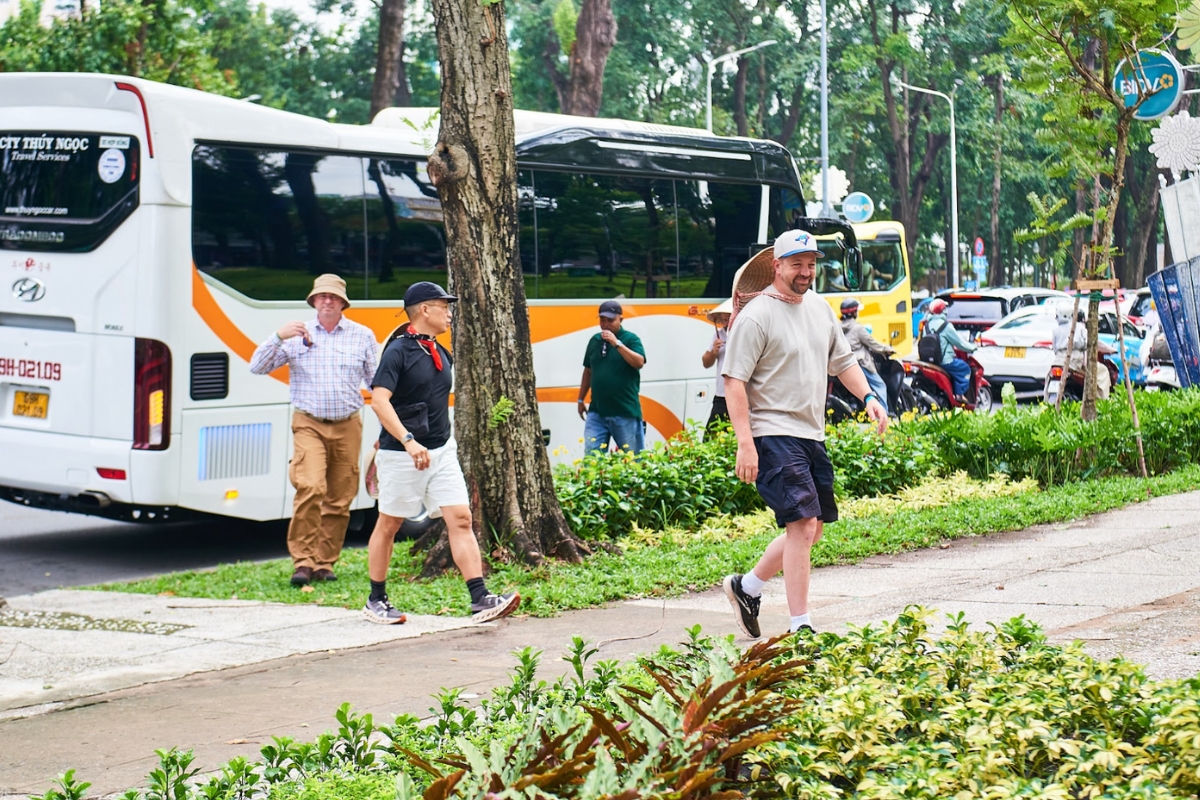
Corporate group transport Vietnam suppliers cover most requirements, with quality varying considerably by operator:
- Cars and sedans. One to three passengers, for VIPs and executives.
- Vans (7 to 16 seats). Small groups, split departures and flexible movements.
- Mini coaches (24 to 29 seats). The workhorse for department-sized groups.
- Standard coaches (35 to 45 seats). The main option for company trips and conferences.
- Sleeper coaches. For long overnight transfers, though rarely appropriate for corporate groups.
- Boats and ferries. Where the programme includes island or river movements.
For coach hire corporate Vietnam programmes, the practical planning unit is the 45-seat coach. A group of 100 needs three, not two and a half, and the spare capacity absorbs late additions.
How do you calculate capacity?
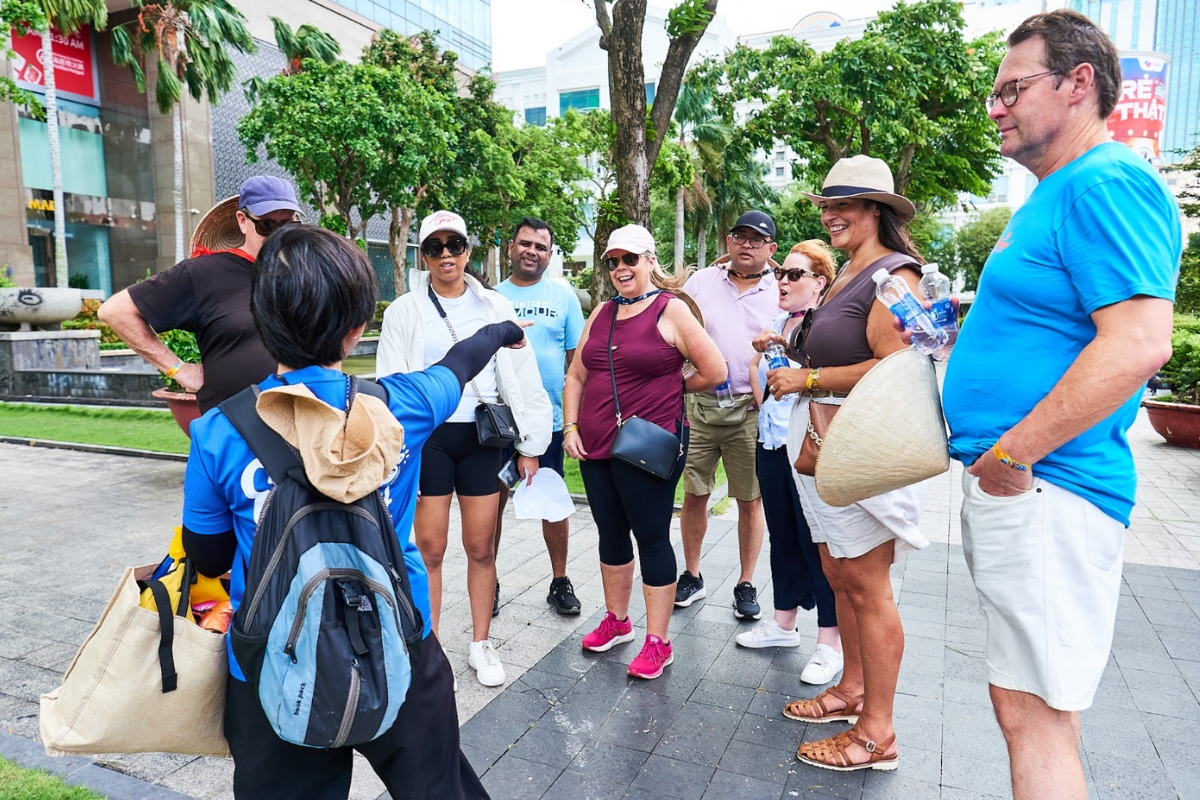
Never plan corporate group transport Vietnam at nominal capacity, which is the most common error.
A 45-seat coach carrying 45 adults with luggage is uncomfortable, and for a two-hour transfer it becomes a complaint. Plan at roughly 80 percent — 36 passengers on a 45-seat vehicle — which also leaves room for guides, staff and equipment.
Luggage matters more than seat count for airport transfers. A group of 40 with checked bags may need a coach plus a support van rather than a single vehicle, and discovering that at the airport is a poor time to solve it.
For excursions without luggage, nominal capacity is workable, though comfort still argues for headroom on longer journeys.
How should airport transfers work?
The first and last impressions of a trip, and worth more attention than they usually get.
A staffed meeting point with branded signage inside arrivals, covering the full window from first to last flight, rather than a driver holding a sheet of paper. For groups arriving across several flights, a holding area with refreshments prevents early arrivals waiting in a terminal.
Departures need a schedule built around actual flight times rather than one blanket coach. A group transfer Vietnam events organisers plan properly will run two or three departure waves matched to check-in windows, which delegates notice and appreciate.
Build a buffer. Vietnamese airport traffic at peak hours is unpredictable, and a transfer scheduled with no margin will eventually be the reason a session starts late.
What safety standards should you require?
Corporate group transport Vietnam safety standards are non-negotiable, and worth confirming rather than assuming:
- Licensed operator with commercial passenger transport authorisation.
- Passenger insurance covering the full group, verified rather than claimed.
- Seatbelts fitted and working — not universal on older fleet.
- Driver hours managed, with a second driver for long transfers.
- Vehicle age and maintenance records for the specific vehicles allocated.
- Emergency procedure and a contact reachable during transfers.
Operators vary considerably. A cheap quote from an unknown supplier frequently means older vehicles and thinner insurance, which is a poor economy for a corporate group. See our risk management guide.
How much does transport cost?
Corporate group transport Vietnam is modest relative to other event lines, and usually priced per vehicle per day rather than per passenger.
The variables are vehicle size and age, journey distance, number of days, driver overtime for late finishes, and whether the vehicle is held on standby or released between movements.
Holding a coach on standby all evening costs more than releasing and recalling it, but a released coach that has to return through evening traffic can arrive late. For a gala finishing at eleven, standby is usually the correct choice.
Overall, corporate group transport Vietnam events require typically takes 3 to 5 percent of a programme budget. See our budget guide.
How do you plan movements?
Build every corporate group transport Vietnam movement into the run sheet with a departure time, a load time before it, and an owner:
- Load time. Ten minutes for a small group, twenty to thirty for 100-plus.
- Departure time, with a named person calling it.
- Journey duration with traffic allowance, not the map estimate.
- Arrival and unload point, confirmed with the venue.
- Return schedule, communicated to delegates in advance.
The load time is the item most often omitted. Three hundred people do not board four coaches instantly, and a schedule that assumes they do runs late from the first movement onward.
What are the common mistakes?
Six corporate group transport Vietnam mistakes that reliably cost time:
- Planning at nominal capacity without luggage allowance.
- No load time in the run sheet.
- Map-based journey estimates that ignore Vietnamese traffic.
- Unconfirmed unloading points, so coaches stop on a main road.
- Single-wave departures for flights spread across a day.
- No transport home after a gala where alcohol was served.
The last is the most consequential. If people are drinking, getting them home is the organiser’s responsibility, and event transportation Vietnam planning that omits it creates both a duty-of-care problem and an early-emptying room.
What about boats and river transfers?
Several Vietnamese programmes involve water movement, and it follows different rules from road transport.
Saigon River cruises, Mekong Delta boats, Halong Bay junks and island transfers to Phu Quoc’s southern islets all require licensed operators with passenger insurance, life jackets in the correct sizes and quantities, and a stated capacity that should not be exceeded.
Weather cancels boats far more often than it cancels coaches. Any programme with a water transfer needs a contracted land-based alternative rather than a hope, and the decision point should be agreed in advance — who calls it, by when, and what happens instead.
How do you handle VIPs and separate movements?
Most corporate programmes have a few people who move differently, and planning for it prevents improvisation.
Senior executives, keynote speakers and client guests often arrive on different flights and may need private cars rather than the group coach. Build these as explicit lines in the transport plan rather than solving them on the day with a taxi.
The same applies to people leaving early, arriving late, or needing accessible vehicles. Collect these requirements at RSVP alongside dietary needs, and allocate a spare van as flexible capacity for the movements that will inevitably emerge.
What about city-specific factors?
Corporate group transport Vietnam traffic patterns differ meaningfully between destinations.
Ho Chi Minh City has heavy congestion at peak hours, and a cross-city transfer that takes twenty-five minutes at ten in the morning takes an hour at six in the evening. Build programmes to avoid moving large groups across the city at rush hour.
Hanoi has similar peaks plus narrower streets in the Old Quarter, where large coaches cannot reach some venues and a drop-off point on a wider road is required.
Da Nang and Nha Trang are compact with light traffic, which is part of why they suit multi-venue programmes. Resort destinations have straightforward transfers but limited fleet, so vehicles should be booked early in peak season.
What about guides and on-board staff?
For anything beyond a single transfer, someone should travel on each vehicle.
A guide or event staff member on board handles the headcount before departure, communicates the schedule, answers questions and — crucially — is the person who notices that one coach is missing two passengers before it leaves rather than after.
For multi-coach movements, one coach lead per vehicle plus a coordinator managing the convoy prevents the common failure where vehicles arrive at a venue twenty minutes apart and the programme starts twice.
Where the group includes international delegates, an English-speaking guide on each vehicle also turns a transfer into usable time — a short destination briefing on the way to an excursion costs nothing and improves the activity that follows.
Should transport be booked directly or through a partner?
Directly is workable for a single transfer. Through a coordinating partner for a programme.
The reason is real-time management. A programme with six movements across three days needs someone confirming each departure, adjusting when a session over-runs and rebooking when a flight is delayed. That is an on-ground role rather than a booking.
A partner also carries accountability for vehicle standards and insurance verification, which is difficult to confirm remotely from another country. See our DMC guide and MICE management guide.
The SHRM research links shared experience to engagement, and a group arriving together and travelling together is part of what makes an event feel shared rather than individually attended.
A short example: when a 180-delegate conference in Da Nang scheduled a single departure coach wave for flights spread across seven hours, forty delegates waited four hours at the airport. The following year the same client ran three waves matched to check-in times, at almost identical cost.
Frequently asked questions about corporate group transport in Vietnam
What vehicle sizes are available in Vietnam?
Cars for VIPs, vans of 7 to 16 seats, mini coaches of 24 to 29, and standard coaches of 35 to 45 seats, plus boats where the programme includes island or river movements.
How should coach capacity be calculated?
At roughly 80 percent of nominal capacity – about 36 passengers on a 45-seat coach – with a support van for luggage on airport transfers.
How should airport transfers be handled?
A staffed branded meeting point covering the full arrival window, a holding area for early arrivals, and departure waves matched to actual check-in times rather than one blanket coach.
What safety standards should you require?
A licensed operator, verified passenger insurance, working seatbelts, managed driver hours with a second driver on long transfers, maintenance records and an emergency contact.
How much does group transport cost?
Typically 3 to 5 percent of a programme budget, priced per vehicle per day. Holding a coach on standby costs more than releasing it but avoids late returns.
What is most often forgotten in planning?
Load time. Three hundred people do not board four coaches instantly – allow ten minutes for a small group and twenty to thirty for 100-plus.
Does traffic affect programme planning?
Significantly in Ho Chi Minh City and Hanoi, where a cross-city transfer can double at peak hours. Da Nang and Nha Trang are compact with lighter traffic.
Is transport home needed after a gala?
Yes, wherever alcohol is served. Omitting it creates a duty-of-care problem and empties the room early as people leave to find their own way back.
Arrange your group transport
Need corporate group transport Vietnam programmes can rely on, built into the run sheet with vehicles and insurance verified? Request a free proposal — or explore our corporate events service and past success stories.