Gala Dinner AV & Staging: What You Need
Nobody has ever left a gala talking about the lighting rig. Plenty have left talking about the fact they could not hear the Employee of the Year citation from table nineteen.
Gala dinner AV production is invisible when it works and catastrophic when it does not, which is why it is consistently under-specified and under-budgeted. The venue’s in-house kit covers a presentation. A gala needs more.
This guide covers what each element actually does, what venues include, what has to be brought in, how to brief a supplier and what to check before the night.
Why does AV matter more at a gala than a party?
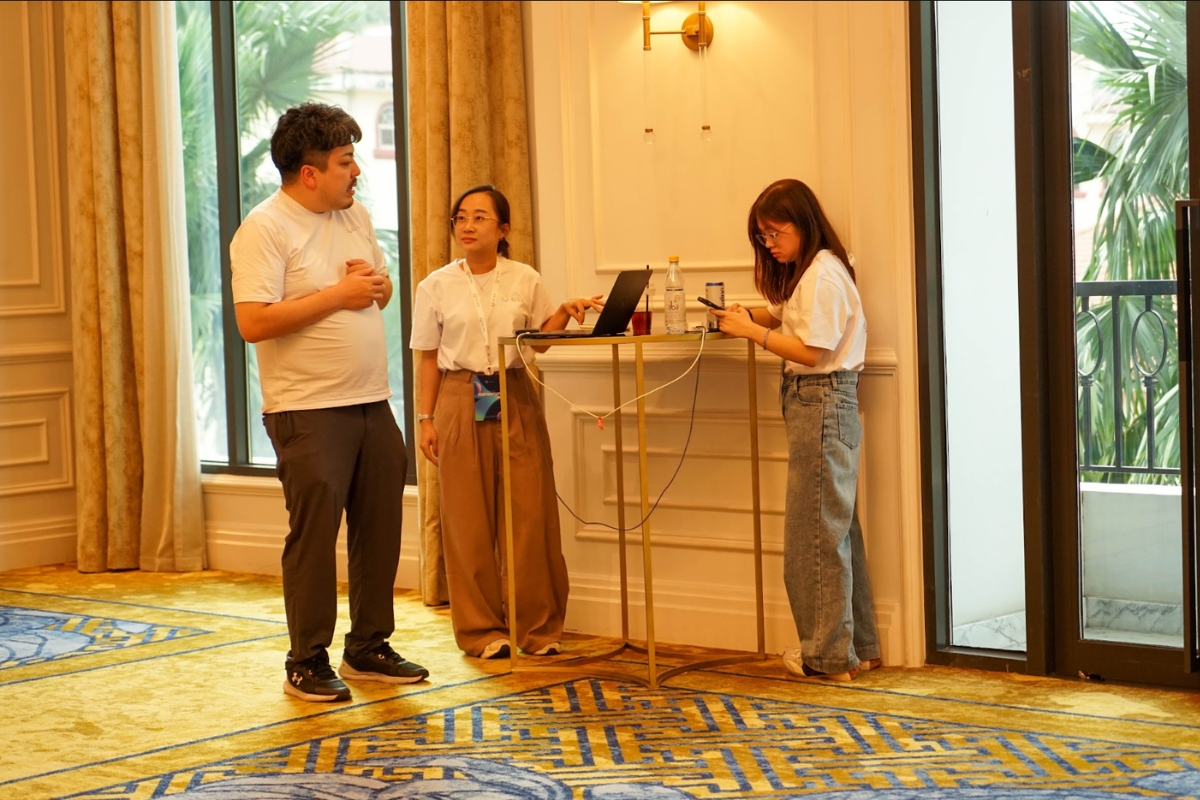
Because the content is the point. At an informal party, music and atmosphere carry the evening and nobody is listening closely.
At a gala, a room of three hundred seated people has to hear a citation, see a name on screen and watch a speaker who is lit rather than silhouetted. The SHRM research links specific recognition to engagement, and an inaudible or invisible award is not recognition at all.
The second reason is geometry. A seated room is wide and deep, with people at the back forty metres from the stage and people at the sides at an oblique angle. Gala dinner AV production exists to reach all of them equally.
What does sound actually need to do?
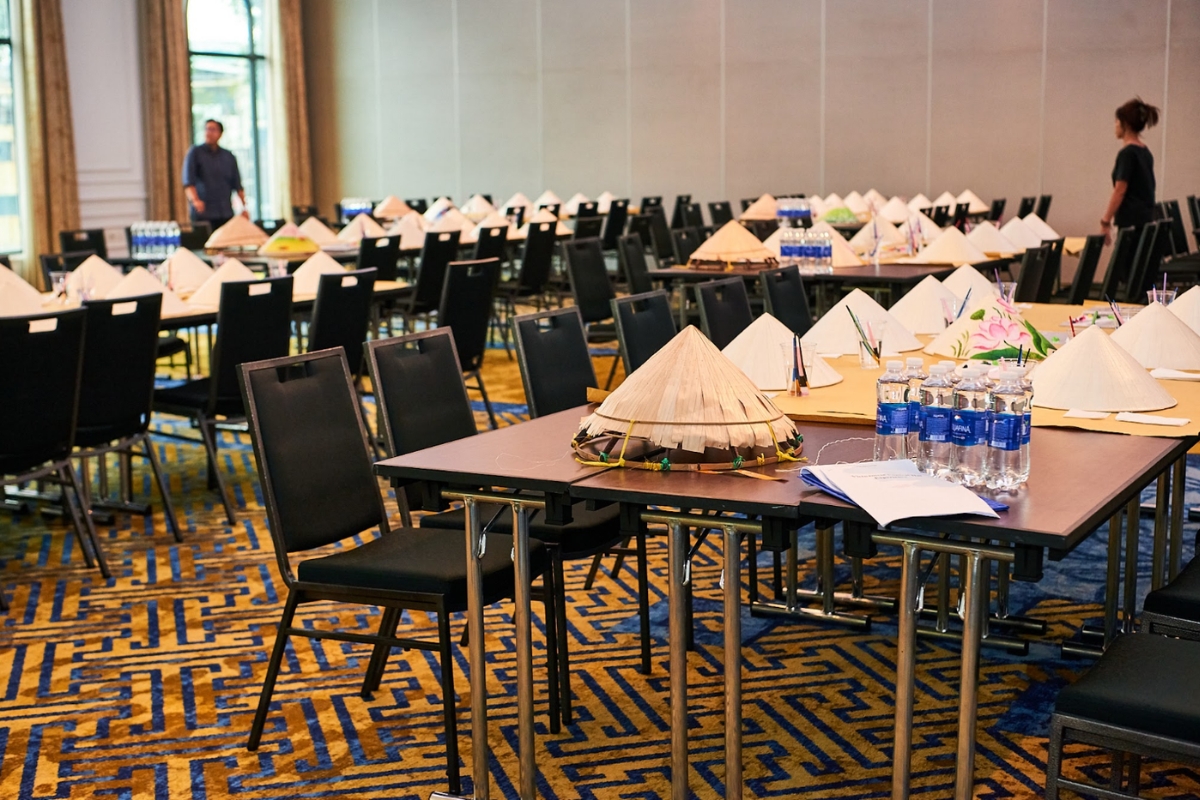
Sound is the most important element of gala dinner AV production and the one most often left to the venue.
House systems in hotel ballrooms are usually designed for background music and a single speaker at a lectern. They struggle with a moving MC, two presenters, and speech intelligibility at the back corners — which is precisely what a gala demands.
A proper specification includes distributed speakers rather than one cluster at the front, delay speakers for rooms deeper than about twenty-five metres, at least two wireless handhelds plus a spare, and an operator who is riding the levels rather than setting them once.
Ask the venue what their system is and whether it has been used for a 300-person awards ceremony. Vague answers mean you need sound and lighting gala dinner suppliers to bring their own.
What screens do you need?
Gala dinner AV production needs screens legible from the furthest seat, which is a bigger screen than most people estimate.
A single projector and screen behind the stage works up to roughly 150 guests. Above that, either a much larger LED wall or side screens are needed, because guests at the sides cannot see a rear-projection screen at an angle.
Practical requirements: text sized for the back row rather than for the designer’s monitor, high enough that standing guests do not block it, and bright enough for a room with table lighting on. LED walls handle ambient light far better than projection, which is why they have become the default for larger galas.
Content should be built at the correct aspect ratio and tested on the actual screen. See our stage and screen guide.
What lighting is required?
Lighting does three separate jobs in gala dinner AV production, and most galas budget for one.
Stage lighting so speakers and award winners are lit from the front. Without it, anyone standing in front of a bright screen becomes a silhouette, and every photograph of the moment is unusable.
Room lighting at a level where guests can read a menu and see each other, but low enough to feel like an evening. Most ballrooms default to full house lights, which flattens the room entirely.
Effect lighting — uplighting on walls and pillars in the theme colour — which is the cheapest transformation available. A plain ballroom in warm uplight looks like a different room, and it costs a fraction of decoration.
Event staging Vietnam gala suppliers will quote all three separately. The first two are essential; the third is the highest-value optional line on the list.
What about the stage itself?
The stage in a gala dinner AV production setup should be higher and shallower than instinct suggests.
A stage needs to be high enough that seated guests at the back can see a person standing on it over the heads of the tables in front — typically 60 to 80 centimetres for a large room. Too low and only the front third of the room sees anything.
Depth matters less than width, since most gala moments involve two or three people rather than a performance. What does matter is a clear, well-lit walk-up with steps on both sides, so award winners are not queuing at a single staircase.
Confirm the venue’s rigging points and load capacity early. A room with a low ceiling and no rigging limits what any AV company gala Vietnam suppliers can deliver, regardless of budget.
How many microphones do you need?
More than one, always, and this is the cheapest fix on the entire list.
The minimum for a gala is a dedicated MC microphone that stays with the MC, a second handheld for presenters and acceptance speeches, and a third as a spare. Passing a single microphone back and forth between an MC and a presenter loses the room every time and looks amateurish.
A headset for the MC is worth considering if they are moving between stage and floor. Lectern microphones are fine for a scripted speech and poor for anything else.
Test every microphone at the rehearsal, including the spare, and check battery levels before doors rather than at the midpoint of the awards.
What does a venue usually include?
Knowing the gala dinner AV production split prevents the most common budget surprise:
Usually included: house sound suitable for background music, a projector and screen, standard house lighting, a basic riser or small stage, and one or two microphones.
Usually excluded: distributed or delay speakers, stage lighting, uplighting, LED walls, additional screens, presentation management, rigging, and a dedicated technician for the evening.
Two venues quoting similar per-head figures can differ by a fifth of the budget once this list is priced. Ask for it in writing during venue selection; see our venue guide and cost guide.
Do you need a technician?
Yes — gala dinner AV production needs an operator for the whole evening rather than for setup.
Someone must ride the sound levels as the room fills and empties, cue every video and graphic, manage microphone handovers and fix the inevitable problem. A gala running from a laptop on a table with nobody watching it is one unsupported file format away from failure.
The technician should be at the rehearsal, hold the run sheet with every cue marked, and have a direct line to the MC. Presentation management on a single machine — every deck, video and award graphic pre-loaded — is their responsibility, and it eliminates laptop swapping entirely.
How do you brief an AV supplier?
Six things, in writing:
- Venue name and room, so they can check dimensions, rigging and power.
- Guest count and layout — round tables of ten, stage position, screen position.
- The run sheet with every AV cue marked.
- All content — decks, videos, award graphics — at least three days before.
- Who is speaking and moving, so microphone allocation is planned.
- What the venue provides, so nothing is quoted twice or missed.
A supplier who asks for the run sheet before quoting is a good sign. One who quotes from a guest number alone has not thought about the evening. See our AV buyer’s guide for supplier selection.
What should the rehearsal cover?
Everything, in order, with the actual content and the actual MC.
Run every video and graphic through the actual screen. Test every microphone including the spare. Walk the award sequence with the MC to check the timing of graphics against citations. Check the stage lighting with someone standing where a winner will stand.
An hour the day before, or the afternoon of, catches the file that will not play and the graphic with the misspelled name. Every gala has at least one, and gala dinner AV production without a rehearsal simply moves the discovery to the live moment.
A short example: when Aldridge & Co ran a rehearsal for a 260-person gala, the award graphics package played perfectly and the CEO’s video failed on an unsupported codec. It was re-encoded in forty minutes. Without the rehearsal it would have failed in front of the room during the opening.
Where should the budget go?
Gala dinner AV production typically takes 12 to 15 percent of a gala budget, and the priority order is clear.
Sound first, because it is the only element whose failure ruins the evening’s purpose. A technician second, since equipment without an operator is a liability. Stage lighting third, so the moments are visible and photographable. Screens fourth, sized to the room.
Uplighting and effect lighting are the best optional spend, transforming a plain room cheaply. Anything beyond that — moving lights, haze, video walls with animated content — is discretionary and should be cut before any of the first four.
Frequently asked questions about gala dinner AV and staging
What AV does a gala dinner need?
Distributed sound with speech intelligibility at the back, screens legible from the furthest seat, stage lighting so speakers are lit, at least three microphones and a technician all evening.
What do venues normally include?
House sound for background music, a projector and screen, house lighting, a basic riser and one or two microphones. Stage lighting, uplighting, extra screens and a technician are usually extra.
How many microphones are needed?
At least three – a dedicated MC microphone, a second handheld for presenters and acceptance speeches, and a spare. Passing one microphone back and forth loses the room.
Do you need stage lighting?
Yes. Without front lighting, anyone standing in front of a bright screen becomes a silhouette, and every photograph of the award moment is unusable.
How big should the screen be?
Large enough that a name is legible from the furthest seat. A single projector works to around 150 guests; above that you need an LED wall or side screens.
Is a dedicated technician necessary?
Yes, for the whole evening. Someone must ride sound levels, cue every video and graphic, manage microphone handovers and fix the inevitable problem.
What should a technical rehearsal cover?
Every video and graphic through the actual screen, every microphone including the spare, the award sequence timing with the MC, and stage lighting with someone standing in position.
How much of the budget is AV?
Typically 12 to 15 percent. Priority order is sound, technician, stage lighting, then screens, with uplighting as the best optional spend.
Plan your gala production
Want gala dinner AV production specified properly against your venue, headcount and run sheet? Request a free proposal and we will confirm what the venue includes and quote only what is genuinely missing — or explore our corporate events service and past success stories.