”
Traditional Vietnamese Games for Team Building
Companies fly teams halfway across Asia to play games invented in a Californian management seminar. Meanwhile the country they have landed in has spent centuries perfecting group games that do exactly the same job — and cost almost nothing to run.
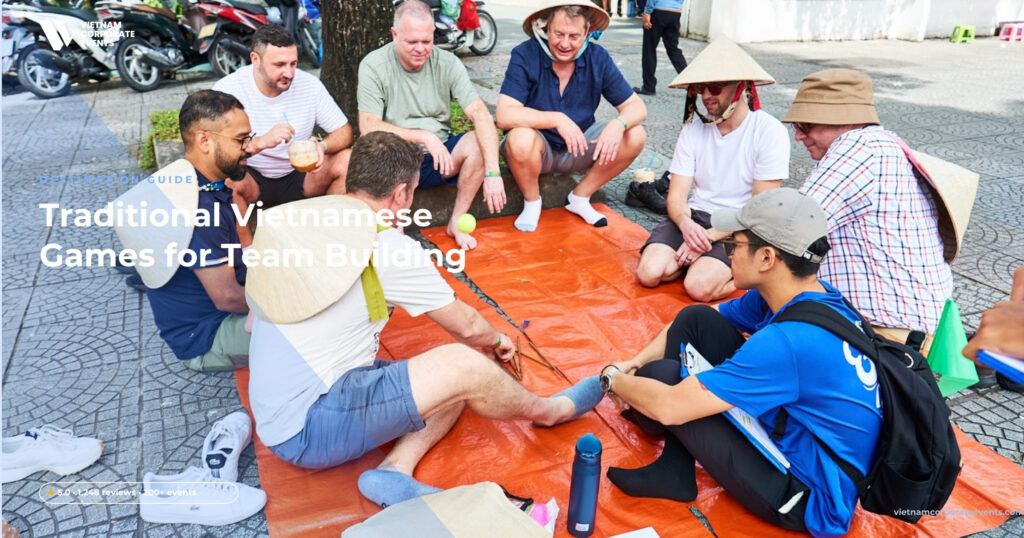
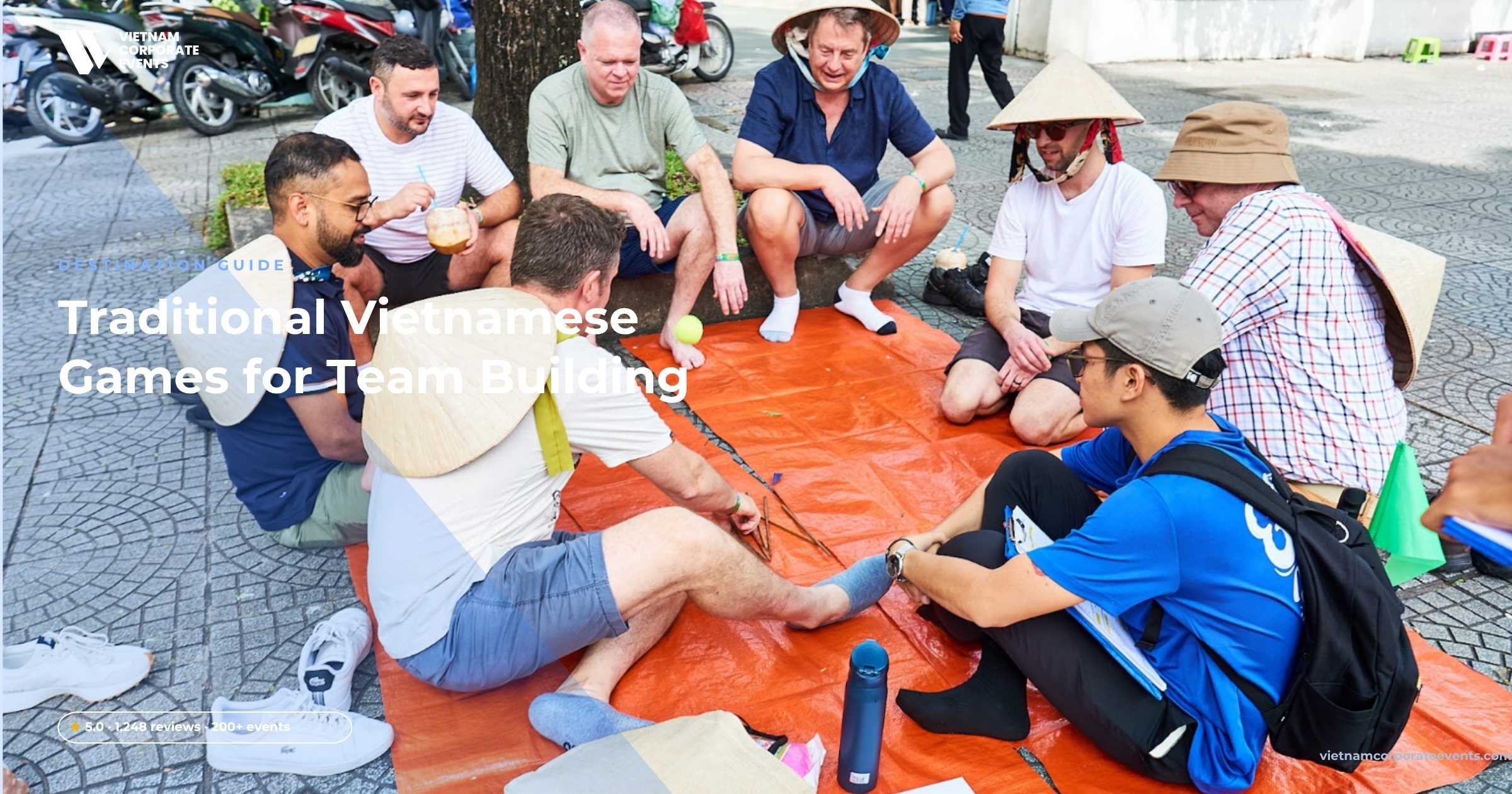
Vietnamese traditional games team building uses folk games from village festivals and schoolyards as the activity. They are simple, physical, instantly understood across language barriers, and they carry cultural meaning that a branded corporate exercise never will.
This guide covers the games worth running, what each one develops, group sizes, how to handle the cultural side respectfully, and what it costs.
Why use traditional games for team building?
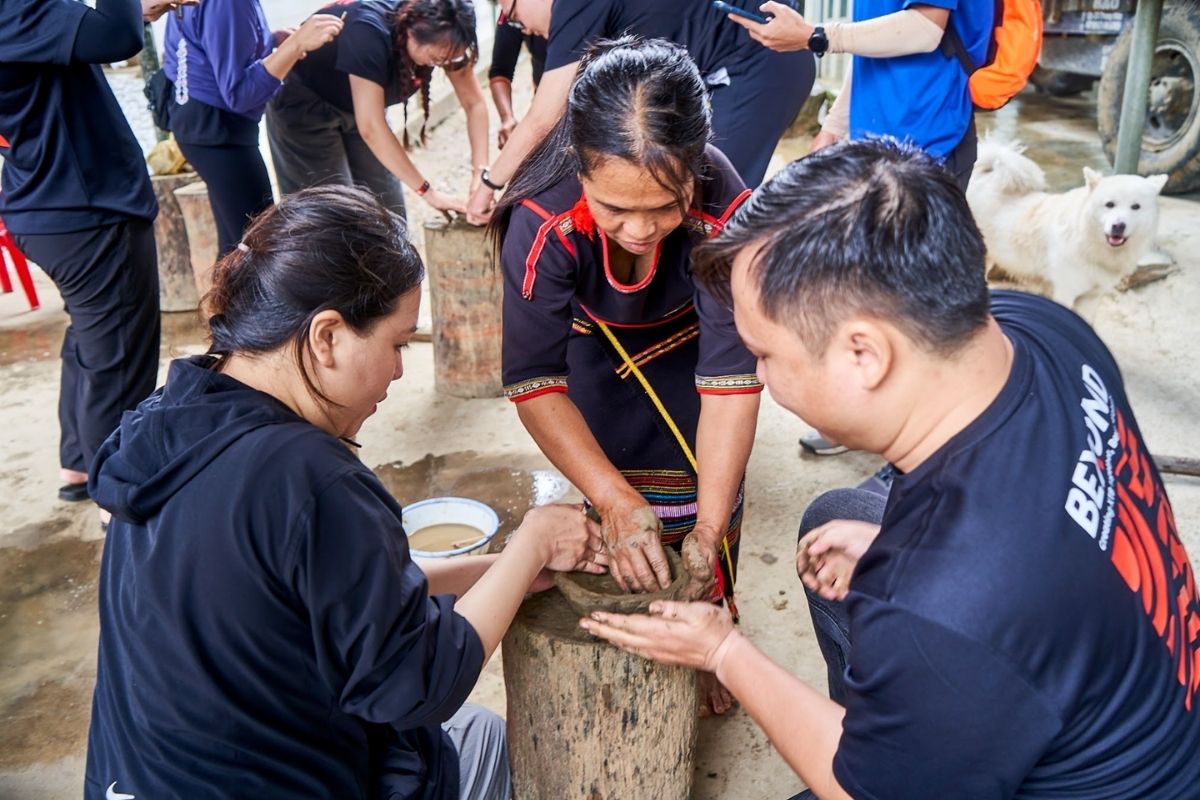
Because the rules explain themselves. Most folk games can be understood in thirty seconds and played immediately, which removes the awkward briefing phase that kills momentum in complex activities.
They also work across mixed groups. Vietnamese traditional games team building suits multinational teams particularly well, because nobody has a professional advantage and the physical simplicity levels age, seniority and language.
The cultural dimension is the real differentiator. For international staff, folk games corporate programmes offer genuine local insight; for Vietnamese employees, they carry a nostalgia that changes the emotional temperature of a company event entirely.
What are the best traditional Vietnamese games?
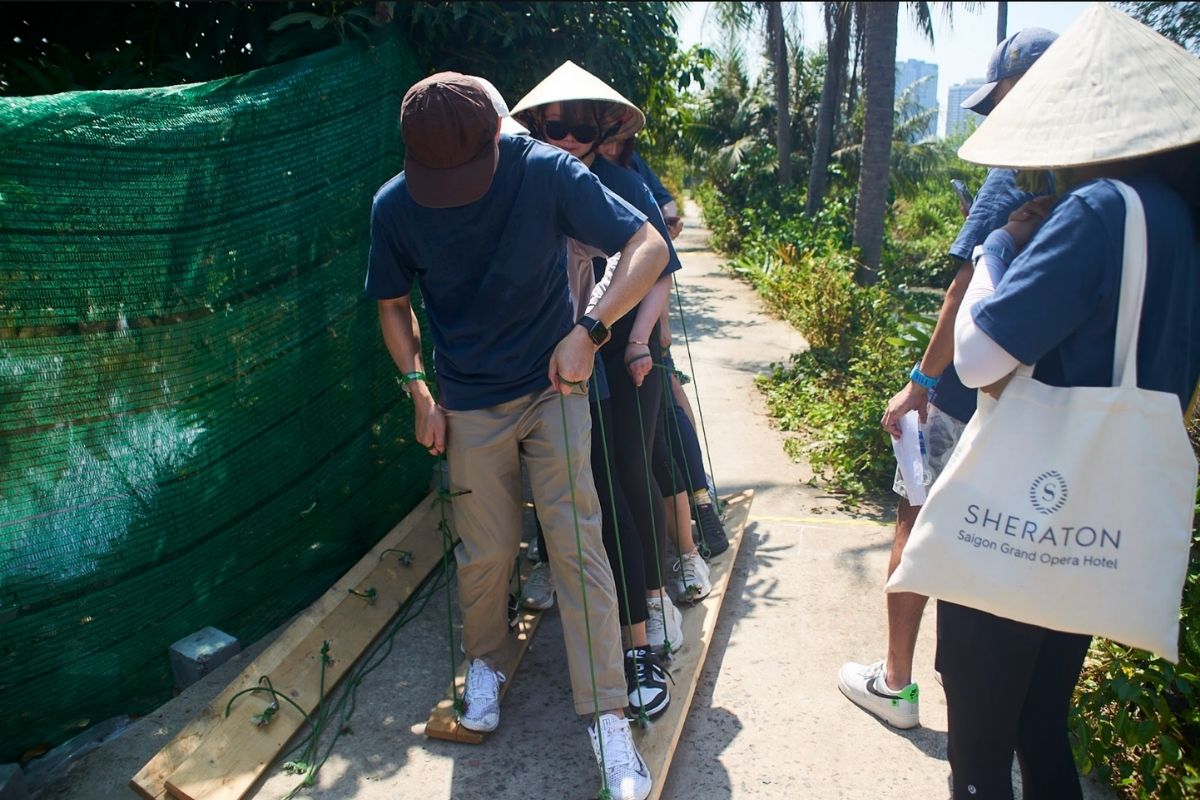
These Vietnamese traditional games team building staples translate to corporate groups without modification:
- Kéo co (tug of war). The universal team game — pure coordinated effort, and the reliable programme closer.
- Nhảy bao bố (sack racing). Chaotic, funny relay racing that dissolves reserve fast.
- Đập niêu (blindfolded pot smashing). A blindfolded player is guided by teammates’ shouted directions.
- Bịt mắt bắt vịt (blindfold duck catching). Usually adapted for corporate use with props rather than live animals.
- Ném còn (ball throwing). A targeting game from northern ethnic festivals.
- Đi cà kheo (stilt walking). Balance and mutual support, genuinely difficult and very funny.
- Cướp cờ (flag stealing). A fast tactical game of speed and feinting.
- Nhảy sạp (bamboo pole dancing). Rhythmic coordination between pole-holders and dancers.
Most Vietnamese traditional games team building programmes run six to eight of these as a festival-style circuit with a shared scoreboard.
What does each game actually develop?
Choosing by outcome makes the programme defensible rather than decorative:
- Synchronised effort → kéo co, nhảy sạp.
- Verbal instruction and trust → đập niêu, blindfold games.
- Tactical thinking under pressure → cướp cờ.
- Mutual physical support → đi cà kheo, sack relays.
- Pure morale and shared laughter → nhảy bao bố.
A tug of war team building finale works because it is the only game where the entire team pulls literally in one direction, which is why it belongs at the end rather than the start.
How do you structure a folk games programme?
For Vietnamese traditional games team building, the festival format is the proven structure. Teams rotate between stations on a timer, accumulating points, before converging for a mass finale.
A typical circuit runs six stations of fifteen minutes each, with two facilitators per station handling rules and scoring. The rotation keeps energy high and means no team waits, which is the most common failure in large-group activities.
The finale matters disproportionately. Ending Vietnamese traditional games team building with a full-group kéo co tournament and an awards moment gives the day a clear emotional peak rather than a gradual fade.
What group sizes suit traditional games?
This is one of the most scalable categories available, which is why it anchors so many large company events.
Small teams of 10 to 40 play most games together with everyone involved. Mid-size groups of 40 to 200 run the rotating station format comfortably, splitting into teams of eight to twelve.
Large groups of 200 to 500-plus work well because the games need minimal equipment and no technical skill — you simply add stations and facilitators. For very large events, cultural games team bonding formats are usually the most practical option available.
Where do these games work best?
Vietnamese traditional games team building runs almost anywhere with open ground, which is part of the appeal:
- Beaches. Soft sand suits sack races and tug of war; see beach team building.
- Resort lawns. The standard setting for a company-trip games afternoon.
- Village and rural settings. The most authentic context, especially in the north.
- City parks and event grounds. Practical for a half-day programme without travel.
They also pair naturally with a cultural destination programme, such as Hoi An or Mai Chau, where the games sit alongside crafts and local cuisine.
How do you run cultural games respectfully?
This is worth getting right, because the difference between celebration and caricature is visible to Vietnamese staff immediately.
Explain the origin of each game briefly rather than presenting it as a novelty — most have festival or agricultural roots worth thirty seconds of context. Use local facilitators who grew up with the games, since their explanation carries an authenticity a foreign host cannot replicate.
Avoid costume elements that turn tradition into fancy dress, and adapt any game involving live animals. The UNESCO framework on intangible cultural heritage is a useful reference point: these are living traditions, not props.
Done properly, folk games corporate programmes give Vietnamese employees a moment of genuine pride in front of international colleagues, which is a rare and valuable thing at a company event.
Are traditional games suitable for international teams?
Yes, and often better than for local-only groups. The physical simplicity means no language barrier, and the novelty is genuine for anyone unfamiliar with them.
Mixed teams work best. Pairing Vietnamese and international colleagues in the same team means local staff naturally take a teaching role, which quietly inverts the usual seniority dynamic in a multinational office.
The one adjustment is briefing. International participants need slightly more explanation and a demonstration, so allow an extra few minutes per station in a mixed-nationality programme.
What do traditional games cost?
Vietnamese traditional games team building is among the cheapest activities available, and that is a genuine strength rather than a compromise.
Equipment is minimal — rope, sacks, bamboo poles, blindfolds, flags — and the venue is usually a beach, lawn or park that costs nothing. The real spend is facilitation, scoring and the staging for the awards finale.
For a large group on a constrained budget, Vietnamese traditional games team building delivers more energy per unit of cost than almost any alternative. Model the numbers with our team building cost guide.
A short example: when Brightlane ran a folk games festival for 220 people on a resort lawn, the moment that made the internal newsletter was the finance director losing a sack race to a graduate hire — a levelling that no keynote or workshop had managed in three years.
How do these compare with modern team games?
Each does something the other does not, and the honest comparison helps you choose:
- Versus problem-solving challenges. Folk games build energy and connection; puzzle formats build decision-making. See problem-solving activities.
- Versus adventure activities. Traditional games are inclusive and low-risk; adventure formats build deeper trust but exclude some participants.
- Versus modern sports formats. Folk games favour nobody, whereas a football tournament rewards existing athletes.
The strongest programmes combine them — a morning of structured challenges and an afternoon of folk games, so the day delivers both learning and genuine enjoyment. Our mini olympics guide covers the hybrid format.
What does a sample folk games afternoon look like?
A typical three-hour circuit shows how the pieces fit into a company-trip afternoon.
The session opens with tribe formation — teams get names, colours and a two-minute chant, which takes fifteen minutes and does more for energy than any icebreaker. Six stations then run on a fifteen-minute rotation: sack racing, blindfold games, stilt walking, flag stealing, ball throwing and bamboo pole dancing.
A short break follows, then the full group converges for a kéo co tournament as the finale, with awards and photographs to close.
The whole afternoon needs one lead facilitator, two station marshals and a scorer. That lean staffing is why Vietnamese traditional games team building remains the most practical option for large groups on a modest budget.
Do you need a large budget or venue?
No, and that is the format’s quiet advantage over almost everything else in this category.
The equipment list is rope, sacks, bamboo poles, blindfolds and flags — items that cost very little and pack into a van. The venue can be a resort lawn, a stretch of beach, a city park or even a large car park with matting.
What the format does need is competent facilitation and honest scoring, because a games circuit with unclear rules descends into argument rather than competition. Budget should go there rather than into equipment.
For a company that wants maximum energy for minimum spend, particularly at large headcounts, this remains the most efficient option available.
Frequently asked questions about Vietnamese traditional games for team building
What are the best Vietnamese traditional games for teams?
Kéo co (tug of war), nhảy bao bố (sack racing), đập niêu (blindfolded pot smashing), cướp cờ (flag stealing), đi cà kheo (stilt walking) and nhảy sạp (bamboo pole dancing).
Do traditional games work for international teams?
Yes, often better than for local-only groups. The rules are physical and instantly understood, and mixing Vietnamese with international colleagues lets local staff take a natural teaching role.
How many people can play traditional games?
From 10 to 500-plus. The rotating station format scales simply by adding stations and facilitators, which makes it one of the most practical options for very large company events.
What equipment do folk games need?
Very little — rope, sacks, bamboo poles, blindfolds and flags. The low equipment requirement is why these games are among the most cost-effective activities available.
How do you run cultural games respectfully?
Explain each game’s origins briefly, use local facilitators who grew up playing them, avoid costume elements that turn tradition into fancy dress, and adapt any game involving live animals.
What is the best game to finish a programme?
Kéo co, or tug of war. It is the only game where the whole team pulls literally in one direction, which makes it the natural emotional peak before the awards.
Can folk games combine with modern formats?
Yes, and the strongest programmes do. A morning of problem-solving challenges followed by an afternoon of folk games delivers both learning and genuine shared enjoyment.
How long should a folk games session run?
Around three hours works well – fifteen minutes for tribe formation, six stations on a fifteen-minute rotation, a break, then a tug of war finale and awards.
What staffing does a folk games circuit need?
One lead facilitator, two station marshals and a scorer covers most groups, which is unusually lean for an activity that scales to several hundred people.
Plan your traditional games team building day
Ready to build your team around Vietnamese traditional games team building that everyone can play? Request a free proposal and we will design the games, facilitation and cultural framing around your group — or explore our team building service and past success stories.
“