”
Corporate Survivor: The Outwit-Outplay Challenge
Most team-building formats last an hour and are forgotten by Friday. The survivor format runs all day, builds its own mythology by lunchtime, and produces a champion tribe people are still referencing at the Christmas party.
The survivor team building game splits a company into tribes that compete across a sequence of physical, mental and creative challenges, accumulating points toward a final showdown. It is the most complete day-long format available, which is why it dominates company trips.
This guide covers how the format works, the challenges that make it, group sizes, the design pitfalls that ruin it, and costs.
How does the survivor format work?
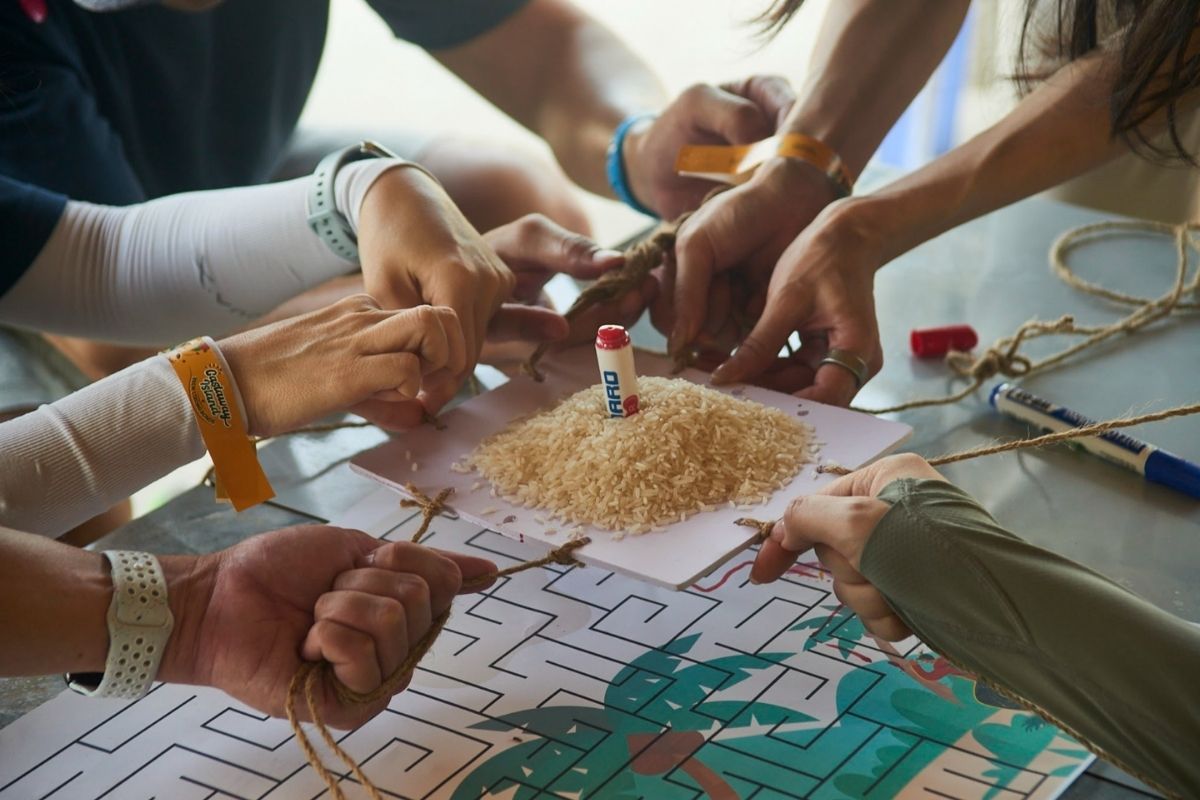
The structure borrows from the television format but drops the part that would be disastrous at work — nobody gets voted out.
Teams are assigned tribes with names, colours and identities, then progress through a series of challenges over a half or full day. Points accumulate on a visible leaderboard, and a final challenge weighted heavily enough to keep every tribe mathematically alive decides the winner.
That last detail matters more than it sounds. A survivor team building game where one tribe is uncatchable by mid-afternoon loses everyone else, so the scoring must be designed to keep the outcome genuinely open until the end.
What challenges make up a survivor day?
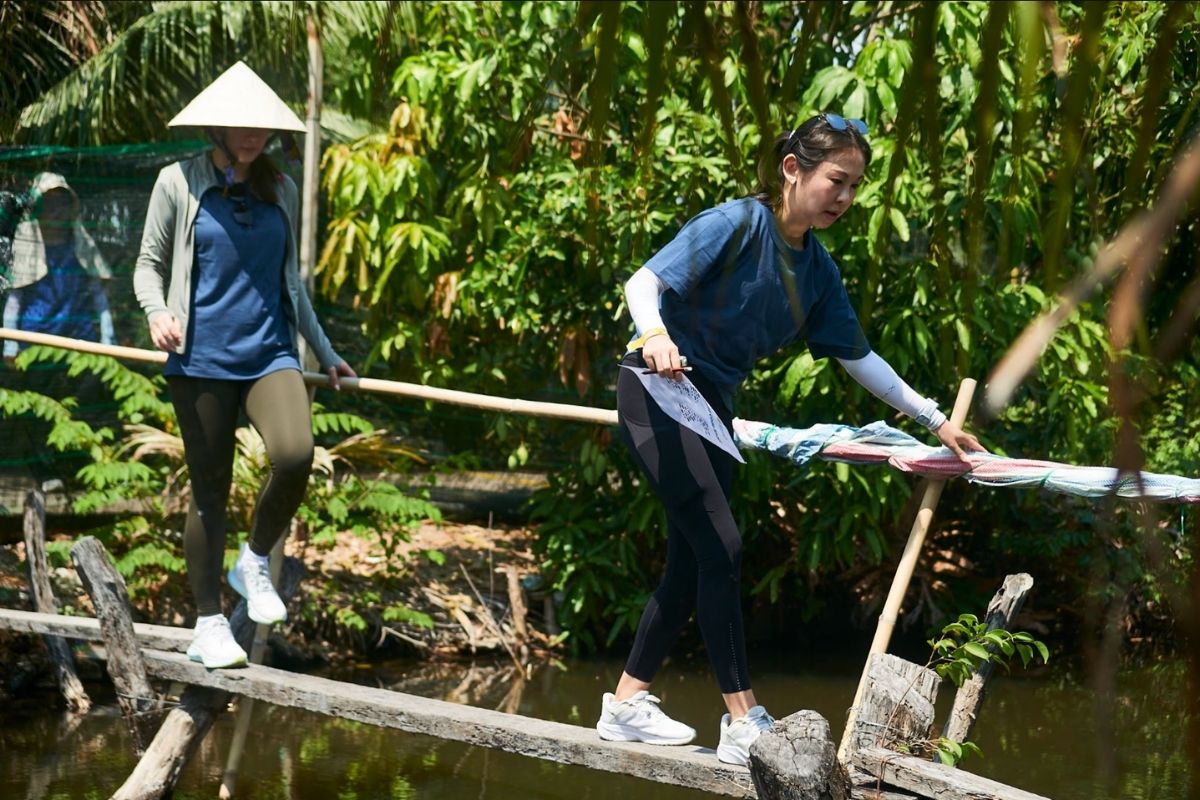
In a survivor team building game, variety is the entire point — the format works because different challenges let different people lead:
- Fire-building or ignition challenges. The iconic opener, usually with controlled modern equipment.
- Shelter construction. Building a structure from natural and supplied materials against the clock.
- Balance and endurance trials. Individual tests where the tribe’s total time counts.
- Puzzle and code challenges. Mental rounds that reward the quieter members; see problem-solving activities.
- Water challenges. Raft races or retrieval tasks; see water team building games.
- Obstacle relays. High-energy physical rounds for the athletic members.
- Tribal council creative task. A performance, chant or totem build that rewards imagination.
- The immunity final. A composite challenge combining several earlier skills.
A well-designed corporate survivor challenge alternates physical and mental rounds so no single type of person dominates the whole day.
Why does the tribe structure work?
Because identity forms remarkably fast, and it does useful work.
Give a group a name, a colour and a flag in the first fifteen minutes, and by the second challenge they are behaving like a unit rather than a set of colleagues. Tribe team building Vietnam programmes exploit this deliberately — the naming ceremony is not decoration, it is the mechanism.
The effect is strongest when tribes are deliberately mixed across departments and seniority. People who have exchanged emails for two years without meeting spend six hours building a shelter together, which does more for cross-team relationships than any amount of structured networking.
What group sizes suit the survivor format?
The survivor team building game is one of the better-scaling formats, though the design changes with size.
Small groups of 20 to 40 run three to four tribes cycling through challenge stations. Mid-size groups of 40 to 150 work best with six to ten tribes and parallel station rotation, which is the format’s sweet spot.
Large groups of 150 to 400-plus need multiple challenge zones running simultaneously with a central leaderboard and a mass final. The rule that governs everything is tribe size: eight to twelve people, or quieter members become spectators rather than participants.
What are the design pitfalls?
Four mistakes account for most disappointing survivor team building game days, and all are fixable in the planning:
- Elimination mechanics. Never remove people from play. Watching colleagues compete for three hours is humiliating, not motivating.
- Too much physical weighting. If most points come from athletic rounds, half the company disengages by the second challenge.
- Runaway scoring. An unreachable leader kills the energy of every other tribe.
- Tribes that are too large. Above twelve, participation collapses.
The first is the one that matters most. The television format’s appeal is elimination drama; a survival team building activity at work must be built on inclusion instead, or it damages exactly the relationships it is meant to build.
Where does the survivor format work best?
The setting contributes significantly to the atmosphere:
- Beaches. The classic setting — sand, water and space for parallel stations; see beach team building.
- Island locations. The most thematically complete, particularly for a company trip; see island team building.
- Resort grounds. Practical and comfortable, with facilities close by.
- Forest and nature sites. Strongest for shelter and fire challenges; see nature team building.
Vietnam’s coastline makes beach and island settings straightforward, which is why the survivor team building game is one of the most requested formats for company trips here.
How long should a survivor programme run?
A full day is the standard, and it is the length the format is designed around.
Six to seven hours allows an opening tribe formation, six to eight challenges, a lunch break and a final with an awards ceremony. That arc is what produces the narrative quality — early rivalries, a mid-day comeback, a decisive final.
A half-day version works with four challenges and a compressed final, though it loses some of the story. Anything shorter is really just a games circuit with tribal branding, which is fine but should be described honestly rather than sold as a corporate survivor challenge.
How do you debrief a survivor day?
The temptation is to skip the debrief because the awards ceremony feels like a natural ending. A ten-minute reflection is worth building in anyway.
The useful questions concern how tribes organised themselves without being told to. Who emerged as the caller in each challenge, and did that change between physical and mental rounds? How did tribes decide who sat out a round they were weak at, and was that conversation comfortable?
The most valuable observation is usually about role flexibility. The SHRM research links structured shared experiences to stronger engagement, and the survivor format’s rotating challenge types make role-switching visible in a way that ordinary work rarely does.
What does a survivor programme cost?
A survivor team building game sits at the higher end of day-format team building, and the reason is staffing.
A survivor day needs a facilitator or marshal per challenge station, plus equipment for eight different challenges, scoring infrastructure, tribe branding and awards. That is considerably more production than a single-activity session.
Against that, it replaces an entire day’s programme rather than filling two hours, so the comparison should be against a full team-building day rather than a single activity. Model the numbers with our team building cost and company trip budget guides.
A short example: when Northwind ran a survivor day for 130 people across six tribes, the winning tribe was the only one that swapped its leader between rounds — deferring to whoever was strongest at each challenge. The client used that observation in their leadership programme for the following year.
Is the survivor format right for your team?
It suits some briefs far better than others, and being honest about that saves money.
It is excellent for large mixed groups, company trips, annual gatherings and any situation where cross-department connection is the goal. The variety means almost everyone finds a round they can lead.
It is a weaker fit for a small senior team wanting focused development, where a targeted problem-solving session delivers more, or for a group with significant physical limitations, where a survivor team building game would need heavy adaptation to stay inclusive.
Matched to the right brief, it remains the most memorable single-day format available — and the one people still talk about a year later.
How do you build the tribes?
Tribe composition is the single most consequential decision of the day, and it should never be left to people choosing their own teams.
Self-selection reproduces the existing social map — departments cluster, friends group, and the cross-team connection that justifies the whole exercise never happens. Deliberate mixing is the point.
The practical method is to assign tribes in advance, balancing each for department, seniority, age and physical ability so no tribe is stacked. Distributing at least one senior person per tribe also prevents a leadership vacuum in the early rounds.
Then hand over identity immediately: name, colour, flag and a chant. Fifteen minutes spent on this at the start of a survivor team building game pays for itself by the second challenge.
What makes the final challenge work?
The final is what people remember, so it deserves disproportionate design attention rather than being whatever activity is left over.
Three principles make it land. It should combine skills from earlier rounds, so the day feels cumulative rather than episodic. It should be worth enough points that every tribe remains mathematically alive going into it. And it should be watchable, since the tribes finishing early become the audience.
A composite obstacle-and-puzzle course usually satisfies all three: physical enough to be exciting, mental enough that raw athleticism does not decide it, and visually clear enough that spectators can follow the lead changing.
Run it, then go straight into awards while the adrenaline is still up. That sequence is what gives a survivor team building game its lasting emotional peak.
Frequently asked questions about the survivor team building game
What is a corporate survivor team building game?
A day-long format where a company splits into tribes competing across physical, mental and creative challenges, accumulating points toward a final immunity challenge and awards ceremony.
Does anyone get eliminated?
No, and they should not. Corporate versions remove elimination entirely, because watching colleagues compete for hours is demoralising rather than motivating. Everyone plays every round.
How many people can play?
From 20 to 400-plus. Mid-size groups of 40 to 150 are the sweet spot, with tribes of eight to twelve people — above twelve, quieter members become spectators.
How long does a survivor programme take?
A full day of six to seven hours is standard, allowing tribe formation, six to eight challenges, lunch and a final with awards. Half-day versions work but lose narrative depth.
Is it too physical for some employees?
Not if it is designed properly. Balanced programmes weight mental, creative and physical challenges roughly equally, so every participant finds rounds where they can genuinely contribute.
Where is the best setting for a survivor day?
Beaches and islands suit the theme best and provide space for parallel stations, while forest sites work well for shelter and fire challenges. Resort grounds are the practical option.
Is the survivor format worth the cost?
For large mixed groups and company trips, generally yes, since it fills an entire day and produces lasting shared references. For small senior teams, a focused problem-solving session delivers more.
How should tribes be assigned?
Deliberately, in advance, balanced for department, seniority, age and physical ability. Self-selection reproduces existing social groups and defeats the purpose of the format.
What makes a good final challenge?
One that combines skills from earlier rounds, carries enough points to keep every tribe in contention, and is watchable for the tribes that finish first.
Plan your corporate survivor challenge
Ready to split your company into tribes with a survivor team building game they will talk about for years? Request a free proposal and we will design the challenges, scoring and setting around your group — or explore our team building service and past success stories.
“