”
Kayaking & Water Adventure Team Building
Put two colleagues in a tandem kayak and give them ninety seconds. If they are not synchronised, the boat simply spins in a circle in front of everyone — no facilitator required, no feedback form necessary.
Kayaking team building in Vietnam is the most honest activity we run. Unlike a beach game where effort can be faked, a paddle craft immediately and publicly reveals whether two people are actually coordinating or just working hard independently.
This guide covers the formats worth running, the best locations in Vietnam, group sizes, safety requirements and costs.
Why does kayaking work so well for teams?
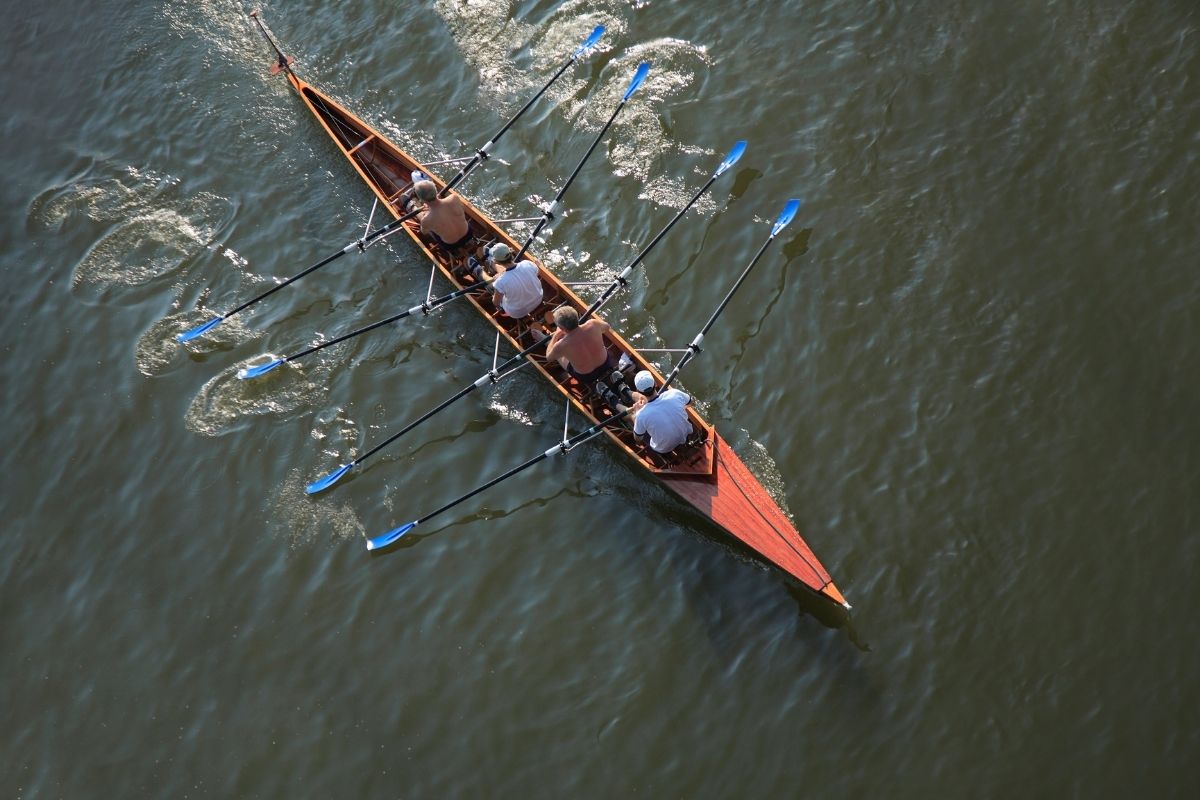
Because coordination beats effort, and that lesson is unusually difficult to argue with.
Two strong paddlers out of sync move slower than two moderate paddlers in rhythm. Kayaking team building Vietnam programmes demonstrate that within the first minute, and the transfer to workplace collaboration barely needs stating.
There is a second effect. Paddling requires continuous low-level communication — short corrections, constant small adjustments — which is exactly the kind of ongoing coordination most project teams are bad at. The SHRM research links structured shared experiences to stronger engagement, and few structures are as unforgiving as a tandem boat.
What kayaking formats work for corporate groups?
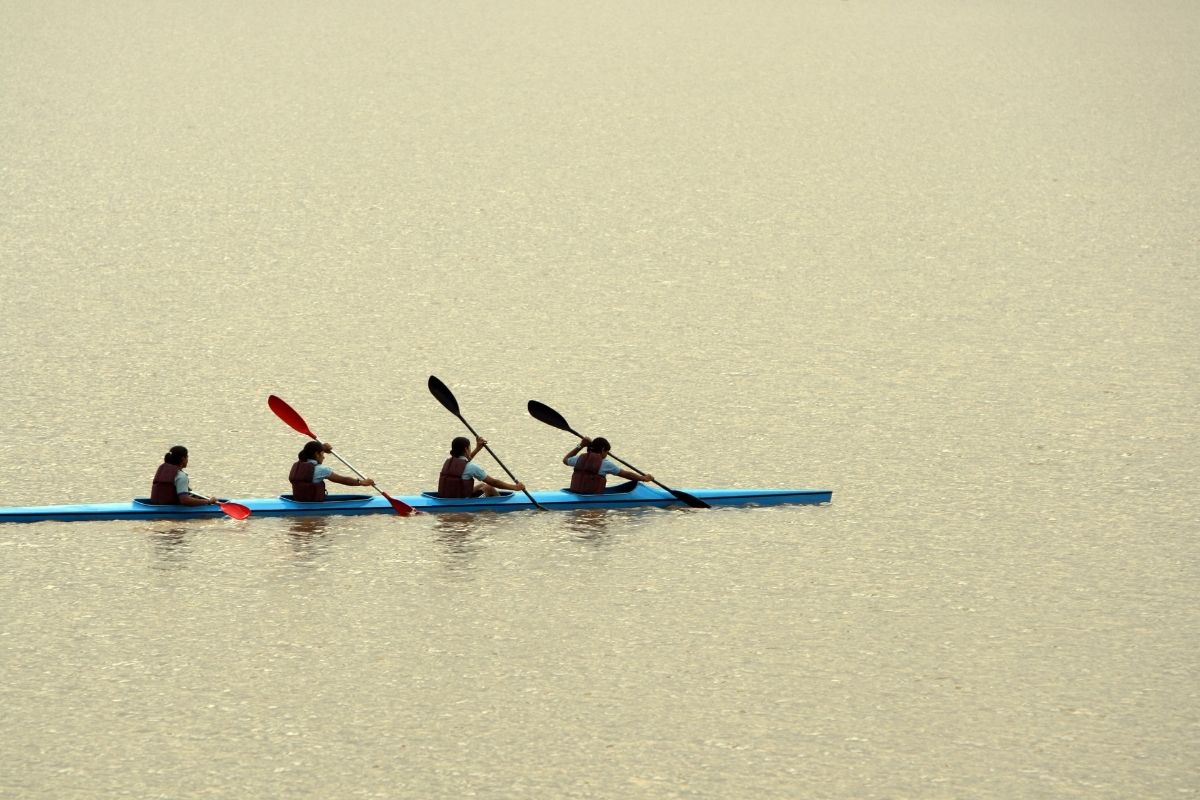
Straight paddling gets dull quickly. These kayaking team building Vietnam formats keep it purposeful:
- Tandem sprint races. Short, competitive heats where synchronisation decides the result.
- Navigation challenges. Teams paddle a route between marked waypoints collecting items.
- Kayak treasure hunts. Clue-based missions across a bay or lagoon.
- Cargo transport challenges. Moving objects between points without capsizing.
- Blind paddling. One paddler navigates under verbal instruction from the other.
- Team relay circuits. Boat handovers that test transitions under pressure.
The blind paddling variant is the strongest diagnostic in the set, because it isolates verbal instruction completely — and it is where most teams discover their briefing habits are worse than they thought.
What about rafting and other paddle formats?
Kayaking team building Vietnam is not the only paddle option, and the alternatives suit different objectives:
- White-water rafting. Six to eight people in one boat responding to a single caller — the best format for testing whether a team follows direction under genuine stress.
- Stand-up paddleboarding. Individual balance with team relay formats; produces the most laughter.
- Dragon boat racing. Large-group synchronisation at scale, up to twenty paddlers per boat.
- Traditional dugout racing. A cultural variant, strong on lakes such as Lak Lake in the Central Highlands.
Rafting team building Vietnam options are more limited than kayaking, since suitable white-water rivers are concentrated in specific regions and seasons. For most corporate groups, sheltered-water kayaking is the practical choice.
Where is best for kayaking in Vietnam?
For kayaking team building Vietnam, conditions vary considerably and matching location to ability matters:
- Ha Long Bay and Lan Ha Bay. The signature setting — sheltered water between limestone karsts; see Ha Long Bay company trips.
- Nha Trang. Calm bay conditions ideal for beginners and mixed-ability groups.
- Phu Quoc. Clear water with island-hopping potential; see Phu Quoc activities.
- Son Tra, Da Nang. Coastal paddling minutes from the city; see Son Tra team building.
- Mekong Delta canals. Flat, sheltered water with cultural interest; see Mekong team building.
Ha Long and Lan Ha are the most spectacular, but a kayaking corporate activity there depends on sea conditions — always worth a land-based contingency.
What group sizes work?
For kayaking team building Vietnam, equipment inventory is the binding constraint, and it is worth confirming before committing to a format.
Small teams of 10 to 30 can all be on the water simultaneously at most operators. Mid-size groups of 30 to 80 usually rotate in waves, with a beach or land activity running in parallel so nobody waits idle.
Large groups above 80 need either a major operator with substantial fleet capacity, or a switch to dragon boats, which carry far more people per craft. Booking kayaking team building Vietnam for 200 people without checking fleet size is a common and expensive planning error.
What safety requirements apply?
Kayaking team building Vietnam carries genuine risk, and the standards here are not negotiable:
- Life jackets for every participant, regardless of stated swimming ability.
- Safety boat cover on the water for the duration of the activity.
- Qualified instructors with a briefed capsize and recovery procedure.
- A swimming-ability check collected discreetly in advance.
- Clear weather and sea-state thresholds for postponing.
- Sun protection and hydration, since open water is deceptively exposed.
A credible operator raises all of this unprompted. See our water team building games guide for the broader safety picture across water formats.
Is kayaking suitable for everyone?
More than people assume, but it needs honest handling.
Tandem kayaks accommodate mixed ability well, since a stronger paddler can pair with a less confident one. Sheltered bay conditions are manageable for almost anyone in a life jacket, and no prior experience is required for the formats above.
The genuine exclusions are shoulder and back injuries, which paddling aggravates, and severe anxiety around deep water. Both are handled the same way: a parallel beach activity of equal status, offered without anyone having to justify themselves.
Framed properly, a kayaking corporate activity includes far more of a team than a running or contact-sport format would.
How do you debrief a paddling session?
The metaphors here are almost too convenient, which is precisely why the debrief works.
Ask what happened in the first thirty seconds — most pairs start out of sync and have to negotiate a rhythm, which mirrors project kick-offs exactly. Ask who set the pace and whether that was agreed or assumed. Ask what the pair did when they started drifting off course, and how long it took them to notice.
Then bridge to work: where else does this team work hard in slightly different directions? That question, asked while everyone is still wet and laughing, tends to land more honestly than it would in a meeting room.
What does kayaking team building cost?
Kayaking team building Vietnam costs sit in the mid range, driven by equipment rental and mandatory safety staffing.
Kayak hire, instructors, safety boat cover and transfers are the main line items. Rafting costs more because rivers require higher guide ratios and specialist equipment, while paddleboarding is generally cheaper.
The cost that should never be trimmed is safety cover. Beyond that, kayaking team building Vietnam is reasonable value given the strength of the experience. Model the numbers with our team building cost guide.
A short example: when Aldridge & Co ran tandem sprint heats for 36 people in Nha Trang, the winning pair were the two quietest people in the company — a data analyst and a warehouse supervisor who had never worked together. Neither was strong; they simply counted their strokes out loud from the start.
How does kayaking compare with other water activities?
Each water format solves a different brief:
- Versus beach games. Beach formats are more inclusive and cheaper; kayaking produces a sharper lesson about coordination.
- Versus snorkelling. Snorkelling is exploratory and calm; kayaking is competitive and demanding.
- Versus dragon boats. Dragon boats scale to far larger groups; tandem kayaks expose individual pair dynamics better.
The strongest programmes combine them across a day — kayaking heats in the morning while energy is high, then beach games and a social close. Our beach team building guide covers building that full programme.
How do you structure a paddling session?
A good session builds skill before it introduces competition, which is the opposite of what most rushed programmes do.
The opening twenty minutes cover technique and safety on flat water, letting pairs find a rhythm before anything is scored. Short sprint heats follow while energy is high, then a navigation or treasure-hunt format that rewards planning over raw speed.
The blind paddling round works best late, once pairs trust each other enough for one to close their eyes. A relaxed paddle back and a beachside debrief closes the session.
Total time on the water should stay around ninety minutes to two hours. Beyond that, shoulder fatigue and sun exposure erode the energy that makes kayaking team building Vietnam effective in the first place.
When is the best season for paddling?
Season matters more for water activities than for anything on land, because sea state governs whether the session runs at all.
In the north, including Ha Long and Lan Ha Bay, the most reliable window runs from roughly March to May and again in the autumn, avoiding both winter mist and the summer storm season.
Along the central coast around Da Nang, conditions are best from around February to August. In the south, including Phu Quoc and Nha Trang, the drier months from November to April generally offer the calmest water.
Sheltered locations such as the Mekong canals and inland lakes are far less seasonal, which makes them the dependable choice when dates are fixed and cannot move around the weather.
Frequently asked questions about kayaking team building in Vietnam
Why is kayaking good for team building?
Because coordination beats effort. Two paddlers out of sync move slower than two moderate paddlers in rhythm, which demonstrates the value of synchronisation within the first minute on the water.
Do participants need kayaking experience?
No. The formats used for corporate groups run in sheltered water with instruction and life jackets, and tandem boats let stronger paddlers pair with less confident colleagues.
Where is best for corporate kayaking in Vietnam?
Ha Long and Lan Ha Bay for spectacle, Nha Trang for calm beginner-friendly conditions, Phu Quoc for clear water, Son Tra for city proximity and the Mekong for flat sheltered canals.
How many people can join a kayaking session?
Small groups of 10 to 30 usually paddle simultaneously. Groups of 30 to 80 rotate in waves, and above 80 you need a large fleet or a switch to dragon boats.
What safety cover does kayaking need?
Life jackets for everyone, safety boat cover on the water, qualified instructors with a capsize procedure, an advance swimming-ability check and clear weather thresholds.
Is kayaking suitable for mixed-ability teams?
Yes, in tandem boats and sheltered water. The genuine exclusions are shoulder or back injuries and severe water anxiety, which should be handled with an equal-status alternative activity.
What is the best kayaking format for teams?
Blind paddling, where one person navigates under verbal instruction from the other, is the strongest diagnostic because it isolates briefing and communication completely.
When is the best season for kayaking in Vietnam?
March to May and autumn in the north, February to August on the central coast, and November to April in the south. Sheltered canals and lakes are far less seasonal.
How long should a kayaking session last?
Ninety minutes to two hours on the water. Beyond that, shoulder fatigue and sun exposure erode the energy that makes the activity effective.
Plan your kayaking team building session
Ready to find out whether your team actually coordinates with kayaking team building in Vietnam? Request a free proposal and we will match the location, formats and safety plan to your group — or explore our team building service and past success stories.
“