”
Incentive Trips to Da Nang: Reward Programs
A bonus disappears into a bank account and is forgotten by the next payday. A trip your top performers had to earn gets retold at every team dinner for the following two years — and their colleagues start asking how to qualify.
An incentive trip to Da Nang works because central Vietnam delivers genuine variety within a compact area: a beach, a mountain resort, a UNESCO heritage town and an international airport, all within an hour of each other.
This guide covers how to design an incentive trip Da Nang programme that actually motivates — the structure, activities, venues, group sizes, and what it costs.
Why does incentive travel outperform cash?

Because of how the two are remembered. Cash is absorbed into household budgets and becomes invisible; a trip becomes a story with photographs attached.
There is also a social dimension cash lacks entirely. An incentive trip Da Nang programme is visible to the whole company — the people who did not qualify watch the photographs appear, which is precisely what drives next year’s performance.
The Incentive Research Foundation studies non-cash reward programmes and their effects on motivation and retention, and the recognition dimension consistently emerges as central. For the wider category, see our incentive travel guide.
Why choose Da Nang for an incentive programme?
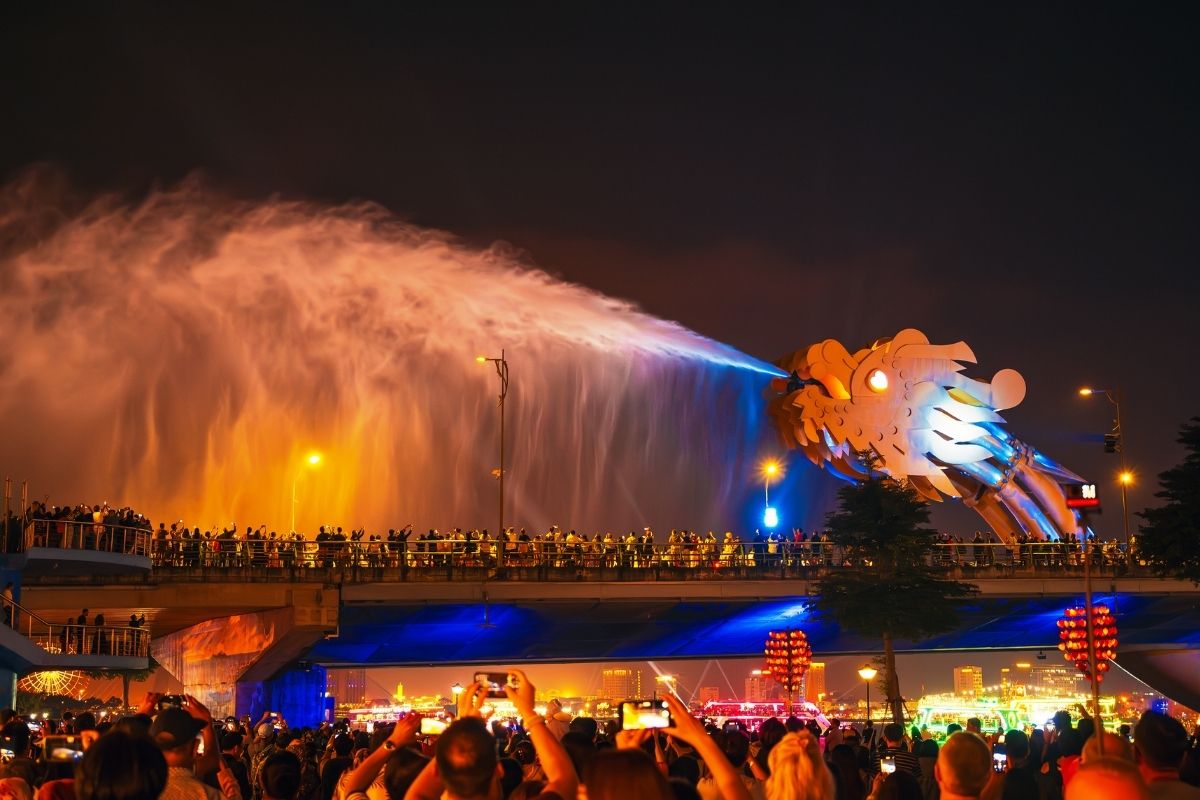
Because it solves the central design problem of incentive travel: the destination must feel genuinely special, but it also has to be reachable without burning two days in transit.
Da Nang manages both. An international airport sits fifteen minutes from the beach, and within an hour you have My Khe’s coastline, the Ba Na Hills mountain resort and Hoi An’s lantern-lit heritage town.
That density means a Da Nang incentive program can deliver three genuinely different experiences in three days, which is what stops a reward trip feeling like a beach holiday with a company logo attached.
How do you structure an incentive programme?
An incentive trip Da Nang structure that works has a clear arc rather than a list of activities:
- Arrival and welcome. An upgrade moment — a room upgrade, a welcome gift, something that signals this is not an ordinary business trip.
- The signature experience. The one thing people will describe afterwards, usually on day two.
- Free time. Genuinely unscheduled, because over-programming a reward turns it back into work.
- The recognition moment. A gala or awards dinner where achievement is named publicly.
- A considered departure. A relaxed final morning rather than a 5am airport run.
The recognition moment is the element most often under-designed. A reward trip Da Nang programme without an explicit ceremony delivers a nice holiday rather than genuine recognition.
What experiences suit an incentive trip?
Incentive trip Da Nang activities differ from team building — the emphasis is on aspiration rather than challenge:
- A private beach gala. Torches, staging and a plated dinner on the sand.
- Ba Na Hills and the Golden Bridge. The signature photograph of central Vietnam; see Ba Na Hills.
- A Hoi An lantern evening. Culture and spectacle; see Hoi An team building.
- Sunset cruises and boat charters. Exclusive-feeling and highly photogenic.
- Golf at championship courses. A staple for senior incentive groups.
- Spa and wellness sessions. The most underrated inclusion, and consistently well received.
The design test for a Da Nang incentive package is simple: would a qualifier pay for this themselves? If yes, it belongs.
What venues suit an incentive group?
For an incentive trip Da Nang, accommodation standard matters more than in any other programme type, because the reward is partly the standard itself:
- Beachfront five-star resorts. The default for a premium incentive trip Da Nang programme.
- Integrated resort complexes. Golf, spa, multiple restaurants and event space in one property.
- Boutique heritage properties. Character over scale, strongest near Hoi An.
- Villa buy-outs. Exclusivity for smaller top-tier groups.
See our Da Nang venues guide for capacities and gala spaces in detail.
What group sizes work?
An incentive trip Da Nang group is usually smaller than a company trip, since qualification limits numbers by design.
Small groups of 10 to 40 get the most premium experience — villa buy-outs, private dining and genuinely bespoke touches. Mid-size groups of 40 to 150 are the most common, working comfortably at a single resort with a private gala.
Large programmes of 150 to 500-plus are possible given Da Nang’s resort inventory, though above 200 the experience shifts from exclusive toward conference-like, and maintaining a sense of privilege takes deliberate design.
When should you run a Da Nang incentive trip?
Timing matters more for incentive travel than for team building, because weather directly affects a reward experience.
The dry season from roughly February to August gives the calmest seas and clearest skies — essential when the beach gala is the centrepiece. The later months carry higher rain risk, which is manageable for a working trip but undesirable for a reward.
Qualification periods should be set backwards from this window. Running an incentive trip Da Nang programme in the wet season because that is when the sales year happens to end is a common and avoidable mistake.
How do you communicate the programme?
This is where most incentive trip Da Nang schemes lose their value, and it costs nothing to fix.
The trip must be visible from the moment qualification opens. Photographs, the resort name and the itinerary should circulate throughout the qualification period, because the motivational effect comes from anticipation as much as from the trip itself.
Progress visibility matters equally — people need to know where they stand against the threshold while there is still time to act.
Afterwards, the content is a company asset. A well-photographed Da Nang incentive program produces material for internal channels, recruitment pages and next year’s launch, which is why professional photography belongs in the budget rather than being left to phones.
What does an incentive trip to Da Nang cost?
An incentive trip Da Nang carries a higher per-head cost than a team-building trip, and that premium is functional rather than wasteful — the standard is part of the reward.
The main drivers are flights, four or five-star accommodation, the gala production, signature experiences and professional photography. Free time reduces activity cost while increasing perceived value, which is a rare combination.
Set against the retention and performance effect, a well-run reward trip Da Nang programme generally compares favourably with an equivalent cash bonus pool. Model the numbers with our incentive travel cost and company trip budget guides.
A short example: when Coastline Mutual sent its top 45 performers to Da Nang, the awards dinner on the sand — names read out individually, with the bay behind — produced a photograph the company used to launch the following year’s programme. Qualification enquiries that quarter more than doubled.
How does Da Nang compare with Phu Quoc for incentives?
Both are strong, and the choice comes down to what kind of reward you are signalling:
- Da Nang offers variety — beach, mountain and heritage in one trip, with the easiest international access.
- Phu Quoc offers island exclusivity and a stronger sense of escape, with visa-free access advantageous for mixed-nationality groups; see Phu Quoc incentive trips.
For a programme where the itinerary needs to feel packed with distinct experiences, an incentive trip Da Nang wins. For pure island reward, Phu Quoc has the edge. Our Da Nang vs Phu Quoc comparison covers the trade-offs in full.
How do you measure incentive programme return?
Incentive travel is one of the few event categories where measurement is genuinely straightforward, because qualification data already exists.
The primary measure is performance against the qualification threshold — comparing the qualifying period against the equivalent prior period, and specifically watching the group just below the threshold, where the motivational effect shows most clearly.
Retention is the second measure. Qualifiers are usually high performers, and tracking their retention against the wider population over the following year captures much of the programme’s value.
Participation in the next cycle is the third. When enquiries about qualifying rise after the photographs circulate, the incentive trip Da Nang programme has done its job as a motivational instrument rather than merely as a reward.
Should partners be included?
It is one of the more consequential design decisions, and it is worth thinking about properly rather than defaulting either way.
Including partners raises the perceived value of qualifying substantially, because the reward extends into the qualifier’s home life rather than being another trip away from it. For sales roles with heavy travel, that distinction matters enormously.
The complications are real though. Partner attendance changes group dynamics, roughly doubles accommodation and catering, and requires a parallel activity programme so partners are occupied during any business content.
The common compromise is offering partner places at a subsidised rate rather than free. That keeps the perceived value high while sharing the cost, and it lets qualifiers self-select rather than the company guessing.
Frequently asked questions about incentive trips to Da Nang
Why is Da Nang good for incentive travel?
Because it combines an international airport with a beach, the Ba Na Hills mountain resort and Hoi An’s heritage town within an hour, delivering three distinct experiences in a short trip.
Why use travel instead of a cash bonus?
Cash is absorbed into household budgets and forgotten, while a trip becomes a memorable story with photographs — and it is visible to colleagues, which drives future qualification.
How long should an incentive trip be?
Three to four days is standard — enough for a signature experience, a gala and genuine free time, without extending time away from work beyond what qualifiers can take.
What is the most important element of an incentive programme?
The recognition moment. A gala or awards dinner where achievement is named publicly is what separates genuine recognition from a company-funded holiday.
How many people can join an incentive trip to Da Nang?
From 10 to 500-plus. Groups of 40 to 150 are most common; above 200 the experience becomes conference-like and needs deliberate design to retain exclusivity.
When is the best time for a Da Nang incentive trip?
The dry season from around February to August, when calm seas and clear skies support a beach gala. Qualification periods should be set backwards from this window.
Should free time be included?
Yes, genuinely unscheduled time is essential. Over-programming a reward trip turns it back into work and undermines the entire premise of the programme.
How do you measure incentive programme success?
Performance against the qualification threshold versus the prior period, retention of qualifiers over the following year, and enquiry volume for the next cycle.
Should qualifiers bring partners?
Often worth offering as a paid or partially subsidised option, since it significantly increases the perceived value of qualifying without proportional cost to the company.
Plan your Da Nang incentive programme
Ready to reward your top performers with an incentive trip to Da Nang they will talk about for years? Request a free proposal and we will design the programme, venues and recognition moment around your qualifiers — or explore our incentive travel service and past success stories.
“