”
18 Funny Team Building Games for the Office
Laughter is the one team-building outcome you cannot fake, schedule or measure — and it is also the one that most reliably makes people want to come back tomorrow.
Funny team building games serve a genuine purpose. They lower defences faster than any structured exercise, they cost almost nothing, and they work in a meeting room on a Tuesday afternoon without a venue, a budget line or a proposal.
This guide covers eighteen games that reliably get laughs, organised by format, plus how to run them without the cringe that ruins most attempts.
Why do funny games actually matter?
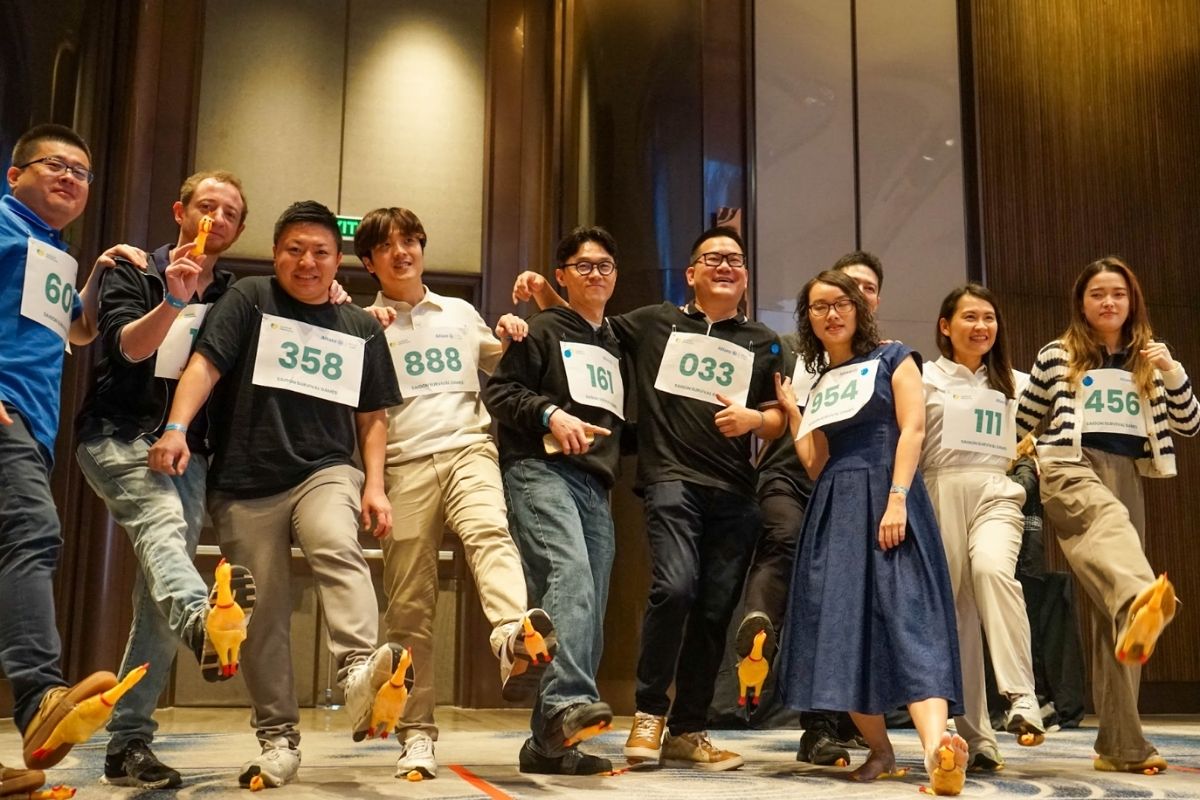
Because shared laughter builds trust quickly, and trust is the precondition for everything else a team needs to do.
The mechanism is simple: looking slightly ridiculous in front of colleagues, voluntarily, is a small act of vulnerability. When everyone does it at once, the group’s tolerance for being imperfect in front of each other rises measurably.
That matters beyond morale. The SHRM research links shared experiences to stronger engagement, and funny team building games are the cheapest, fastest version of that experience available to any manager.
What are the best minute-to-win-it games?
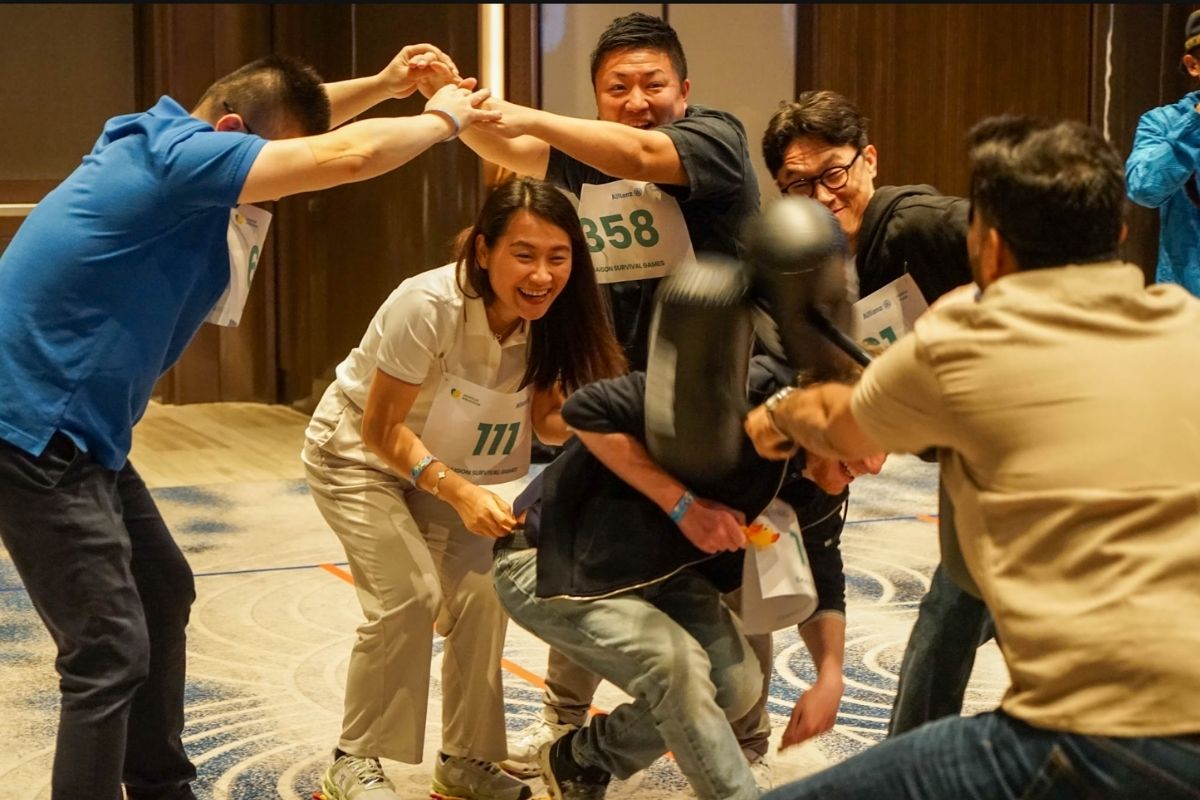
These sixty-second funny team building games are the backbone of the category — simple, visual and reliably absurd:
- Cookie face. Move a biscuit from forehead to mouth using only facial muscles.
- Stack attack. Build and dismantle a cup pyramid against the clock.
- Junk in the trunk. Empty a tissue box strapped to your waist by shaking alone.
- Nose dive. Transfer cotton balls using petroleum jelly on your nose.
- Chopstick challenge. Move small objects between bowls one-handed.
- Balloon keep-up. Keep several balloons airborne as a team without using hands.
Minute to win it corporate formats work because everyone understands the rules instantly and failure is funnier than success — which removes the performance pressure that kills participation.
What quick games work in a meeting room?
These funny team building games need no equipment and fit into fifteen minutes before a meeting:
- Two truths and a lie. The classic, and still effective with a new team.
- Desert island defence. Each person defends one absurd item they would bring.
- Whose desk is it? Photographs of workspaces, guess the owner.
- The story chain. Each person adds one sentence, building an increasingly ridiculous narrative.
- Reverse charades. The group acts, one person guesses — far funnier than the original.
- Emoji translation. Describe your week in emojis for others to interpret.
Quick fun office games like these are the ones a manager can run without approval, budget or planning, which is exactly why they get used.
What larger-group party games work?
For company events, galas and trips, these scale to a room of any size:
- Human bingo. Find colleagues matching squares — the best mingling icebreaker.
- Lip sync battle. Team performances, reliably the highlight of any gala.
- The newlywed game, work edition. Pairs answer questions about each other.
- Office olympics. Absurd events using stationery; see mini olympics.
- Guess the baby photo. Predictable, and it works every single time.
- Charades relay. A tournament format for large groups.
These hilarious team bonding games pair naturally with a party or awards evening, where the atmosphere already supports a bit of nonsense.
How do you avoid the cringe?
This is the part that matters, because badly run funny games are worse than no games at all.
Three rules prevent most disasters. Keep them short — a game that outlasts the laugh becomes an ordeal. Make participation genuinely optional, because forced fun is a contradiction and everyone in the room knows it.
And never single out individuals for embarrassment. Games where the whole group looks silly together build connection; games where one person is the spectacle build resentment.
The fourth rule is about seniority: a leader who plays first and badly gives everyone else permission. A leader who watches from the side turns funny team building games into a compulsory performance for the boss.
What group sizes suit each format?
Matching funny team building games to the room prevents the most common failure — half the group watching:
- 4 to 12 people. Meeting-room games, two truths and a lie, story chains.
- 12 to 40 people. Minute-to-win-it tournaments with teams competing in rotation.
- 40 to 150 people. Human bingo, charades relays, office olympics with parallel stations.
- 150-plus. Stage-based formats such as lip sync battles, with the audience as participants.
Above forty, the rule is participation in parallel rather than in sequence, or the energy dies while people wait their turn.
When should you run funny games?
Timing affects how they land more than the choice of game does.
They work best as an opener, warming a room before serious content, or as a closer, sending people out on energy. They work worst immediately after difficult news, when forced levity feels dismissive rather than lifting.
Mid-afternoon is the natural slot in a long agenda — the post-lunch dip is a genuine physiological reality, and ten minutes of nonsense outperforms another coffee.
For a full programme, quick fun office games are best used as connective tissue between more substantial sessions rather than as the main event.
Do funny games work for senior teams?
Yes, with adjustment — and the adjustment is mostly about framing rather than content.
Senior groups resist anything that feels like it was designed for a school assembly. The same game framed as a competitive challenge, with a leaderboard and a trophy, lands entirely differently from the same game framed as “”let’s all have fun together.””
Wit works better than slapstick at this level. Desert island defence, reverse charades and the newlywed game reward verbal quickness, which senior groups genuinely enjoy competing on.
And the seniority rule applies doubly: if the most senior person in the room plays first and loses cheerfully, the rest follows.
What do these games cost?
Almost nothing, which is the entire point of funny team building games as a category.
Most need only stationery, balloons, plastic cups and biscuits. A full minute-to-win-it tournament for forty people can be equipped for less than the cost of a single catered lunch.
The only genuine cost is time and a competent host. If you are running funny team building games as part of a larger event, a professional MC is worth the money purely for pacing — knowing when to cut a game that has peaked is a real skill. Model the wider numbers with our team building cost guide.
A short example: when Brightlane opened its annual meeting with reverse charades, the CFO acting out “”quarterly forecast”” for a room of ninety became the reference joke for the rest of the year. Total cost: a printed list of words.
How do funny games fit a larger programme?
They are the connective tissue, not the structure. A day built entirely on laughs feels great and changes nothing.
The strongest programmes use them deliberately: a funny opener to warm the room, a substantial activity or workshop in the main block, and a light closer. See our icebreaker games guide for openers specifically, and problem-solving activities for the substantive middle.
Used that way, hilarious team bonding games make the serious parts of a programme work better, because a group that has laughed together talks more honestly afterwards.
How do you host these games well?
The host matters more than the game, and a few habits separate a session that lands from one that limps.
Demonstrate rather than explain. Thirty seconds of showing beats two minutes of rules, and it gives permission by making the host the first person to look silly.
Cut games at their peak rather than running them to a natural end. The instinct is to let everyone finish; the better move is to stop while people still want more.
Read the room continuously. If a game is not landing within ninety seconds, abandon it cheerfully and move on — treating funny team building games as disposable is exactly what keeps the energy up.
Do these work for remote and hybrid teams?
Yes, with adaptation, and remote teams arguably need them more since informal interaction does not happen by accident on a video call.
The formats that translate best are verbal rather than physical. Two truths and a lie, desert island defence, the story chain and emoji translation all work unchanged over video, because they rely on talking rather than moving.
Some minute-to-win-it challenges also adapt well, with everyone attempting the same task simultaneously at their own desk using household items. The shared absurdity of eight people balancing biscuits on their faces on a grid of webcams is genuinely effective.
Keep remote sessions shorter than in-person ones — ten minutes rather than twenty — since video fatigue sets in faster and the energy is harder to read through a screen.
Frequently asked questions about funny team building games
What are the best funny team building games?
Minute-to-win-it challenges such as cookie face and stack attack, reverse charades, human bingo and lip sync battles are the most reliable across different group sizes and settings.
How do you avoid team building games feeling cringeworthy?
Keep them short, make participation genuinely optional, never single out individuals for embarrassment, and have the most senior person play first and badly.
Do funny games work for senior leadership teams?
Yes, when framed as competition with a leaderboard rather than enforced fun, and when the games reward wit rather than slapstick — reverse charades and desert island defence work well.
How long should a funny game last?
Sixty seconds to five minutes each, and no more than fifteen to twenty minutes for a whole session. A game that outlasts the laugh becomes an ordeal.
What equipment do office games need?
Very little — stationery, balloons, plastic cups and biscuits cover most formats. A full tournament for forty people costs less than a catered lunch.
When is the worst time to run funny games?
Immediately after difficult news such as layoffs or bad results, when forced levity feels dismissive. The post-lunch dip in a long agenda is the ideal slot instead.
Can funny games replace a proper team building programme?
No. They are connective tissue that makes serious sessions work better, but a day built entirely on laughs produces morale without developing any capability.
How should a host introduce a game?
By demonstrating rather than explaining. Thirty seconds of showing beats two minutes of rules, and it gives permission by making the host the first to look silly.
What if a game is not working?
Abandon it cheerfully within about ninety seconds and move on. Treating these games as disposable is exactly what keeps the energy in the room high.
Plan your team’s next session
Want funny team building games that actually land, built into a programme that does something? Request a free proposal and we will design the session around your team — or explore our team building service and past success stories.
“