”
Corporate Event Trends in Vietnam for 2026
The question planners used to ask about Vietnam was whether it could handle their group. In 2026 the question has changed entirely: it is now what delegates will remember afterwards.
That shift underpins most corporate event trends Vietnam 2026 planners are dealing with. The market has matured past proving it has capacity, and the competition has moved to experience, sustainability and destination distinctiveness.
This guide covers the trends that are actually changing programmes, what they mean practically, and which are worth building into your planning.
What is happening to the market?
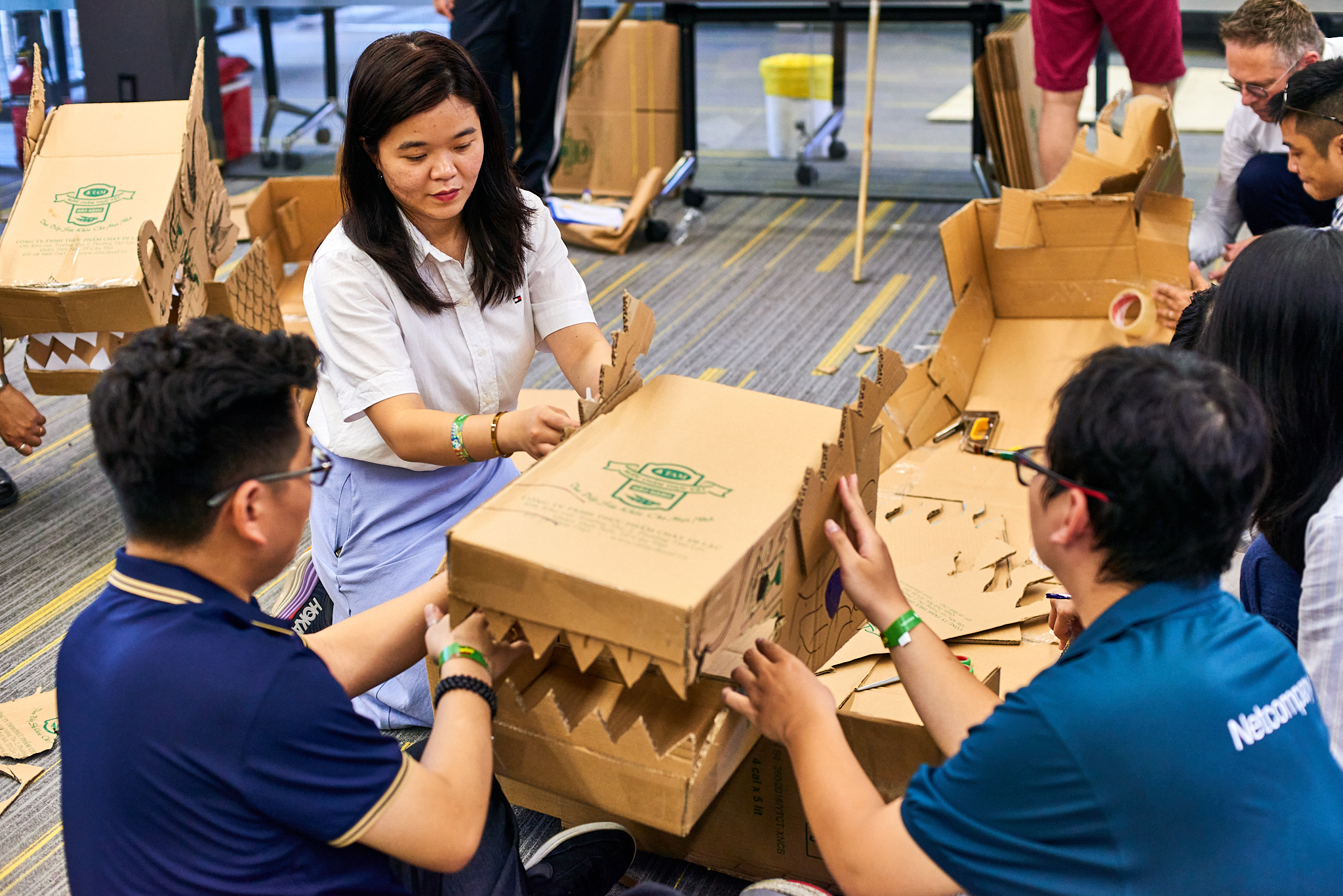
Context matters for understanding corporate event trends Vietnam 2026, because it explains why so much is changing at once.
Vietnam’s MICE sector has been on a sustained growth path, with market estimates placing it in the region of US$7.7 billion for 2026 and projecting continued expansion through the early 2030s. Corporate buyers account for roughly half that activity, with meetings the largest segment and exhibitions growing fastest.
Policy has moved in the same direction. Recent national measures have reduced VAT on event-related activity and introduced incentives aimed at cultural and events industries, while infrastructure investment has continued across airports and expressways.
For planners, the practical translation of these MICE trends Vietnam is straightforward: more capacity, more competition between venues, and a stronger negotiating position than a few years ago.
Trend one: experience over capacity
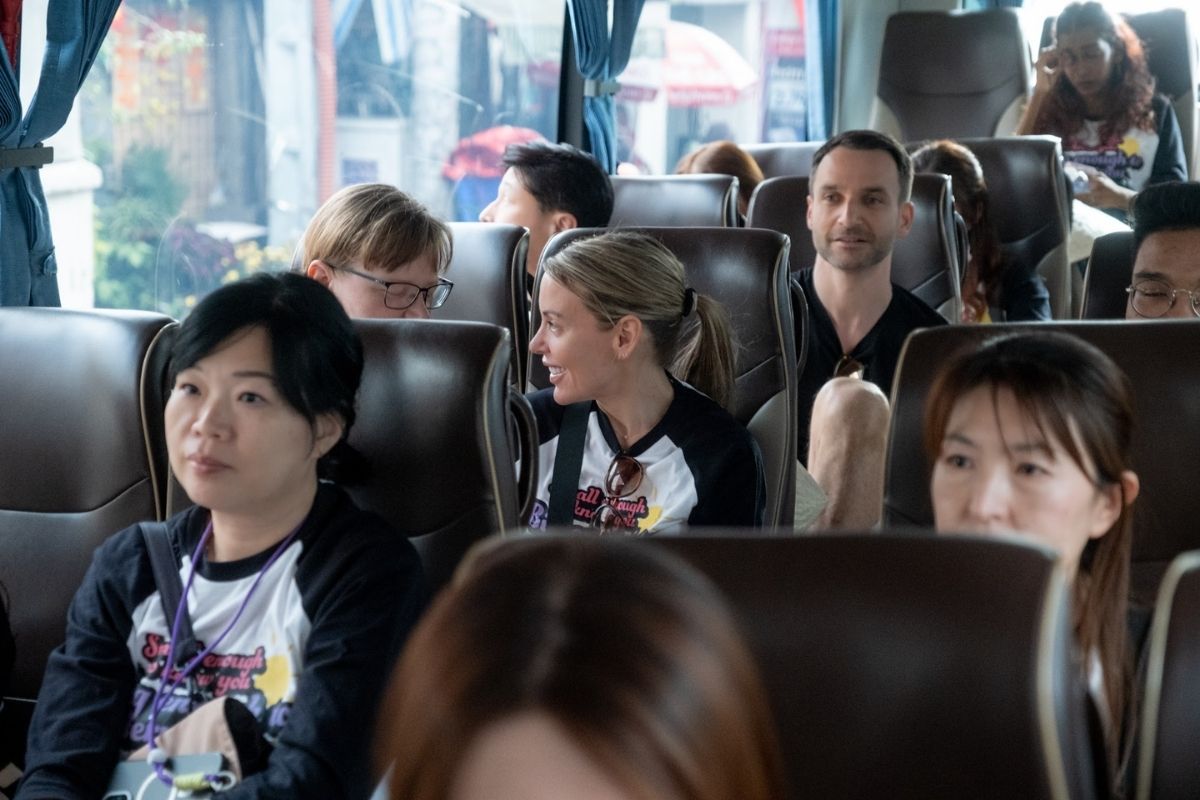
The defining corporate event trends Vietnam 2026 shift. Venue capacity is now assumed rather than sold, so properties and destinations compete on what delegates actually experience.
Practically, this means programmes increasingly blend the meeting with the destination — a conference session in the morning, a cultural activity in the afternoon, a gala somewhere with genuine character rather than the ballroom downstairs.
It also means the “”wow moment”” has become a standard expectation rather than a premium extra. Among corporate event trends Vietnam 2026 buyers are responding to, this is the one that most changes how a programme is designed. See our unique event venues guide for options beyond the hotel ballroom.
Trend two: sustainability moves from optional to expected
Sustainability requirements now appear in briefs that would have ignored them three years ago, driven largely by international parent companies with reporting obligations.
What this looks like in practice: digital rather than printed materials, refillable water stations, local and seasonal catering, measured food-waste reduction, and venue selection that considers energy and waste practices.
For formal reporting, ISO 20121 provides an event sustainability management standard, and aligning activity to the UN Sustainable Development Goals gives a recognised reference framework.
The honest caution is that greenwashing is increasingly visible to employees. A programme that flies 200 people to an island and plants ten trees is not a sustainability initiative, and staff notice.
Trend three: emerging destinations gain ground
Improved road and air infrastructure has made destinations viable that were impractical for corporate groups a few years ago.
Quy Nhon, Ninh Binh, Buon Ma Thuot and the Mekong Delta are all now realistic options for programmes that would previously have defaulted to Da Nang, Phu Quoc or Nha Trang.
The driver is partly novelty — companies that have run three trips to the same beach are actively looking for something their staff have not done. See our guides to Quy Nhon, Ninh Binh and Buon Ma Thuot.
Trend four: smaller, higher-quality groups
A quieter shift among corporate event trends Vietnam 2026, but a consistent one: many companies are choosing several smaller, better programmes over one large annual event.
The logic is that a 300-person event delivers energy but little genuine connection, whereas four 75-person department programmes address specific dynamics and allow real conversation.
This also reflects budget reality. Among team building trends 2026 planners report, splitting the annual event into targeted sessions is often a response to flat budgets rather than growing ones — and it frequently produces better outcomes anyway. See our department team building guide.
Trend five: bleisure and extended stays
The blending of business and leisure travel has become standard rather than exceptional, particularly for regional delegations.
Practically, this means building in free time, offering partner programmes, and choosing destinations where delegates might genuinely want to extend their stay at their own expense.
For planners, the implication is that destination appeal now affects attendance rates. A conference in a place people want to visit fills more easily than an identical agenda somewhere purely functional.
Trend six: purpose-led programmes
CSR elements have moved from an occasional add-on to a regular component, and expectations about their quality have risen.
Token activities are increasingly recognised as such. What works is measurable outcomes, genuine community partnership rather than staged photography, and a connection to the company’s actual commitments.
The generational factor is real: younger employees consistently value purpose-led activity more highly, and for companies competing for talent this is a retention consideration rather than a public-relations one. See our purpose-driven team building and CSR team building guides.
Trend seven: hybrid formats settle into a realistic role
After several years of overstatement, hybrid has found a sensible position — useful for conference content reaching a wider audience, largely irrelevant for team building.
The realistic assessment is that hybrid works for information transfer and fails for relationship building. Companies that tried to run hybrid team building have mostly stopped.
Where it does matter is in extending conference reach without extending travel cost, which is a genuine efficiency. See our virtual team building guide for what does and does not translate.
What do these trends mean for planning?
Four practical implications follow from these corporate event trends Vietnam 2026.
Book earlier. Growing demand and a busier calendar mean the lead times that worked in previous years are tighter now, particularly for peak-season dates and large groups.
Design for content. Assume the event will be photographed and shared internally, and brief photography accordingly rather than treating it as an afterthought.
Build in flexibility. Weather contingency, hybrid capability and adaptable agendas are now standard expectations rather than optional extras.
Measure something. Budget holders increasingly ask what an event achieved, and corporate event trends Vietnam 2026 include a genuine rise in expectations around demonstrating outcomes.
Which trends should you actually act on?
Not all of them, and being selective is sensible.
The ones worth acting on for almost every company are sustainability, since it is increasingly required and the measures are cheap, and smaller targeted programmes, which usually improve outcomes regardless of budget direction.
Experience-led design matters most for reward and incentive programmes where the memory is the deliverable. Emerging destinations matter most for companies that have exhausted the obvious options.
Hybrid matters only if you have a genuine distributed audience for conference content. Chasing every trend produces an incoherent programme; picking the two that match your actual objective produces a better one.
What is not changing?
Worth stating, because trend articles tend to imply everything is new.
The fundamentals of a good programme are unchanged: a clear objective, a realistic agenda, competent logistics, genuine free time, and follow-through afterwards. No trend substitutes for any of these.
The most common failure in corporate events remains what it has always been — an over-packed agenda with no clear purpose, delivered competently and forgotten quickly. A programme that gets the fundamentals right and ignores every trend on this page will still outperform one that does the reverse.
How should budgets respond to these trends?
Most companies are working with flat rather than growing budgets, which shapes which trends are actually actionable.
The good news is that several of the most significant shifts cost nothing. Deliberate cross-department mixing, structured debriefs and genuine free time all improve outcomes without adding a line to the budget.
Sustainability measures are broadly cost-neutral too — digital materials and refillable water are cheaper than print and bottles, and local seasonal catering is usually less expensive than imported menus.
Where budget genuinely shifts is in reallocation rather than growth: moving spend from decoration toward facilitation, from one large event toward several smaller ones, and from venue prestige toward destination distinctiveness. That reallocation is the practical response to corporate event trends Vietnam 2026 for most planners.
What is driving the market growth?
Three factors are working together, and understanding them helps explain why venue availability and pricing behave the way they do.
Infrastructure is the most visible. Continued investment in airports and expressways has shortened travel times and opened destinations that were previously impractical for corporate groups, which increases total capacity across the country.
Policy support is the second, with measures reducing tax on event-related activity and incentives directed at cultural and events industries. For buyers this eventually shows up in pricing, though not immediately.
Regional demand is the third. Vietnam competes increasingly effectively against established Southeast Asian MICE destinations on value, which draws in international programmes that would previously have gone elsewhere — and that inbound demand is part of why booking lead times have tightened.
What should you watch for next?
A few developments look likely to shape the following planning cycle, and they are worth tracking rather than acting on yet.
Venue supply continues to expand, particularly at convention scale and in emerging coastal destinations. More capacity generally improves buyer negotiating position, though the effect lags construction by a year or two.
Sustainability reporting requirements are tightening for companies with international parents, which will likely move venue environmental credentials from a soft preference to a scoring criterion in tenders.
Regional competition is intensifying too, as neighbouring destinations respond to Vietnam’s growth. For buyers that is straightforwardly good news, since competition on both price and quality tends to favour the person holding the brief.
Frequently asked questions about corporate event trends in Vietnam
What is the biggest event trend for 2026?
The shift from capacity to experience. Venue capability is now assumed, so destinations and properties compete on what delegates actually experience and remember.
Is sustainability now expected in event briefs?
Increasingly, yes, particularly where an international parent company has reporting obligations. Practical measures include digital materials, refillable water, local catering and measured waste reduction.
Which emerging destinations are gaining ground?
Quy Nhon, Ninh Binh, Buon Ma Thuot and the Mekong Delta, all made more viable by improved road and air infrastructure and sought out for novelty.
Are companies running fewer large events?
Many are choosing several smaller, targeted programmes over one large annual event, which addresses specific team dynamics and often produces better outcomes on a flat budget.
Does hybrid still matter for corporate events?
For conference content reaching a distributed audience, yes. For team building, largely not — hybrid works for information transfer and fails for relationship building.
How is the Vietnamese MICE market performing?
It has been on a sustained growth path, with market estimates around US$7.7 billion for 2026 and continued expansion projected, supported by policy measures and infrastructure investment.
Which trends should a planner prioritise?
Sustainability and smaller targeted programmes suit almost every company. Experience-led design matters most for reward programmes, and emerging destinations for companies that have exhausted the obvious choices.
Plan your 2026 programme
Want to build the corporate event trends Vietnam 2026 that actually matter into your planning? Request a free consultation and we will advise on what is worth acting on for your objective — or explore our corporate events service and past success stories.
“