
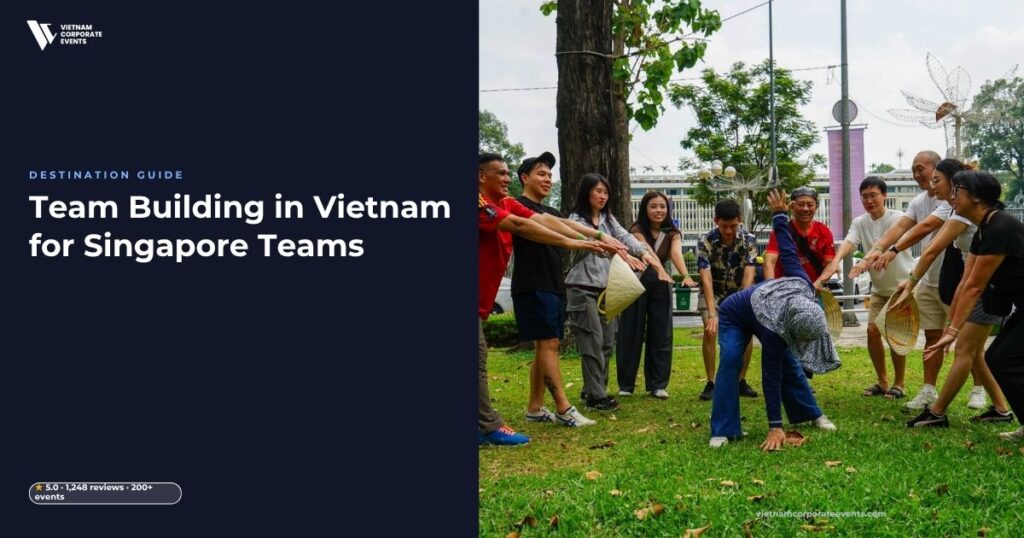
Team Building in Vietnam for Singapore Teams
Singapore offices are among the most multicultural workplaces on earth, which makes them harder to run team building for than almost anywhere. A format that lands with one nationality can quietly exclude three others in the same room.
Team building Vietnam for Singapore teams works partly for that reason: the setting is unfamiliar to everyone equally, and activities built around a country nobody in the room is from remove the home-advantage problem entirely.
This guide covers formats that suit multicultural teams, destination choices, group sizes, facilitation language, costs and how to plan it from Singapore.
Why take a Singapore team overseas at all?
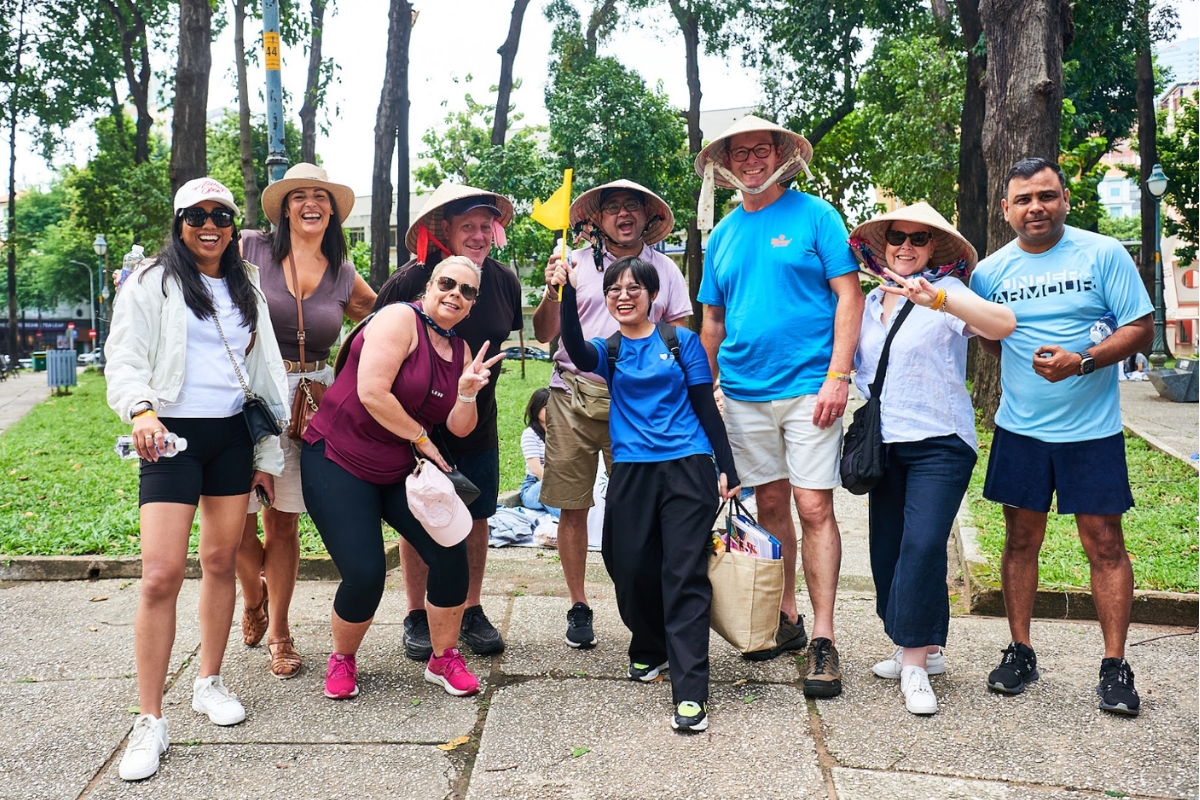
Because team building Vietnam for Singapore teams buys separation that a local offsite cannot.
A team building day in Singapore ends with everyone going home, checking email in the evening and arriving the next morning as though nothing happened. Two nights away produces the informal dinners and late conversations that actually build relationships.
The SHRM research links structured shared experiences to stronger engagement, and the unstructured hours around the structure do as much work as the activities themselves. Singapore team building overseas is bought for those hours as much as for the programme.
What makes a Singapore team different?
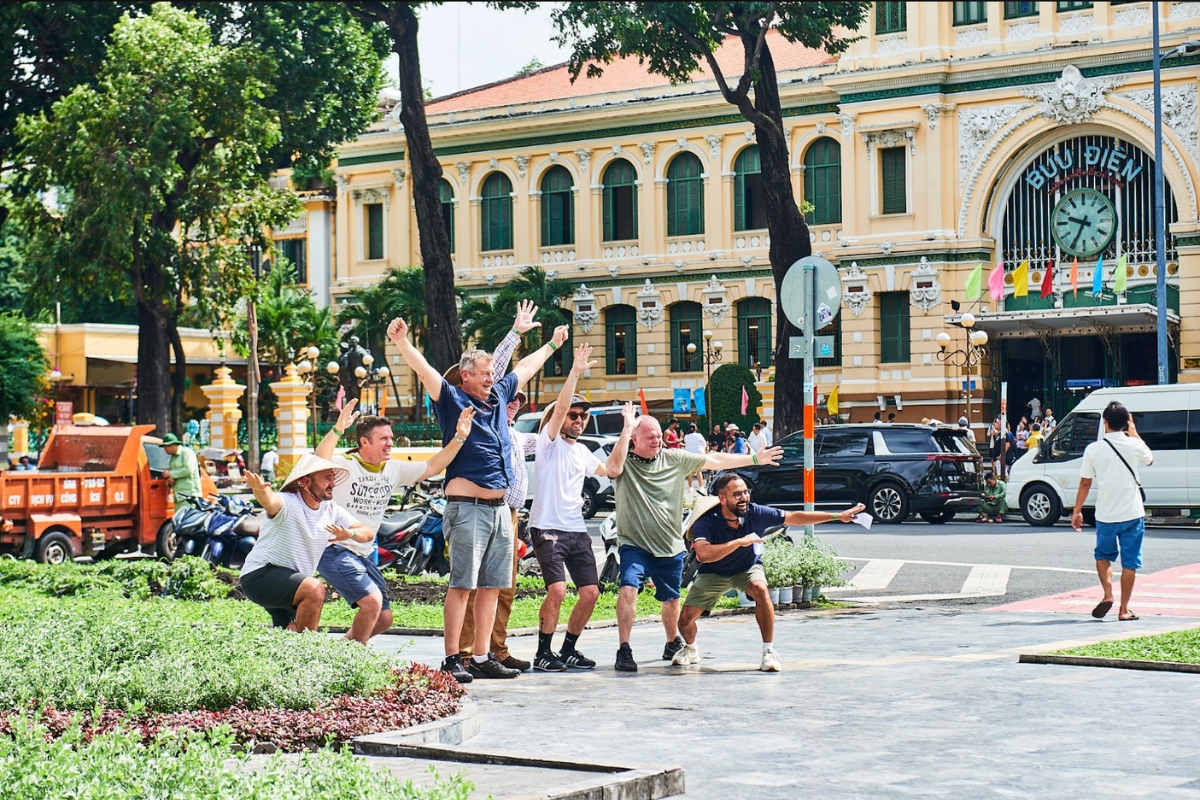
Three characteristics should shape any team building Vietnam for Singapore teams programme.
Nationality mix is the first. A typical office includes Singaporean, Malaysian, Indian, Filipino, Chinese, Australian and European colleagues, which rules out anything depending on shared cultural references, wordplay or local pop culture.
Language is the second. English is the working language, but fluency varies, and activities that depend on quick verbal exchange advantage native speakers. Physical, visual and problem-solving formats level this.
The third is that Singapore teams are often used to well-run corporate events and have high expectations of logistics. Sloppy delivery is noticed faster here than in many markets.
What activity formats work best?
Team building Vietnam for Singapore teams works best with formats needing no shared cultural background and no language advantage:
- Amazing race and treasure hunts. Navigation, problem-solving and teamwork with minimal language dependency; see Amazing Race.
- Beach olympics and water games. Physical, visual and inclusive; see water games.
- Cooking challenges. Universally accessible, produces a shared meal, and Vietnamese cuisine is new to almost everyone; see cooking team building.
- Problem-solving and construction challenges. Bridge builds and escape rooms reward thinking rather than talking; see problem-solving activities.
- CSR and community activities. Purpose-led, and consistently well received in multicultural teams; see CSR team building.
- Vietnamese traditional games. Nobody has an advantage, and the cultural framing is genuinely interesting; see traditional games.
The traditional games option deserves attention for SG staff team building Vietnam programmes specifically. The rules are physical and instantly understood, and being a beginner together is a genuine leveller for a room where seniority and language usually structure interactions.
What should be avoided?
Four formats that work poorly for multicultural Singapore teams:
- Trivia and quizzes built on Western or single-culture general knowledge.
- Improv and comedy formats that depend on fluent, fast English.
- Anything alcohol-centred, given the religious and personal mix in most Singapore offices.
- Activities with dietary blind spots — a cooking challenge with only pork is a poorly designed activity.
The dietary point extends beyond food activities. Halal, vegetarian and allergy requirements should be collected at RSVP and confirmed directly with the kitchen, not passed along and assumed.
Which destinations suit a Singapore team?
For team building Vietnam for Singapore teams, flight time and activity range are the two criteria:
- Da Nang. Three hours direct, with beach, mountain and Hoi An heritage within an hour — the widest activity range for a short trip; see Singapore to Da Nang.
- Ho Chi Minh City. Two hours, with Mekong Delta and Cu Chi day options; see Mekong team building.
- Phu Quoc. Island beach programmes with strong resort infrastructure; see Singapore to Phu Quoc.
- Nha Trang. Best value, sheltered bay and reliable water activities.
- Da Lat. Cool highlands for teams wanting a genuine climate change and adventure activities.
Da Lat is worth flagging for Singapore teams specifically. A group that lives in permanent humidity finds pine forest and a jacket in the evening a novelty in itself, which is a small thing that people remember.
What group sizes work?
The full range, with different design at each level.
Small teams of 10 to 30 run everything together and get the richest debrief. Mid-size groups of 30 to 120 need parallel stations and rotating waves, which is the standard configuration and the sweet spot for offshore team building Singapore companies run.
Above 120, the format shifts toward mass-participation activities — beach olympics, traditional games circuits, survivor formats — rather than anything requiring facilitated discussion. See our survivor format guide for large-group structure.
What language should facilitation be in?
English, with a facilitator who is genuinely fluent rather than adequate.
This matters more than it sounds. A facilitator whose English is functional can run instructions but cannot read a room, manage a dominant participant or run a debrief that produces anything. For team building Vietnam for Singapore teams, facilitation quality is the single largest variable in whether the day achieves anything.
Ask to speak with the actual facilitator before contracting, not the account manager. And confirm they will be present on the day — some suppliers sell with their strongest facilitator and deliver with someone else.
How does a debrief work with a multicultural group?
More carefully than with a single-culture team, because participation norms differ.
Directness varies considerably across the nationalities in a typical Singapore office. Open-floor questions tend to be answered by the same confident few, and a facilitator who reads that as consensus has misread the room.
Better mechanisms: small-group discussion before plenary, written input collected anonymously, and direct invitation of quieter participants by name. The findings then reflect the whole group rather than the loudest third.
What does it cost from Singapore?
The comparison that matters is total delivered cost per head against a Singapore-based equivalent, not activity price against activity price.
Flights and two nights’ accommodation are added; venue, activity, facilitation and catering costs all fall substantially. For a two-night programme the totals typically land close, with Vietnam delivering a higher accommodation tier and a far wider activity range.
For a single-day event, staying in Singapore remains correct. See our cost comparison and team building cost guides.
A short example: when a Singapore technology firm of 45 ran a Da Nang programme mixing a beach olympics morning with a Hoi An cooking challenge, the feedback highlight was neither activity. It was the mixed teams — the first time engineering and commercial staff had spent a full day working together outside a meeting.
How do you plan it from Singapore?
Plan team building Vietnam for Singapore teams four to five months out for a mid-size group, with the same sequence as any offsite.
Objective first, then destination and dates, then a local partner for venue, activities, transport and delivery. Keep the programme content and internal communications in Singapore — nobody understands your team’s dynamics better than you do.
Delegate the ground. Managing Vietnamese activity suppliers, transport and venues remotely, in a second language and currency, is substantial work for an HR team that has another job. See our Singapore retreats guide and DMC guide.
How do you handle religious and dietary needs?
More carefully than in Singapore, where halal certification and dietary options are ubiquitous and assumed.
Vietnam is far less set up for this by default. Halal food is available in the major cities and at international resorts but is not standard, vegetarian options can be limited outside tourist areas, and staff will not necessarily raise it themselves.
Collect requirements at RSVP, brief the resort’s kitchen directly rather than through a supplier chain, and confirm halal sourcing in writing where it matters. For prayer requirements, ask the resort about a quiet room and check prayer times against the programme.
Getting this right is noticed. Getting it wrong is noticed considerably more, and it undoes a great deal of what the trip was meant to build.
What does a two-night programme look like?
A workable structure for a Singapore team of 50 in Da Nang:
Day one. Morning flight, resort arrival and lunch. An afternoon activity chosen to mix departments — beach olympics or a treasure hunt — followed by an unstructured welcome dinner. The first day’s job is to break the office dynamic, not to deliver content.
Day two. The main programme in the morning while energy is highest: a problem-solving session, a cooking challenge or a CSR activity depending on the objective. Free time or a short excursion in the afternoon, then a gala dinner with awards.
Day three. A short closing session that converts the two days into commitments, then the flight home.
The structure that fails is content on day one. A team arriving off a flight into a facilitated session has neither the energy nor the informality the session needs.
Frequently asked questions about team building in Vietnam for Singapore teams
Why take a Singapore team to Vietnam for team building?
Separation. A local day ends with everyone going home; two nights away produces the informal dinners and late conversations that actually build relationships.
What activity formats suit multicultural Singapore teams?
Amazing race formats, beach olympics, cooking challenges, problem-solving builds, CSR activities and Vietnamese traditional games – all low in language dependency.
What should be avoided?
Trivia built on single-culture general knowledge, improv requiring fluent fast English, alcohol-centred activities, and any food activity with dietary blind spots.
Which destination is best for a Singapore team?
Da Nang for the widest activity range in a short trip, Ho Chi Minh City for Mekong and Cu Chi days, Phu Quoc for beach, and Da Lat for a genuine climate change.
What language should facilitation be in?
English, with a genuinely fluent facilitator. Ask to speak with the actual facilitator before contracting and confirm they will be present on the day.
How do you debrief a multicultural group?
Small-group discussion before plenary, anonymous written input, and direct invitation of quieter participants – open-floor questions surface only the confident few.
Is it more expensive than staying in Singapore?
For a two-night programme, totals typically land close, with Vietnam delivering a higher accommodation tier and wider activity range. For a single day, stay in Singapore.
How far ahead should you plan?
Four to five months for a mid-size group. Keep objective, programme content and internal communications in Singapore; delegate venue, activities and transport locally.
Plan your Vietnam team building
Planning team building Vietnam for Singapore teams and want activities that work across a multicultural room? Request a free proposal and we will design the programme and facilitation around your group — or explore our team building service and past success stories.