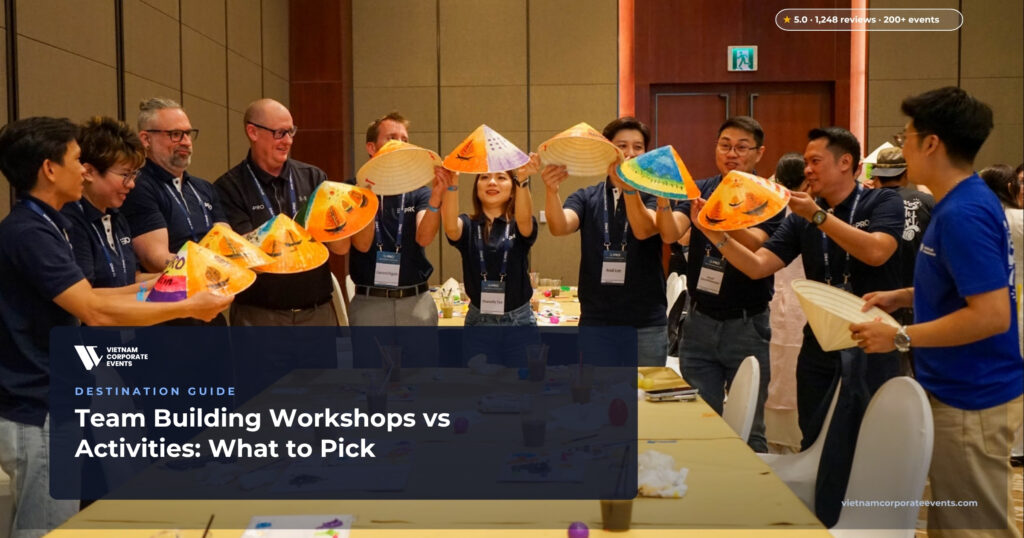
”
Team Building Workshops vs Activities: What to Pick
Half the companies that ask us for a team-building day actually need a workshop. The other half book a workshop when what their exhausted team really needs is a beach and a tug-of-war rope.
A team building workshop Vietnam programme develops a specific capability — feedback, communication, decision-making — through structured facilitation. An activity builds energy, connection and morale. Both are legitimate; confusing them wastes budget.
This guide covers the difference, the workshop formats worth running, how to choose, what good facilitation looks like, and costs.
What is the difference between a workshop and an activity?
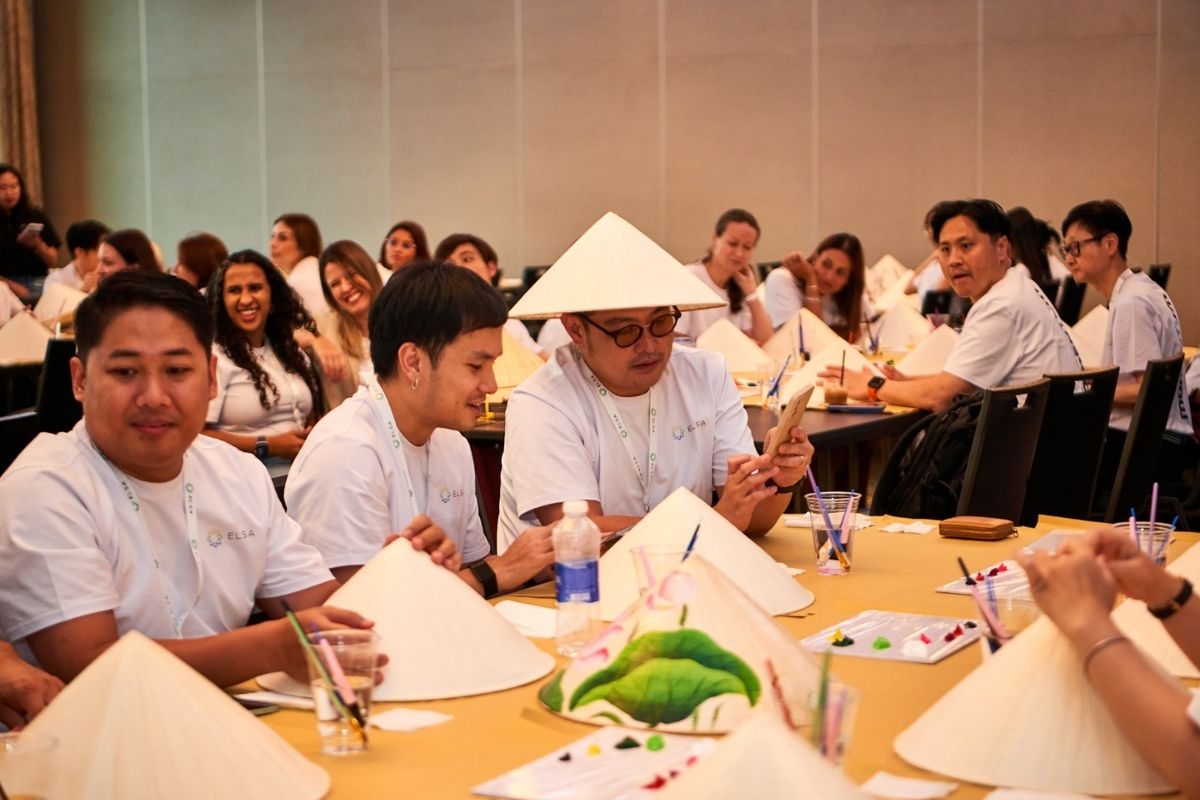
The clearest distinction is what happens afterwards. An activity produces shared memories and improved relationships. A workshop produces an agreed change in how the team works.
A team building workshop Vietnam session is built backwards from a behavioural objective. It uses exercises, but the exercises exist to generate material for discussion rather than to be enjoyed for their own sake.
An activity inverts that. The experience is the point, and any insight is a welcome by-product. Neither approach is superior — they answer different questions, and the SHRM research on engagement supports both structured development and shared experience as distinct contributors.
When do you need a workshop rather than an activity?
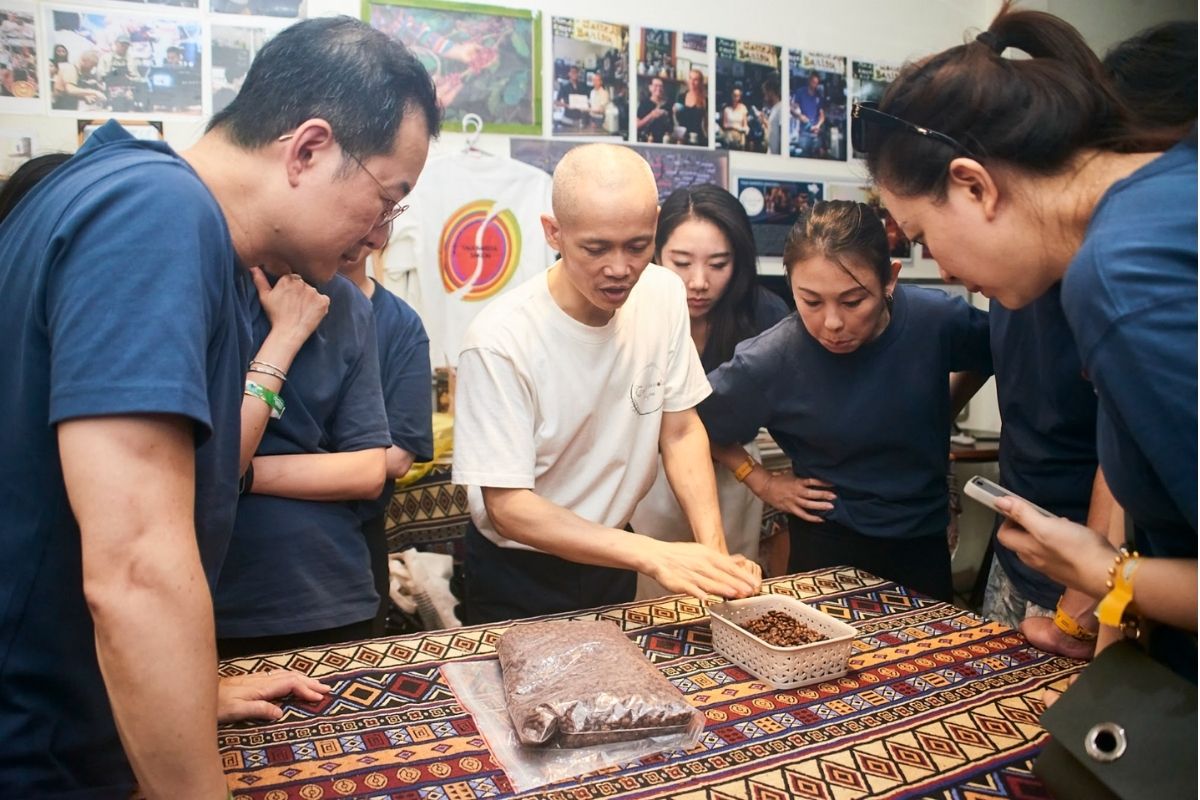
Four signals point clearly toward a team building workshop Vietnam programme:
- A named problem. Meetings run long, decisions get reopened, feedback is not happening — a specific dysfunction rather than general flatness.
- A structural change. A merger, restructure or new leadership team that needs to establish how it will operate.
- Recurring conflict. The same tension resurfacing between functions.
- A capability gap. The team needs a skill it does not currently have.
By contrast, if the honest answer to “”what do you want from this?”” is “”people are tired and we haven’t done anything fun in a year,”” then a corporate workshop activities programme is the wrong instrument entirely. Book a team building day instead.
What workshop formats work best?
These team building workshop Vietnam formats reliably produce change rather than pleasant discussion:
- Communication and feedback workshops. Structured practice in giving and receiving direct feedback safely.
- Decision-making workshops. Establishing who decides what, and how disagreement gets resolved.
- Team charter sessions. Agreeing explicit working norms — response times, meeting rules, escalation paths.
- Psychological safety workshops. Building the conditions where people raise problems early.
- Cross-functional alignment. Two teams that keep colliding mapping their handoffs.
- Leadership workshop team building. Senior groups working on how they operate as a unit rather than as individual function heads.
Each combines short experiential exercises with facilitated discussion, which is what separates a skills workshop corporate teams remember from a training lecture they endure.
How do you combine workshops and activities?
The strongest team building workshop Vietnam programmes use both formats, and the sequencing matters more than most planners realise.
Activities before workshops build the psychological safety that honest discussion requires. A group that has just capsized a kayak together talks more openly than one that walked in from the office an hour earlier.
Workshops before activities work when the workshop generates commitments that the activity can then test. Agree a rule about confirming assumptions, then run a bridge build and watch whether it survives contact.
For a two-day offsite, the reliable pattern is an activity on day one afternoon, the workshop on day two morning while the shared experience is fresh, and a light social close. See our problem-solving activities guide for the exercises that bridge both.
What makes a good facilitator?
This is the single biggest variable, and it is where most of the budget should go.
A good facilitator holds the room without dominating it, notices who has not spoken, and is willing to name a difficult dynamic in real time. They also know when to abandon the plan — if a genuine issue surfaces in the first twenty minutes, that is the session now.
Warning signs are easy to spot in a proposal. Rigid hour-by-hour agendas with no flex, heavy reliance on branded personality assessments, and an unwillingness to talk to participants beforehand all suggest a facilitator delivering content rather than reading a room.
For a team building workshop Vietnam programme with international staff, language capability matters too — bilingual facilitation is often the difference between genuine participation and polite silence from half the group.
How long should a workshop run?
A team building workshop Vietnam session should be shorter than most companies assume, and run more often.
A half-day of three to four hours is the practical unit for a single objective. Full-day workshops can work for major structural questions such as a team charter, but attention genuinely degrades after about four hours of facilitated discussion.
What produces durable change is repetition rather than duration. Three half-days across a quarter, each revisiting the commitments from the last, outperforms a single intensive day by a wide margin — because the second session is where you find out what actually stuck.
What group sizes work for workshops?
A team building workshop Vietnam session needs a much smaller group than an activity, which surprises people planning a whole-company event.
The optimum is 8 to 20 people — small enough that everyone speaks, large enough for genuine diversity of view. Between 20 and 40, the format must shift to break-out groups with plenaries, which works but dilutes individual airtime.
Above 40, honest facilitated discussion becomes impossible and the session turns into a presentation with exercises. For a large company, the answer is running the same workshop several times for different groups, not scaling one session upward.
How do you make workshop outcomes stick?
Most workshops fail in the fortnight afterwards rather than in the room, and three habits prevent that.
End with specific written commitments — not “”communicate better”” but “”decisions get documented in the channel within 24 hours, and anyone can ask for that.”” Name an owner for each commitment, because unowned agreements evaporate.
Then schedule the review before people leave the room. A thirty-minute check-in six weeks later, already in the calendar, does more for durability than any amount of energy on the day.
A team building workshop Vietnam programme without a follow-up mechanism is an expensive conversation. With one, it becomes a change — see our guide to measuring team building ROI for how to track it.
What does a workshop cost?
A team building workshop Vietnam programme costs less than an activity day in logistics and more in expertise, which reverses the usual budget shape.
There is no venue hire beyond a room, no equipment, no transport and no safety cover. Almost the entire cost is facilitator time — design, delivery and follow-up — which is exactly where it should sit.
Bilingual facilitation, bespoke design for a specific organisational problem, and follow-up sessions all add cost and are usually worth paying for. Model the numbers alongside activity formats with our team building cost guide.
A short example: when Meridian Pay ran a decision-making workshop for its 14-person leadership team, the output was a single page defining which decisions needed consensus and which needed only consultation. The client reported their weekly meeting shortened by forty minutes and stayed that way — from one half-day.
Can workshops run during a company trip?
Yes, and a destination setting often improves them — provided the schedule respects what each element needs.
The mistake is treating a workshop as something to slot between a beach morning and a gala dinner. Facilitated discussion needs alert, unhurried people, which means a morning slot before activities rather than an afternoon one after them.
Highland and nature destinations suit this particularly well, since the calm supports reflection. See our Da Lat and Ninh Binh retreat guides for settings built around exactly this combination.
What should you brief a facilitator on?
The quality of a workshop is largely decided before anyone enters the room, and it depends on how honestly you describe the situation.
Tell the facilitator the real problem rather than the polite version. “”We want better communication”” produces a generic session; “”two directors have not spoken directly in four months and their teams have stopped sharing information”” produces a useful one.
Share the history too — what has been tried, what failed, and which topics are genuinely sensitive. A facilitator walking into an unexploded issue with no warning will either miss it or detonate it.
Good facilitators will also want to speak to a few participants beforehand. Resistance to that request is a warning sign about the facilitator; refusing it is a warning sign about the organisation.
Frequently asked questions about team building workshops in Vietnam
What is the difference between a team building workshop and an activity?
A workshop develops a specific capability through facilitated discussion and produces agreed changes in how a team works. An activity builds energy, connection and morale through shared experience.
When should you choose a workshop?
When there is a named problem — long meetings, reopened decisions, missing feedback — or a structural change such as a merger or new leadership team that needs explicit working norms.
How many people should attend a workshop?
Eight to twenty is optimal. Between 20 and 40 requires break-out groups, and above 40 genuine facilitated discussion becomes impossible, so run the same session multiple times instead.
How long should a team building workshop be?
Half a day of three to four hours per objective. Repetition beats duration — three half-days across a quarter outperform one intensive day because the follow-up reveals what actually stuck.
What makes a good workshop facilitator?
Someone who holds the room without dominating it, notices who has not spoken, names difficult dynamics in real time, and will abandon the agenda when a real issue surfaces.
How do you make workshop outcomes last?
End with specific written commitments, assign an owner to each, and schedule the follow-up review before anyone leaves the room. Unowned agreements without a check-in date evaporate.
Can you combine a workshop with team activities?
Yes, and it works well. Activities first build the psychological safety honest discussion requires, so a workshop the following morning benefits from the trust built the day before.
What should you tell the facilitator beforehand?
The real problem rather than the polite version, plus what has already been tried, what failed, and which topics are genuinely sensitive within the team.
Should the facilitator speak to participants first?
Yes. Good facilitators request it, and resistance to that request is a warning sign about the facilitator rather than about the organisation.
Is a workshop suitable during a company trip?
Yes, in a morning slot before activities rather than after them, since facilitated discussion needs alert, unhurried people to be worth anything.
Plan your team building workshop
Not sure whether you need a workshop or an activity? Request a free consultation and we will help you diagnose which a team building workshop Vietnam programme should be — or explore our team building service and past success stories.
“