”
Weekend Company Trips Within 3 Hours of HCMC
Everyone assumes a proper company trip means flights, three days and a budget sign-off from the CFO. It does not. Some of the best programmes we run start on a Saturday morning coach and are back before Sunday dinner.
A weekend company trip from Ho Chi Minh City works because the south has genuine variety within a three-hour radius — beaches, highlands, forest and river country, all reachable by road. No flights, no lost working days, no eye-watering budget.
This guide covers the six strongest options, what suits which team, sample itineraries, costs and how to choose.
Why plan a weekend company trip from Ho Chi Minh City?

Because it removes the two biggest obstacles to running a trip at all: cost and time away from work.
A weekend company trip from Ho Chi Minh City uses non-working days, so nobody loses productive hours, and skipping flights cuts the largest single line item from the budget. That combination makes it repeatable — a quarterly reset rather than a once-a-year event.
The trade-off is honest: you get less distance, not less impact. A well-designed two-day programme delivers most of the bonding of a longer trip, which is why a short corporate getaway HCMC teams can actually approve often beats the trip that never gets signed off.
Where can you go within three hours of Saigon?
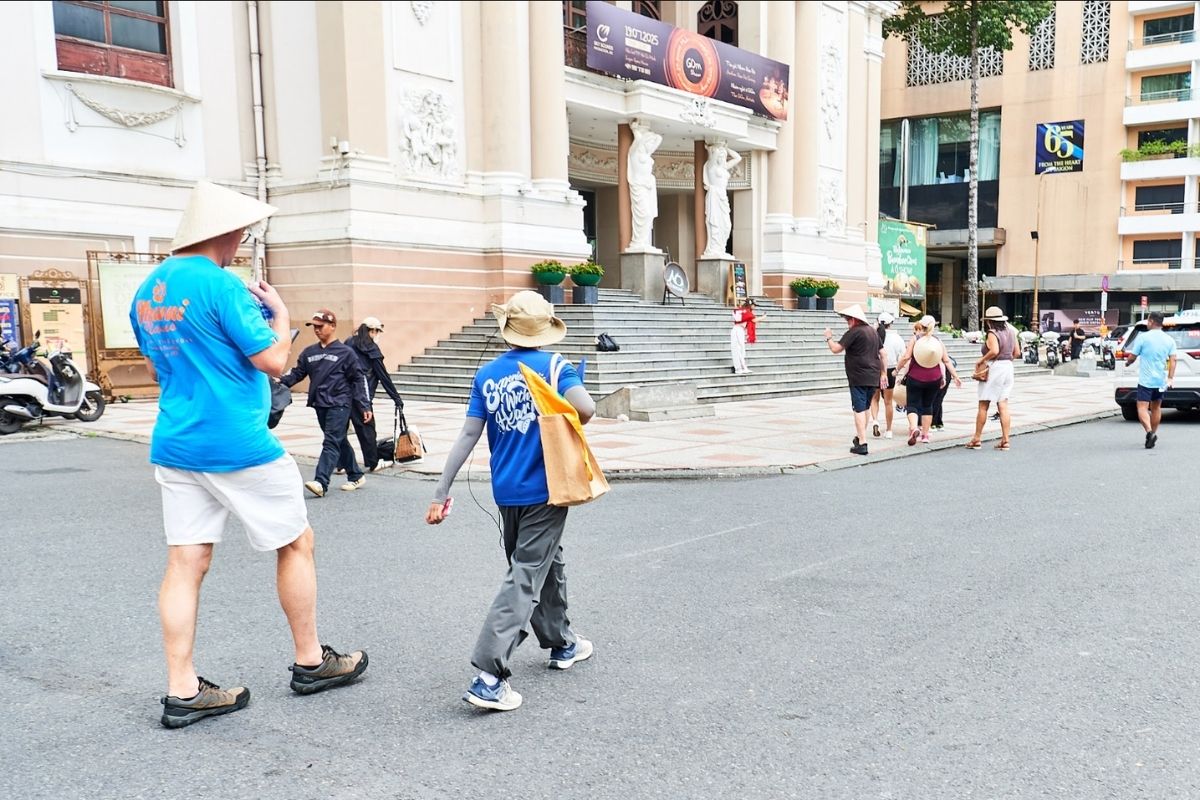
Six destinations cover almost every brief:
- Vung Tau (~2 hours). The closest beach — fastest to reach, easiest to run; see Vung Tau team building.
- Ho Tram & Long Hai (~2.5 hours). Quieter resort coast, better for a premium feel.
- Can Gio (~1.5 hours). Mangrove biosphere — nature and CSR without leaving the city region.
- Cu Chi & surrounds (~1.5 hours). Historic and outdoor programmes close to town; see Cu Chi corporate day trips.
- Mekong Delta / My Tho (~2 hours). River life, sampans and orchards; see Mekong team building.
- Da Lat (~5-6 hours or a short flight). Beyond the radius by road, but the highland option for a long weekend.
For most teams, the choice comes down to beach versus nature — and how much of the weekend they are willing to spend travelling.
Which destination suits which team?
Matching the destination to the goal matters more than picking the prettiest option:
- Fast and energetic: Vung Tau — maximum beach time, minimum transfer.
- Premium and relaxed: Ho Tram — resort quality for a leadership or reward weekend.
- Purpose-driven: Can Gio — mangrove planting and conservation; see CSR team building and purpose-driven team building.
- Culturally distinctive: the Mekong — floating markets and river challenges.
- Cool and adventurous: Da Lat — for teams who can spare the extra travel.
A 2 day company trip near Saigon should lead with one strong idea rather than trying to fit everything into 48 hours.
What does a sample weekend itinerary look like?
A typical two-day beach programme shows how tight the timing needs to be.
Saturday starts with a 7am departure, arriving mid-morning. A beach olympics runs before lunch while the air is cooler, followed by free time in the afternoon and a seafood dinner with awards in the evening.
Sunday opens with a lighter session — a treasure hunt or water challenge — then a relaxed lunch and a mid-afternoon return, putting everyone home by early evening.
The discipline is in protecting the first morning: leave late and you lose the best activity window, which is the single most common way a weekend team building near HCMC programme underdelivers.
How do you make a short trip feel worthwhile?
Two days can feel rushed if the programme is over-packed. The fix is fewer, better sessions.
Choose one flagship activity, one social highlight and one relaxed window, then protect all three. Teams remember a great beach olympics and a good dinner far more than four half-finished activities.
The SHRM research links structured shared experiences to stronger engagement, and structure matters even more when time is short — every hour has to earn its place.
What group sizes work for a weekend trip?
Road-based trips scale well because coaches are easy to add. Small teams of 20 to 50 travel simply and fit boutique resorts.
Mid-size groups of 50 to 200 work comfortably with parallel activity stations and a resort block booking. Larger groups of 200-plus are possible on the nearby coast, though transfer logistics and staggered departures become the main planning challenge.
What does a weekend company trip cost?
Weekend trips are among the most cost-efficient formats available, because there are no flights and only one hotel night.
The main costs are coach transfers, one night’s accommodation, the activity programme and catering. Because the spend concentrates on experience rather than travel, a weekend company trip from Ho Chi Minh City typically delivers more visible value per unit of budget than a longer fly-in trip. Model it with our company trip budget guide.
A short example: when Northwind ran a two-day Ho Tram programme for 85 people, the entire trip cost less than the flights alone would have for an island equivalent — and because it used a weekend, not a single working day was lost.
How do you choose between the destinations?
Work backwards from the single outcome that matters most, rather than comparing scenery. Three questions usually settle it.
How much transfer time can you afford? On a two-day trip, every extra hour on the road is an hour of programme lost, which is why the closest options often outperform prettier ones further away.
What is the trip actually for? A reward leans coastal and comfortable; a values or purpose-driven programme leans toward mangroves and CSR; a culture-first brief leans to the river country.
What will approval hinge on? If budget is the constraint, the nearest beach wins on cost efficiency almost every time.
Answer those three and the shortlist usually reduces to one or two options, which is far more useful than an open-ended comparison of destinations.
What outcomes does a short trip deliver?
Two focused days deliver most of the bonding value of a longer trip, provided the programme is designed rather than improvised. Shared meals and one strong activity do the heavy lifting.
The bigger strategic advantage is frequency. Because a weekend format is cheap and low-friction, companies can run it two or three times a year instead of once — and repeated shared experience compounds in a way a single annual trip never does.
Teams also return genuinely rested rather than travel-worn, which matters when everyone is back at their desks on Monday morning.
How do you protect the schedule on a two-day trip?
Timing discipline is the whole game when you only have 48 hours. Three rules prevent most of the value leaking away.
Leave early. A 7am departure versus a 9am one is not two hours lost — it is the entire prime activity window, because by late morning the heat makes hard physical sessions unpleasant.
Front-load the flagship activity. Whatever the trip is really about should happen in the first block, while energy is highest and before any delay can compress it.
Build in one genuine gap. An unscheduled afternoon hour is not wasted time; it is what makes the trip feel like a reward rather than a relocated workday.
Get those three right and a short programme punches well above its length. Get them wrong and the same itinerary feels rushed at the start and empty at the end.
Should you use a coach or self-drive?
For anything above a handful of people, a private coach is the clear answer. It keeps the group together, turns transfer time into social time, and removes the risk of stragglers arriving separately.
Self-drive or ride-hailing suits very small teams, but it fragments the group at exactly the moment a trip should be building shared momentum. Many facilitators use the outbound journey for briefings, team allocation and icebreakers, which only works when everyone travels together.
Coaches also simplify the return leg, when people are tired and a single scheduled departure is far easier to manage than a dozen separate arrangements.
How often should you run a short trip?
Two or three times a year is realistic for most companies, and that frequency is the format’s real strategic advantage.
A single annual trip creates one spike of goodwill that fades within weeks. Repeated shorter programmes create a rhythm, so cohesion is topped up regularly rather than left to decay for eleven months.
A common pattern is a mid-year reset, a post-peak-season reward and a year-end celebration, with only one of them being a longer fly-in trip. Because the weekend format is cheap and low-friction, it is the one that makes that cadence affordable.
Frequently asked questions about weekend company trips from HCMC
Where can you go for a weekend company trip from Ho Chi Minh City?
Vung Tau, Ho Tram and Long Hai for beaches, Can Gio for mangrove nature and CSR, Cu Chi for historic outdoor programmes, and the Mekong Delta for river-based activities.
How long should a weekend company trip be?
Two days and one night is the standard format, using non-working days so the team loses no productive time while still getting a genuine change of scene.
Is a weekend trip long enough for real team building?
Yes, provided the programme is focused. One flagship activity, one social highlight and one relaxed window deliver most of the bonding of a longer trip.
What is the cheapest weekend trip option near Saigon?
Vung Tau is typically the most cost-efficient thanks to its short transfer and wide range of accommodation, making it the easiest option to approve on a modest budget.
How many people can join a weekend trip?
From small teams of 20 to groups of 200-plus, since coach travel scales easily. Larger groups mainly need staggered departures and careful transfer planning.
Should a weekend trip include a working session?
Usually only a light one. A short kickoff or recognition moment adds purpose, but loading a weekend with meetings undermines the reward the trip is meant to deliver.
What time should a weekend trip depart?
As early as practical – around 7am. Leaving at 9am does not cost two hours, it costs the entire prime activity window before the midday heat sets in.
Is a private coach better than self-drive?
For anything above a handful of people, yes. A coach keeps the group together, turns transfer time into social time and removes the risk of stragglers.
Plan your weekend company trip
Ready to run a weekend company trip from Ho Chi Minh City your team will actually look forward to? Request a free proposal and we will design the destination, itinerary and logistics around your group — or explore our company trips service and past success stories.
“