”
Corporate Retreats in Sapa: Mountain Offsites
A beach resort is a reward. A mountain is a reset. When a leadership team needs to think rather than celebrate, the difference matters more than most companies realise.
A corporate retreat in Sapa puts a team among terraced rice fields, mountain villages and cool highland air in Vietnam’s far north, beneath Fansipan — the country’s highest peak. It is the antidote to the distraction of a beach programme.
We design northern mountain programmes regularly, so this guide covers why a corporate retreat in Sapa works, the activities, venues, group sizes, logistics and costs.
Why choose Sapa for a corporate retreat?
Because the setting supports focus rather than competing with it. At around 1,500 metres, Sapa is cool and quiet, with none of the pull of a pool or a beach bar.
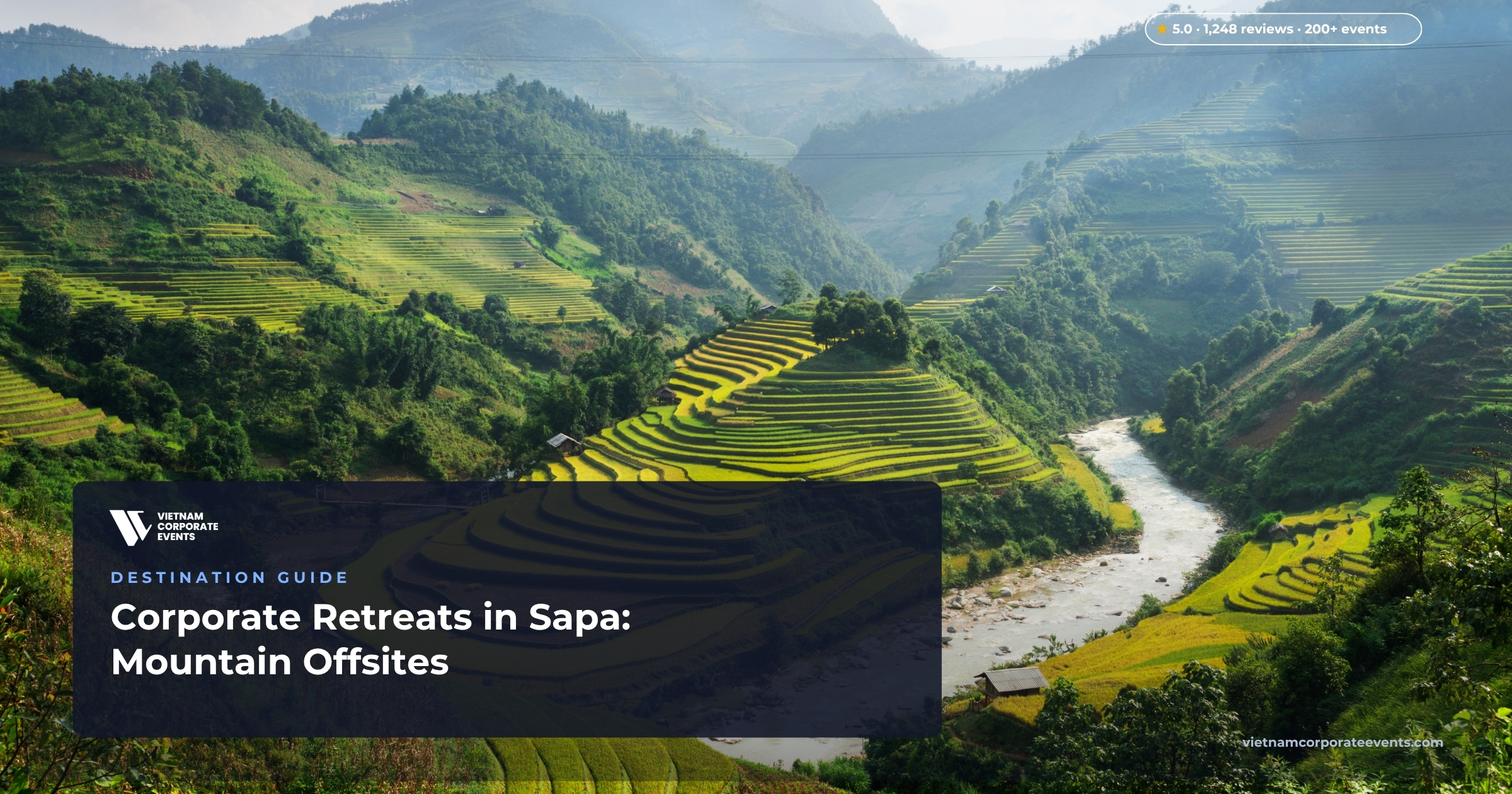
The landscape does the rest. Terraced rice fields, misty valleys and hill-tribe villages give a corporate retreat in Sapa a sense of genuine distance from the office — psychologically as well as geographically.
That combination suits leadership offsites and strategy sessions especially well. For the wider category, see our executive retreats in Vietnam guide and the Da Lat highland retreat alternative in the south.
What can you do on a Sapa retreat?
The mountains and the culture are the programme. The strongest versions of a corporate retreat in Sapa blend both:
- Guided valley treks. Walks through rice terraces to villages, with team tasks along the route.
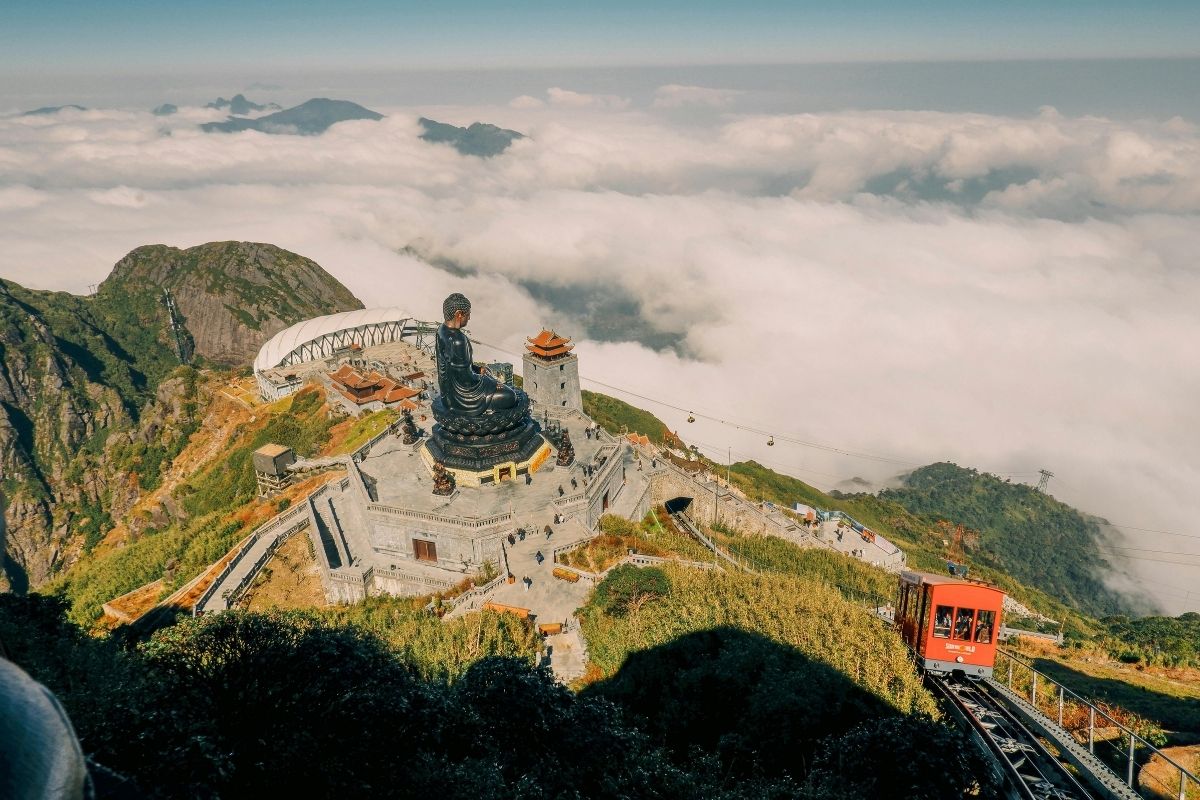
- A Fansipan cable-car excursion. A shared highlight to Vietnam’s highest peak.
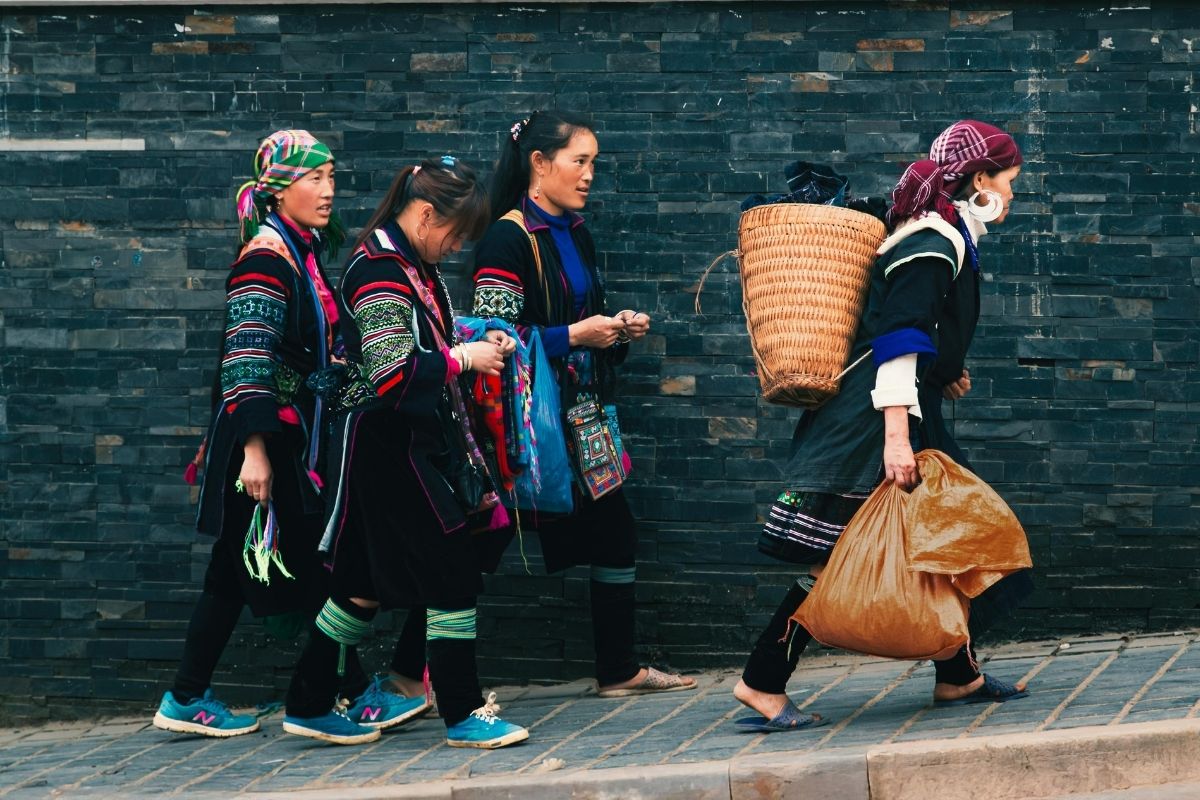
- A cultural village challenge. Craft and cooking sessions with local communities.
- Strategy sessions. Working blocks in a lodge or hotel, framed by the mountain views.
- A fireside dinner and reflection. A quiet close to each day.
Sapa team building leans toward endurance, reflection and shared discovery rather than high-energy games, which is precisely what a leadership group tends to need.
What venues suit a Sapa offsite?
The town and surrounding valleys offer a range of bases:
- Mountain-view hotels. Full meeting facilities with panoramic outlooks.
- Boutique lodges. Intimate, characterful bases for smaller leadership groups.
- Eco-lodges and homestays. Immersive options for teams wanting authenticity.
- Resort properties. Higher-standard bases for premium programmes.
Meeting space in Sapa is smaller-scale than in the coastal cities, so a Sapa leadership offsite is usually built around groups that value intimacy over capacity.
What group sizes suit Sapa?
A corporate retreat in Sapa is best for small and mid-size groups. Teams of 10 to 50 fit the venues, trails and village activities comfortably.
Groups up to around 100 are workable with careful venue selection and rotating activity groups. Very large groups are better served by Ha Long Bay or the central coast, since mountain trails and accommodation simply are not built for volume.
How do the logistics of a Sapa retreat work?
The north takes more travel time than a coastal programme, so planning matters. The essentials:
- Access. A flight to Hanoi, then road or overnight train — usually five to six hours by expressway.
- Timing. Enough days to justify the journey; two nights minimum, three is better.
- Guides. Local trekking guides who know the trails, weather and villages.
- Weather. Layers for cool, misty conditions and a wet-weather plan.
A local partner manages transfers, guides and contingencies, so a mountain retreat Vietnam programme runs smoothly despite the distance.
When is the best time for a Sapa retreat?
Season shapes the experience more here than almost anywhere else in Vietnam. September and October bring the golden rice-harvest terraces — the most photogenic window and the most popular.
March to May offers green terraces, wildflowers and comfortable trekking conditions. Winter is cold and often misty, which some teams find atmospheric and others find limiting, while summer brings heavier rain.
For a first Sapa programme, the autumn harvest or the spring window gives the most reliable balance of scenery and walkable weather.
How do you structure a retreat that actually works?
The mistake is treating a retreat as a holiday with a slide deck attached. A good structure alternates work and shared experience deliberately.
A proven rhythm runs a focused strategy session each morning while minds are fresh, a trek or cultural activity in the afternoon, and reflection over dinner. The physical activity between sessions is what turns abstract discussion into genuine alignment.
The SHRM research links structured shared experiences to stronger engagement, and a corporate retreat in Sapa gives that structure a setting no meeting room can rival.
What does a Sapa corporate retreat cost?
The cost of a corporate retreat in Sapa is driven by travel time, accommodation standard, guides and the length of stay. The journey north adds transfer cost that a domestic beach trip avoids.
Against that, accommodation and activities in Sapa are generally good value, and the impact of the setting is high. Model the full picture with our company trip budget guide.
A short example: when Aldridge & Co took its 22-person leadership team to Sapa for three days, the decisive conversation happened not in the meeting room but halfway down a terraced valley — where two directors who had disagreed for months finally talked properly, walking side by side.
What outcomes does a Sapa retreat deliver?
The clearest outcome is decision quality. Away from the office and without resort distractions, leadership teams tend to have the conversations they have been postponing for months.
Shared physical effort is the second mechanism. Walking a valley trail side by side removes the adversarial geometry of a boardroom table, and difficult discussions often go better in motion than across a desk.
Teams return more aligned and noticeably more candid with each other. That combination of alignment and trust is what a corporate retreat in Sapa is really designed to produce.
How does Sapa compare with other retreat destinations?
Each option solves a different brief, and the honest comparison helps:
- Versus a beach retreat. The coast rewards; Sapa focuses. Choose the beach to celebrate, the mountains to think.
- Versus Da Lat. Both are cool highland options; Da Lat is far easier to reach from the south, Sapa is more dramatic and more remote.
- Versus Ninh Binh. Ninh Binh is closer to Hanoi with easier logistics; Sapa offers greater scale of landscape and cultural depth.
For northern teams wanting a genuine mountain reset, a corporate retreat in Sapa is the strongest option in the country — provided the group can spare the travel days.
What should teams know before travelling to Sapa?
Sapa demands more preparation than a coastal programme, and a little briefing prevents most problems:
- Warm layers. Evenings are cold year-round and winter can be genuinely chilly.
- Proper walking shoes. Terrace trails can be muddy and uneven.
- Rain protection. Mist and showers are common, even in good seasons.
- Realistic fitness expectations. Treks can be graded easy to demanding.
With those covered, guides handle routes, pacing and safety, so a Sapa leadership offsite runs comfortably for mixed-ability groups.
How far ahead should you plan a Sapa retreat?
Three to four months is sensible for most groups, and longer for the autumn harvest window, which is the busiest and most sought-after period in the north.
Because a corporate retreat in Sapa depends on smaller venues and specific lodges rather than large resort inventory, the best properties commit early. Trekking guides for larger groups also need booking ahead in peak months.
The travel logistics reward early planning too. Locking transfers from Hanoi — road or overnight train — well in advance keeps the arrival day smooth, which matters when the journey north already consumes part of the programme.
What does a sample Sapa itinerary look like?
A typical three-day programme alternates focused work with shared experience, which is the rhythm that makes a mountain offsite productive.
Day one travels up from Hanoi, settling in with an afternoon orientation walk and an opening dinner to set the agenda. Day two is the core: a morning strategy session while minds are fresh, a guided valley trek through the rice terraces after lunch, then reflection over a fireside dinner.
Day three runs a shorter closing session to convert discussion into decisions, followed by a Fansipan excursion or village visit before the return journey.
The pattern matters more than the specifics. Working in the morning, moving in the afternoon and reflecting in the evening is what turns a scenic trip into a retreat that changes how a leadership team operates.
Is the travel time to Sapa worth it?
It is a fair question, and the honest answer depends on the length of the programme. For a one-night trip, no — the journey consumes too much of the value.
For a two or three-night retreat, the distance becomes an asset rather than a cost. The travel itself creates separation from work, and by the time a group arrives they have already mentally left the office behind in a way a short hop never achieves.
Teams based in Hanoi or the north will find the maths comfortable. Southern teams should weigh a corporate retreat in Sapa against Da Lat, which delivers a similar highland reset with far less travel.
Frequently asked questions about a corporate retreat in Sapa
Is Sapa good for a corporate retreat?
Yes, especially for leadership offsites. Its cool climate, rice terraces and lack of resort distractions make it well suited to strategy sessions combined with shared outdoor experiences.
How do you get to Sapa?
By flying to Hanoi, then travelling five to six hours by road via the expressway, or taking an overnight train to Lao Cai followed by a short transfer.
What activities can you do in Sapa?
Guided valley treks through rice terraces, a Fansipan cable-car excursion, cultural village challenges and fireside reflection sessions alongside working blocks.
How many people can a Sapa retreat take?
It suits groups of 10 to 50 best, with up to around 100 possible using careful venue selection. Larger groups are better served by coastal destinations.
When is the best time to visit Sapa?
September and October for the golden rice harvest, or March to May for green terraces and comfortable trekking. Winter is cold and misty; summer brings heavier rain.
How long should a Sapa retreat be?
At least two nights, ideally three, so the travel time north is justified by enough programme days on the ground.
How far ahead should you plan a Sapa retreat?
Three to four months for most groups, and longer for the autumn harvest window, since smaller lodges and trekking guides commit their capacity early.
What should the team pack for Sapa?
Warm layers for cold evenings, proper walking shoes for muddy terrace trails, and rain protection, since mist and showers are common even in good seasons.
Plan your Sapa corporate retreat
Ready to give your leadership team the focus of a corporate retreat in Sapa? Request a free proposal and we will design the programme, venue and logistics around your goals — or explore our retreat and team building services and past success stories.
“