Year-End Party Invitations: Wording & Design
An invitation that says “Year End Party, 20 December, Ballroom, 6pm” will get people through the door. It will not get them excited, and it will not tell the kitchen how many vegetarians are coming.
Year end party invitation ideas are usually treated as a design job. They are actually a data-collection job wearing a design costume — the invitation is how you learn headcount, dietary needs, partner attendance and whether anyone needs transport.
This guide covers what to include, wording for different tones, bilingual handling, timing, and how to get RSVPs from people who ignore internal emails.
What does an invitation need to do?

Year end party invitation ideas have four jobs, in this order.
Give people the information they need to attend — date, time, venue, dress code, whether partners are included. Build enough anticipation that they want to. Collect the data you need — RSVP, dietary requirements, transport, partner names. And set expectations about the evening’s tone so nobody arrives in the wrong outfit.
Most corporate party invite wording covers the first job and skips the other three. The result is a full room where a third of the guests are dressed for a different party and the kitchen is guessing.
What information must be included?
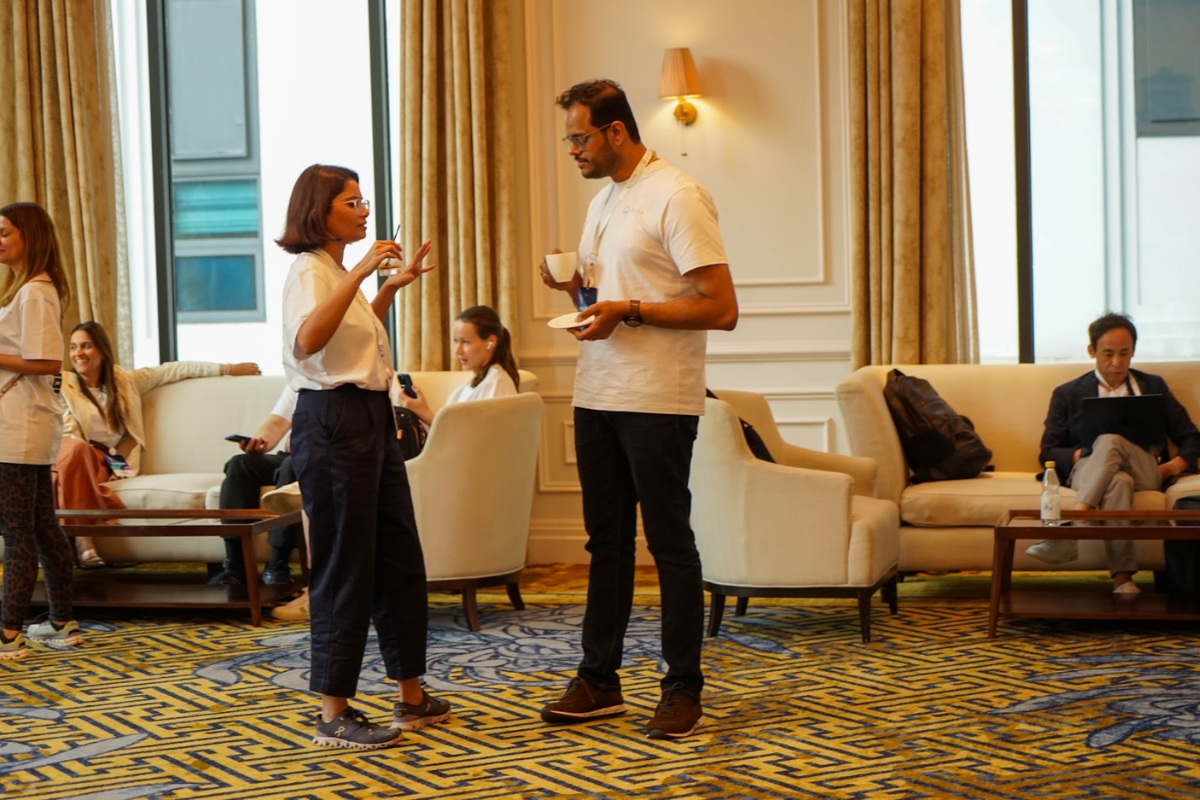
A checklist for year end party invitation ideas that prevents the follow-up emails:
- Date and day, written out — “Friday 19 December” not “19/12”.
- Arrival time and start time separately. “Doors 6:00pm, seated 6:45pm” stops the late arrivals.
- Venue name and full address, with a map link.
- Dress code, with the theme and a concrete example.
- Partner policy, stated explicitly either way.
- End time, so people can plan transport.
- Transport arrangements if coaches are provided, with pick-up points.
- RSVP deadline and mechanism.
- Contact for questions.
The arrival-versus-start distinction is the most useful line on any YEP invitation template. It is the difference between a reception with people in it and an empty room at 6.30.
What wording works for a formal party?
Formal invitations should be short, warm and specific. A workable structure:
“You are invited to the [Company] Year-End Celebration.
Friday 19 December 2026 · Doors 6:00pm, dinner served 7:00pm
[Venue name], [address]
Dress code: Black and gold — formal wear in either colour is perfect
Partners are warmly welcome
Carriages at 11:00pm
Please RSVP by 5 December using the link below, including any dietary requirements.”
Note what is doing the work: the dress code names the theme and immediately tells people what is acceptable, and the RSVP line asks for dietary needs in the same breath rather than in a follow-up.
Avoid corporate throat-clearing. “As we approach the conclusion of another successful fiscal year” is not an invitation; it is a memo with a date attached.
What wording works for an informal party?
Informal year end party invitation ideas can be considerably looser, provided the practical information survives:
“We made it through another year — come and celebrate it properly.
Friday 19 December · From 6:30pm
[Venue], [address]
Food, drinks, a lucky draw and the return of the department lip sync battle
Dress: tropical, or just something bright
Bring your partner if you’d like
RSVP by 5 December — and tell us what you can’t eat”
The named programme element — the lip sync battle — does more for attendance than any amount of adjectives, because it tells people what will actually happen.
How should bilingual invitations work?
For most companies in Vietnam, year end party invitation ideas should carry both languages on the same invitation rather than two separate sends.
Side-by-side columns or stacked blocks both work. What does not work is sending the Vietnamese version to Vietnamese staff and the English version to everyone else, which quietly signals two separate parties.
Have the Vietnamese version written rather than translated. A direct translation of English corporate warmth reads stiffly, and the tone should feel natural in both. The SHRM research links inclusion to engagement, and the invitation is the first place inclusion is either demonstrated or not.
Printed or digital?
Digital for the RSVP mechanism, and printed only where it adds something.
Digital invitations — a designed email, a landing page or a messaging-app card — cost nothing, arrive instantly, and can carry a form that collects everything you need. For company event invitation design, this is the practical default.
Printed invitations make sense in three cases: client-facing events where the object signals importance, senior or long-service staff where a physical card is a mark of respect, and companies with staff who do not use email daily — factory and operations teams in particular. Many Vietnamese manufacturers send both, and the printed card doubles as the entry ticket.
How do you collect the data you actually need?
Put everything in the RSVP form, and keep it under six questions:
This is the part of year end party invitation ideas that pays for itself, because every answer here removes a problem on the night.
- Attending? Yes, no, or not sure yet.
- Partner attending? With their name for the seating plan and name badge.
- Dietary requirements. A free-text field, not a set of tick boxes that miss things.
- Transport needed? With pick-up point options.
- Department or team, for the seating plan.
- Anything we should know? Accessibility needs, usually surfaced here.
The free-text dietary field matters. Tick boxes for “vegetarian / vegan / halal” miss allergies, and an allergy discovered at the table is a serious problem rather than an inconvenience.
When should invitations go out?
A two-stage sequence beats a single send.
The save-the-date goes eight weeks out with the date, venue city and theme — enough for people to hold the evening and start thinking about the dress code. The full invitation with RSVP goes four to five weeks out, with a deadline two weeks before the party.
Then chase. A reminder at the deadline and a final one three days later typically converts the last twenty percent. Nobody responds to a first email about a December party in November; that is normal, not a failure.
See the planning checklist for where invitations sit against venue and catering deadlines.
How do you design the invitation?
Match the design to the theme and keep the information legible, in that order of ambition and reverse order of importance.
Use the party’s theme colours and one strong image or graphic. Keep the practical details in a clearly separated block at the bottom rather than woven into decorative text. Test it on a phone, since that is where most people will read it.
If the party has a designed backdrop or theme artwork, reuse it — the invitation, the screen, the signage and the photo backdrop should look like one event. See our event branding guide and themes guide.
A short example: when Meridian Pay moved from a plain calendar invite to a designed bilingual card with a six-question RSVP form, dietary requirements collected in advance went from eleven to thirty-four out of 180 guests. The kitchen had known about eleven.
What about invitations for clients and VIPs?
Different tone, earlier timing, and a personal follow-up.
Client invitations should go six to eight weeks out, be personally addressed rather than bulk-sent, and come from the relationship owner rather than a generic address. A printed card sent to the office carries weight that an email does not.
Follow up personally within a week. A client who has not responded has not necessarily declined; they have most likely not seen it. Year end party invitation ideas for staff and for clients are genuinely different exercises, and using the same send for both under-serves one of them.
What about save-the-dates for busy periods?
December is the most contested month in anyone’s calendar, and a party competing with client dinners, school events and travel needs to claim the date early.
An eight-week save-the-date with nothing but the date, city and theme is enough to hold the evening. It costs one email and consistently lifts attendance by more than any wording improvement to the full invitation.
For companies with staff who travel, send it earlier still — twelve weeks — since flights and client commitments are booked on that horizon. The full invitation with the RSVP form can follow at the normal four to five weeks.
How do you handle non-attendance?
Some people will not come, and how that is handled says more about a company than the party does.
Make the RSVP genuinely optional in tone. An invitation that reads as compulsory produces attendance without goodwill, and the people who attend reluctantly are visible on the night. Nobody should have to give a reason for declining.
Consider the practical barriers rather than assuming disinterest. Caregiving responsibilities, a long commute, religious observance, not drinking, or simply not wanting a late night are all common and none is a rejection of the company. An earlier finish, organised transport and a genuine non-alcoholic option remove most of them.
For staff who cannot attend, a smaller gesture — a team lunch, a gift, a mention in the year-in-review — keeps them included. Year end party invitation ideas that assume everyone can come will always leave someone out.
Frequently asked questions about year-end party invitations
What should a year-end party invitation include?
Date written out, separate arrival and start times, venue and map link, dress code with an example, partner policy, end time, transport, RSVP deadline and a contact.
When should invitations be sent?
A save-the-date eight weeks out and the full invitation with RSVP four to five weeks out, with the deadline two weeks before the party, plus two reminders.
Should invitations be bilingual?
In most Vietnamese companies, yes – both languages on the same invitation rather than separate sends, with the Vietnamese written rather than translated.
Printed or digital invitations?
Digital as the default, since it carries the RSVP form. Printed adds value for clients, senior staff, and workforces such as factory teams who do not use email daily.
What should the RSVP form ask?
Attendance, partner name, dietary requirements as free text, transport needs, department for seating, and an open field for accessibility needs.
Why use a free-text dietary field?
Tick boxes for vegetarian or halal miss allergies, and an allergy discovered at the table is a serious problem rather than an inconvenience.
How do you increase RSVP rates?
Name a specific programme element people want to see, send a save-the-date early, then chase at the deadline and again three days later.
Are client invitations different?
Yes – six to eight weeks out, personally addressed from the relationship owner, ideally printed, with a personal follow-up within a week.
Design your party invitations
Want year end party invitation ideas that collect what you need and make people want to come? Request a free proposal and we will design the invitation, RSVP flow and signage as one set — or explore our corporate events service and past success stories.