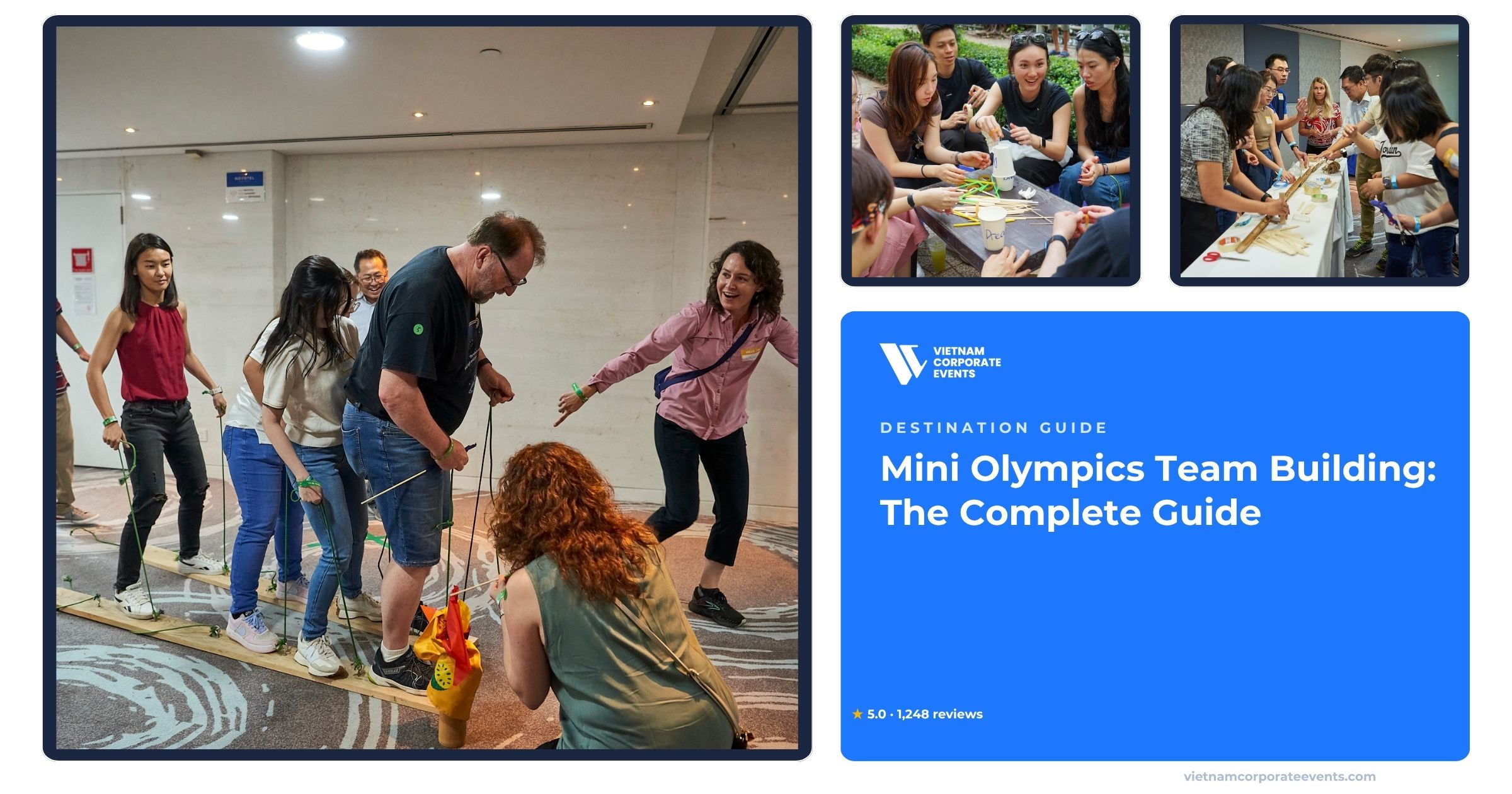
What is mini olympics team building?
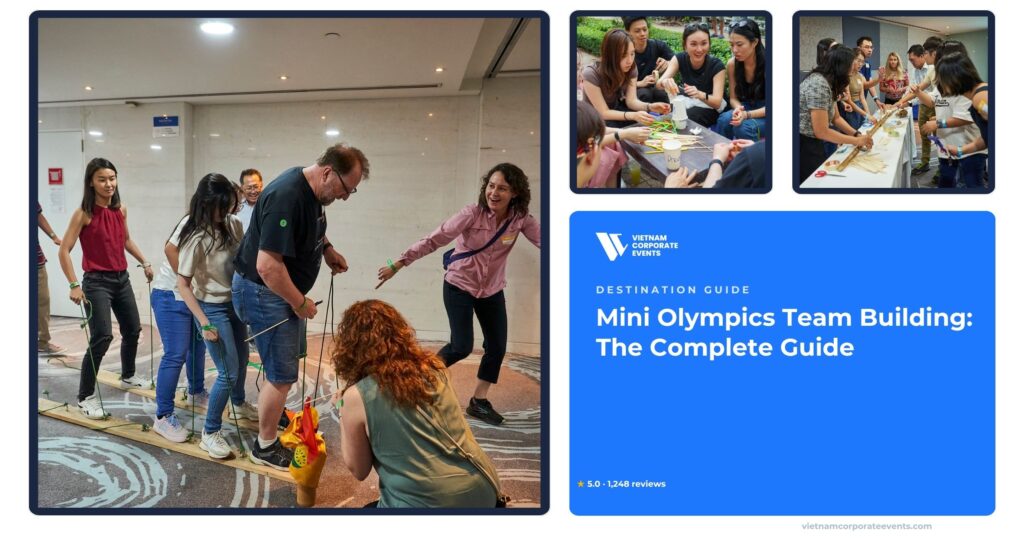
Mini olympics team building is a multi-event competition where teams earn points across a circuit of short, varied games — relays, target challenges, puzzles and physical tasks — with a running leaderboard and a medal ceremony to finish.
Think of it as a corporate sports day reimagined for teamwork rather than athletics. The events are designed so that strategy, coordination and morale matter as much as fitness, which is what makes corporate mini olympics games inclusive.
The format’s strength is breadth. Because no single event decides the winner, every team stays in contention and every personality finds a moment to contribute.
How does a corporate mini olympics work?
The structure is built for energy and fairness:
- Opening ceremony. Teams form, choose names and colours, and make a fun “”oath”” to set the tone.
- Station rotation. Teams rotate through a circuit of events, scoring points at each.
- Parallel play. Multiple stations run at once so nobody stands idle.
- Live leaderboard. Running scores keep the competition alive to the last event.
- Medal ceremony. A podium finish and awards bank the shared high.
That parallel, rotating design is why mini olympics team building scales so well — everyone is always active, whatever the group size.
What events can a mini olympics include?
The best circuits blend physical, mental and silly-fun events so every type of person shines:
- Relay races. Classic team relays with fun twists.
- Tug-of-war. The great leveller and a reliable crowd-pleaser.
- Target and accuracy games. Skill-based stations that reward focus over speed.
- Puzzle and trivia stations. Brain events so non-athletes score too.
- Water or balloon challenges. High-laughter events that break tension.
- Giant inflatable games. Big-format fun for a festival feel.
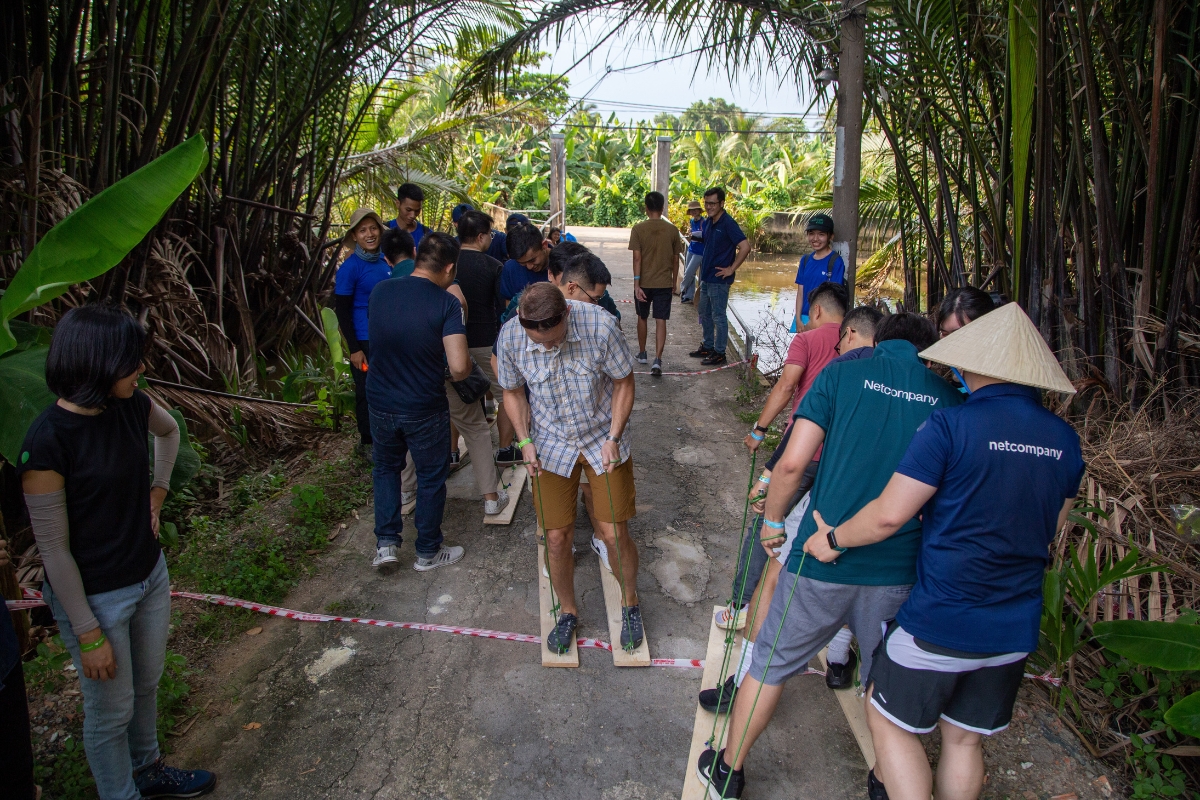
- Synchronised team tasks. Events that demand coordination, not just effort.
On a beach, these become a full beach team building Olympics; indoors, they pair with our indoor team building activities. For the wider menu, see our team building games ideas pillar.
What group sizes suit a mini olympics?
This is one of the most scalable formats there is. A group of 50 runs a tight circuit of six to eight stations. A group of 200 runs more stations in parallel with clear team colours and a central scoreboard.
For 500-plus, the mini olympics becomes a festival-scale event with a big central stage, an emcee and a grand medal ceremony — one of the best large-group formats available. See our guide to team building for large groups for more.
Where can you run a mini olympics in Vietnam?
Anywhere with space. The format flexes to the venue:
- Beaches — Da Nang, Nha Trang and Phu Quoc for a sand-and-sea Olympics.
- Resort lawns and fields — for mid-to-large corporate groups.
- Ballrooms and indoor courts — a weather-proof indoor edition.
- City parks — a convenient option near Ho Chi Minh City or Hanoi.
How do you score a mini olympics fairly?
Fair scoring is what keeps the day fun rather than fractious. Weight events so no single station dominates, award participation as well as winning, and mix skill events with luck-based ones so weaker teams stay hopeful.
A running leaderboard, visible to all, is the engine — it keeps every team invested to the final event. The goal is a close finish where the whole room is cheering, not a runaway where half the group checks out by mid-morning.
What does mini olympics team building cost?
Cost depends on the number of stations, equipment, duration and group size, with per-person rates dropping as headcount rises. Because it uses simple equipment and open space, a mini olympics is strong value for large groups compared with production-heavy formats.
Adding inflatables, staging, an emcee or a themed medal ceremony raises the cost. A local organiser quotes by headcount and scale; model it inside a wider program with our company trip budget guide.
Why does a mini olympics build a stronger team?
Because it engineers inclusion and shared identity. Team colours and a running score create instant belonging, the variety of events means everyone contributes somewhere, and the medal ceremony gives the group a collective high to remember.
Research bodies such as SHRM link shared, active experiences to stronger engagement, and few formats generate as much cross-department mixing as a company olympics.
A short example: when Brightlane ran a 150-person mini olympics team building day on a Da Nang beach, the marketing and engineering teams — usually strangers — ended up in the same relay and spent the closing gala swapping stories. The scoreboard did what months of “”collaboration initiatives”” had not.
How do you theme a mini olympics?
A theme lifts a mini olympics from a set of games to a memorable event. It gives teams an identity and the day a story, which is what people remember afterward.
- National teams. Each team represents a country, complete with colours and a flag.
- Ancient Olympics. A toga-and-laurels twist for a fun, photogenic feel.
- Company-values games. Each event maps to a company value for a branded edition.
- Beach or festival theme. A relaxed, summer-party atmosphere for a company trip.
The theme costs little but transforms the energy, turning a circuit of games into a shared spectacle the whole company talks about.
What makes a mini olympics inclusive?
The best events are designed so a marathon runner and someone who avoids the gym both matter to the result. That inclusivity is the whole point.
Mix physical events with mental and luck-based ones, so points come from strategy and teamwork as much as fitness. Award participation as well as winning, and keep events short so nobody is exposed for long. Handled well, the quietest team member scores as many points as the most athletic — and feels part of the win.
How do you plan a mini olympics: a checklist
- Confirm the group size and split into balanced teams with colours.
- Choose 6–10 varied events mixing physical, mental and fun.
- Plan parallel stations so nobody stands idle.
- Set up a visible leaderboard to keep the competition alive.
- Book the right space — beach, lawn or indoor court.
- Close with a medal ceremony to bank the shared high.
Follow that sequence and the day runs on rails. The energy takes care of itself once the structure is right.
What makes a mini olympics different from a normal sports day?
A company sports day is about athletics; a corporate mini olympics is about teamwork. The events are deliberately designed so coordination, strategy and morale decide the winner as much as speed or strength.
That shift is what makes it a genuine team-building tool rather than just a fun outing. Mixed teams, a running scoreboard and a medal ceremony create shared identity and cross-department mixing that a straight athletics day rarely achieves.
It is also far more inclusive. Because points come from brain events and luck-based games as well as physical ones, the least sporty person on the team still matters to the result — and feels it. That inclusivity is the quiet reason the format works so well for large, mixed corporate groups.
How does a mini olympics fit into a company trip?
It is one of the most natural anchors for a company trip, because it fills a half day with high energy and involves everyone at once. A typical structure runs the olympics on the first afternoon, then a themed gala that evening to celebrate the winners.
On a beach, it becomes the centrepiece of a summer program; on a resort lawn, it pairs neatly with a strategy session earlier in the day. The medal ceremony gives the trip a clear emotional peak that the closing dinner can build on.
Because it scales so well, a mini olympics works whether the trip is 50 people or 500, and it consistently generates the group photos and stories that make a company trip memorable long after everyone is back at their desks. See how it slots into a wider itinerary in our company trip planning guide.
When is the best time of year for a mini olympics?
Because it is usually outdoors, timing matters. Vietnam’s dry seasons are ideal — roughly February to August for central beaches, and November to April for the south and Phu Quoc, when conditions suit a full day in the open.
Summer, the corporate peak, works well with morning scheduling and shade, since the festival energy of a beach olympics suits warm weather. For the rainy season or a guaranteed forecast, an indoor edition in a ballroom or sports hall keeps the format reliable year-round, so there is rarely a bad time to run one.
Frequently asked questions about mini olympics team building
How long does a mini olympics take?
Most run a half day, around three to four hours including the opening ceremony, station rotations and a medal ceremony. Full-day versions add more events and a lunch break.
How many people can join a mini olympics?
From 50 to 500-plus. The parallel-station design makes it one of the best formats for very large groups.
Do participants need to be fit or sporty?
No. A good mini olympics team building circuit mixes physical, mental and fun events so non-athletes score just as many points.
Can a mini olympics run indoors?
Yes. Ballrooms and indoor courts host an indoor edition with adapted stations, making it a reliable all-weather choice.
What is the best venue for a mini olympics in Vietnam?
Beaches and resort lawns are ideal for the festival feel, while indoor courts and ballrooms work year-round.
Can a mini olympics be combined with a gala dinner?
Yes, and it is the most popular pairing. Teams compete through the afternoon, then celebrate the winners at a themed gala that evening, giving the day a clear build from competition to celebration and a memorable emotional peak.
Stage your company olympics
Ready to unite a big group with a mini olympics team building event? Request a free proposal and we will design the events, scoring and ceremony around your group size and venue — or explore our team building service and past success stories.
“