”
Company Trip to Da Nang: The Complete Playbook
Most companies fly a team to Da Nang, park them in a beach resort, and call it a trip. The ones who plan it properly turn the same three days into the event their people talk about all year.
A company trip to Da Nang works because central Vietnam packs a beach, a heritage town, a mountain resort and a modern airport into one compact region. This playbook covers how to plan it: why Da Nang, the trip formats, the activities, group sizes, the best time to go, and what it really costs.
We run programs here every season, so this is the practical guide rather than a brochure.
Why choose Da Nang for a company trip?

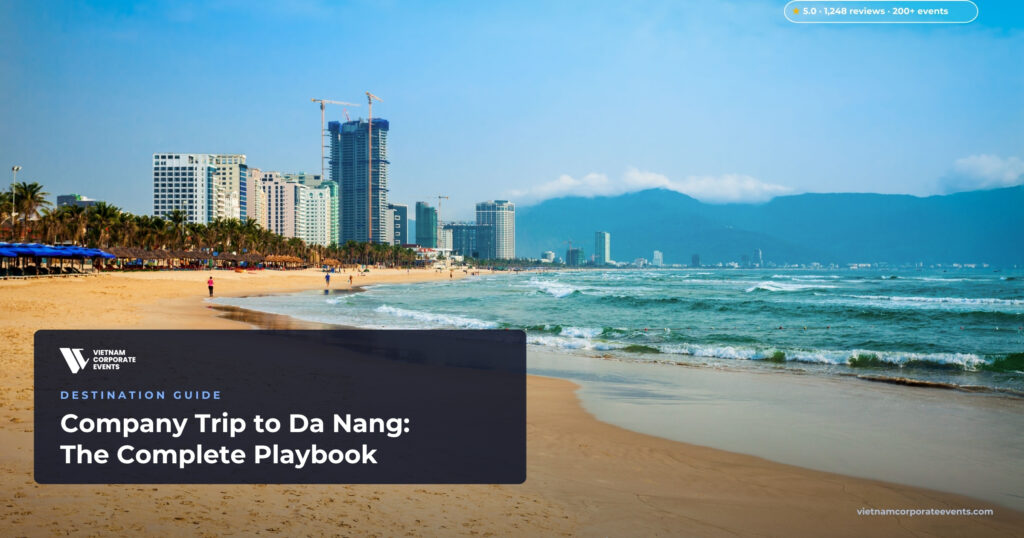
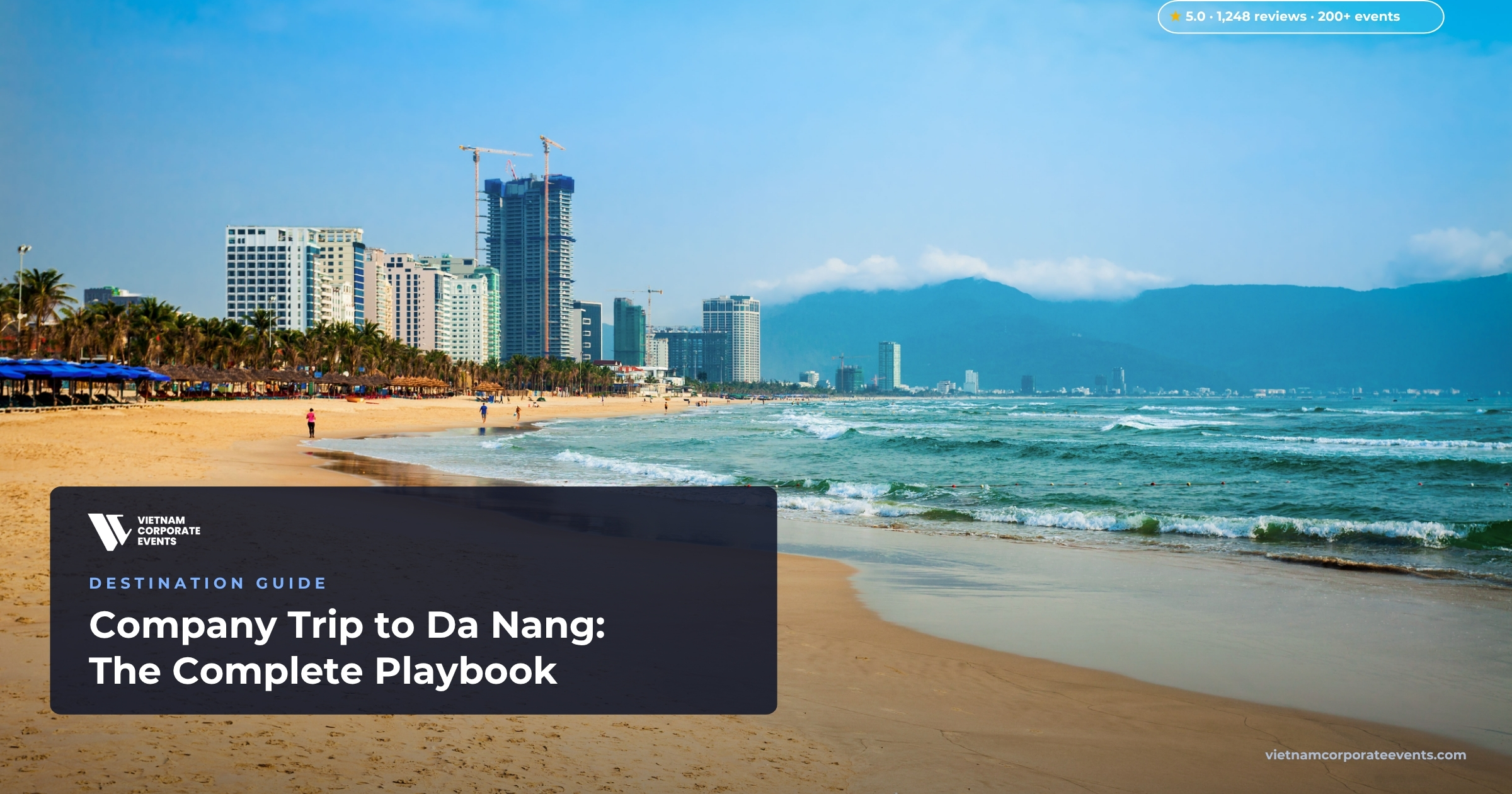
Because everything sits close together. Da Nang has a long city beach, an international airport 15 minutes from the coast, and Hoi An, Ba Na Hills and the Marble Mountains all within easy reach.
That density means a single trip can hold a beach day, a cultural evening and a mountain adventure without long transfers. It is why Da Nang company trip ideas are so varied — the region does half the work for you.
It also scales, from a 20-person team retreat to a 500-person incentive. Weighing it against the other coastal option? See our Da Nang vs Nha Trang comparison. For the day-by-day plan, see our detailed Da Nang itinerary, and for activities, our Da Nang team building guide.
What trip formats work in Da Nang?

The region suits several shapes of trip. The best fit depends on your goal:
- The team retreat. Two to three days of beach team building, bonding and a gala.
- The incentive reward. A premium trip for top performers; see incentive travel.
- The conference-plus-trip. Meetings by day, activities and a gala by night.
- The culture-and-coast mix. A beach base with cultural sessions in Hoi An.
A good corporate trip Da Nang matches the format to the objective, so the days build toward a clear purpose rather than drifting.
What activities can you build a Da Nang trip around?
The region’s variety is its strength. A strong program mixes several of these:
- Beach programs on My Khe — olympics, water games and a bonfire close.
- Ba Na Hills — a cable-car day with the Golden Bridge; see Ba Na Hills.
- Hoi An culture — lantern-making, cooking and a basket-boat challenge.
- A Son Tra eco activity — jungle and coast; see Son Tra.
- A gala dinner — a celebratory evening on the beach or in a ballroom.
The trick is variety with a thread, so each day feels distinct but the trip holds together as one experience.
Structure is what separates a trip from a holiday. The SHRM research links structured shared experiences to stronger engagement, which is why the strongest programmes score and facilitate activities rather than leaving them loose.
What group sizes suit Da Nang?
Da Nang handles almost any number. Small teams of 20 to 50 enjoy an intimate retreat with easy coordination and premium venues.
Mid-size groups of 50 to 200 split across beach, mountain and cultural activities, and large groups of 200 to 500-plus run parallel programs from a big resort base. A Da Nang team building package scales cleanly because the region’s venues and airport are built for volume.
When is the best time for a Da Nang trip?
Timing matters on this coast. The dry season, roughly February to August, offers the calmest seas and clearest skies — ideal for beach and outdoor programs.
The later months bring a higher chance of rain, so a trip then should keep indoor and cultural options ready. For most companies, the February-to-August window is the safe choice for a beach-led program, and a local partner always builds in weather-aware backups.
What does a company trip to Da Nang cost?
Cost depends on length, standard, group size and activities. The main drivers are flights, accommodation, the activity program, catering and any gala production.
Da Nang generally offers strong value against regional rivals, with a wide range of resorts from four-star to luxury. Pairing activities across the region spreads the cost efficiently. Model it with our company trip budget guide.
A short example: when Lumera brought its 180-person team to Da Nang for three days, the trip ran a beach olympics on day one, a Ba Na Hills adventure on day two, and a Hoi An lantern evening to close — three completely different experiences, one seamless trip, and a team that came back noticeably tighter.
How do you structure a multi-day Da Nang programme?
The most effective structure alternates energy levels so the group never burns out. A proven rhythm runs a high-energy day, then a contrasting one.
Day one lands and opens with a beach programme — olympics, water games and a welcome dinner. Day two goes inland or upward for a Ba Na Hills or Son Tra excursion, closing with the gala. Day three softens into a Hoi An cultural morning before departure.
That arc gives the trip a shape: arrive and energise, peak in the middle, close on something reflective. A company trip to Da Nang that follows this pattern feels complete rather than rushed, and it lets the gala land at the emotional high point.
Every element flexes to the group, but protecting the contrast between days is what keeps a multi-day programme from blurring into one long stretch of activities.
What outcomes does a Da Nang trip deliver?
A well-designed programme delivers three things at once: reward, bonding and alignment. The beach and resort setting signals genuine appreciation, which lifts morale before anything is scheduled.
The activities do the bonding, particularly when teams are mixed across departments so colleagues who rarely interact end up solving problems together. A gala or awards moment then converts that energy into recognition.
Teams return noticeably tighter, and the shared reference points — the race, the bridge, the lantern evening — keep the effect alive back at the office for months.
What are the common mistakes to avoid?
Most disappointing trips fail in the same predictable ways, and all of them are avoidable:
- Over-packing the schedule. Four activities a day exhausts people; two done well beats four rushed.
- No free time. A trip with zero downtime feels like work, not reward.
- Keeping departments together. Mixing teams is where the real relationship-building happens.
- Ignoring the weather window. A beach-led programme in the wet months without a backup is a gamble.
Avoiding these four is most of the work. A good corporate trip Da Nang plan builds in breathing room and contingency from the start rather than bolting them on later.
How far ahead should you book a Da Nang trip?
Earlier than most companies expect. Da Nang is one of Vietnam’s most in-demand corporate destinations, and the best resorts commit their group inventory well in advance.
For a mid-size programme, three to four months ahead is a comfortable lead time. For a large incentive of 200-plus, or anything landing in the peak dry-season months, six months is more realistic — particularly if you need a specific beachfront venue for a gala.
Short-notice trips are still possible, but the trade-offs are real: less venue choice, higher rates and tighter flight availability. Booking a company trip to Da Nang early is the cheapest single decision you can make.
It also buys design time. The difference between a good and a great company trip to Da Nang is usually the weeks spent shaping the programme, not the budget spent on it.
How do you measure whether the trip worked?
Most companies never check, which makes the next budget conversation harder than it needs to be. A few simple measures fix that.
A short pulse survey within a week captures energy, enjoyment and whether people felt recognised. Over the following month, watch for the signals the trip was meant to create — cross-department collaboration, retention conversations and general morale.
Qualitative evidence matters too. When people are still referencing the trip in meetings weeks later, and when the photographs end up on internal channels and recruitment pages, that is a strong indicator the programme landed.
Tracking these turns a trip from a cost line into a demonstrable investment, which is what makes the following year’s approval straightforward.
Should you combine the trip with a conference?
Often yes, and Da Nang is unusually well set up for it. The region’s resorts pair proper meeting facilities with beach and excursion access, so a business agenda and a reward programme can share the same days.
The format that works best keeps the two clearly separated rather than blended. Meetings run in a focused morning block while attention is high; activities and social elements take the afternoon and evening.
Trying to interleave them tends to weaken both — delegates half-present in sessions, and a programme that never quite feels like a reward. Clean separation lets a company trip to Da Nang deliver business outcomes and genuine recognition in one visit.
For the conference side specifically, our Da Nang venues guide covers capacities and layouts in detail.
Frequently asked questions about a company trip to Da Nang
Why is Da Nang good for a company trip?
Because it combines a city beach, an international airport and nearby attractions like Hoi An and Ba Na Hills, letting one trip hold beach, culture and mountain activities without long transfers.
How many days should a Da Nang company trip be?
Two to three days is typical — enough for a beach program, a mountain or cultural day and a gala evening, while keeping the trip focused and cost-effective.
What activities can you do on a Da Nang trip?
Beach team building, a Ba Na Hills cable-car day, Hoi An cultural sessions, a Son Tra eco activity and a gala dinner, usually mixed across a multi-day program.
When is the best time to visit Da Nang?
The dry season from around February to August offers the calmest seas and clearest skies, making it the safest window for a beach-led company trip.
How big a group can Da Nang handle?
From small retreats of 20 to large incentives of 500-plus, thanks to its international airport, large resorts and venues built for volume.
How far in advance should you book a Da Nang company trip?
Three to four months for a mid-size group, and around six months for a large incentive or a peak dry-season date, especially if you need a specific beachfront gala venue.
Should departments stay together on the trip?
No. Mixing teams across departments is where the real relationship-building happens, and it is one of the simplest ways to increase the value of the programme.
How much free time should a company trip include?
At least one genuine unscheduled window per day. A trip with no downtime feels like relocated work rather than a reward, and energy drops sharply by day two.
Plan your company trip to Da Nang
Ready to turn a company trip to Da Nang into the event your team remembers all year? Request a free proposal and we will design the itinerary, activities and logistics around your group — or explore our company trips service and past success stories.
“