Why does cooking work so well for team building?
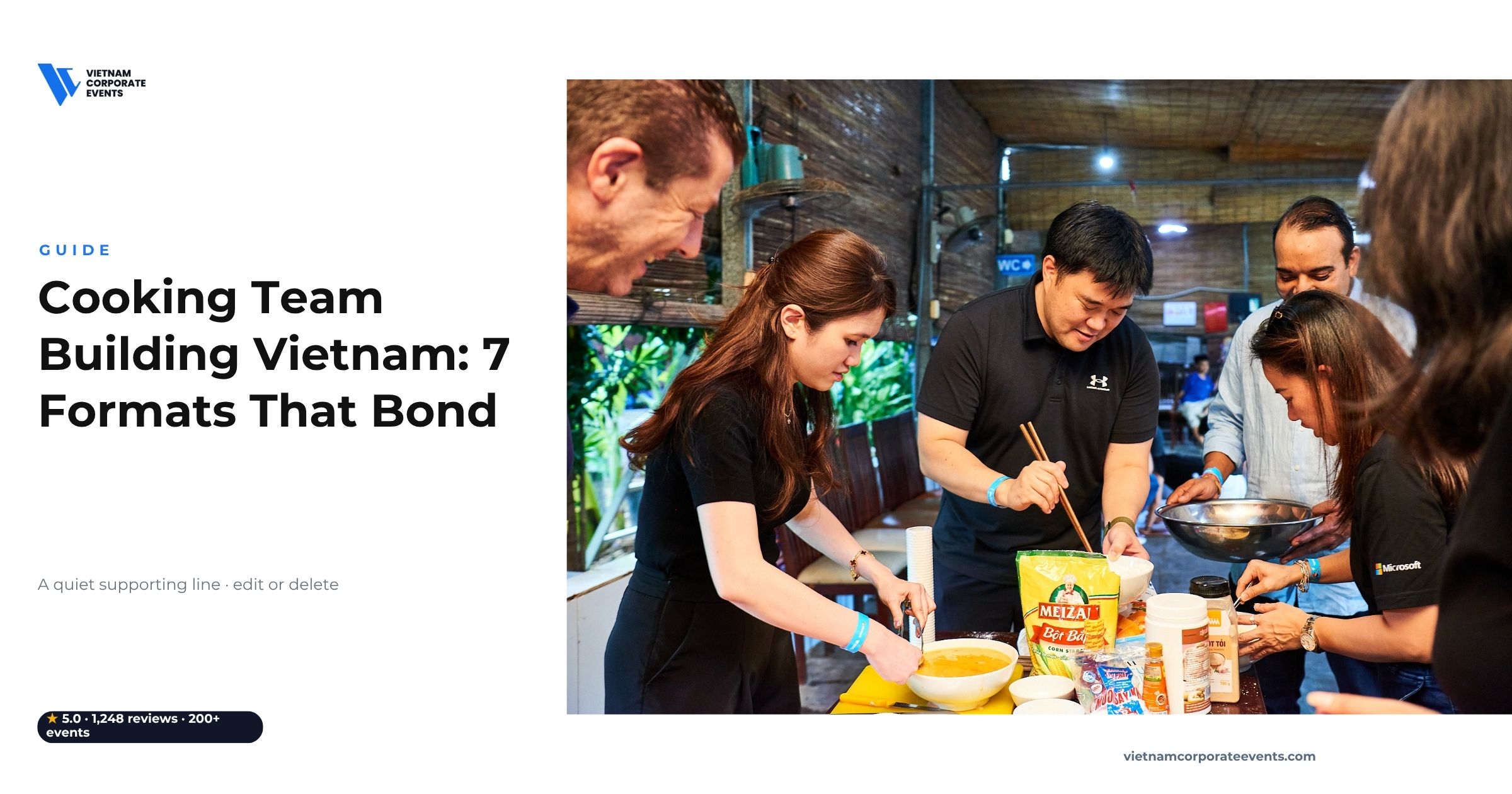
Cooking hits every ingredient of good team building at once. It demands communication, division of labour and time management, and it ends in a shared, tangible result everyone can enjoy together.
It is also uniquely inclusive. There is a role for the organiser, the creative, the perfectionist and the cheerleader, so no one sits on the sidelines — a real advantage over purely physical formats.
And it is memorable. A cooking class team bonding session ends with a meal eaten together, and that shared table does as much for a team as the cooking itself. In Vietnam, the food is the draw as much as the challenge.
7 cooking team building formats in Vietnam
Match the format to your objective, group and setting. These seven cover most briefs:
- MasterChef team building challenge. Teams cook a dish against the clock, judged on taste, teamwork and presentation.
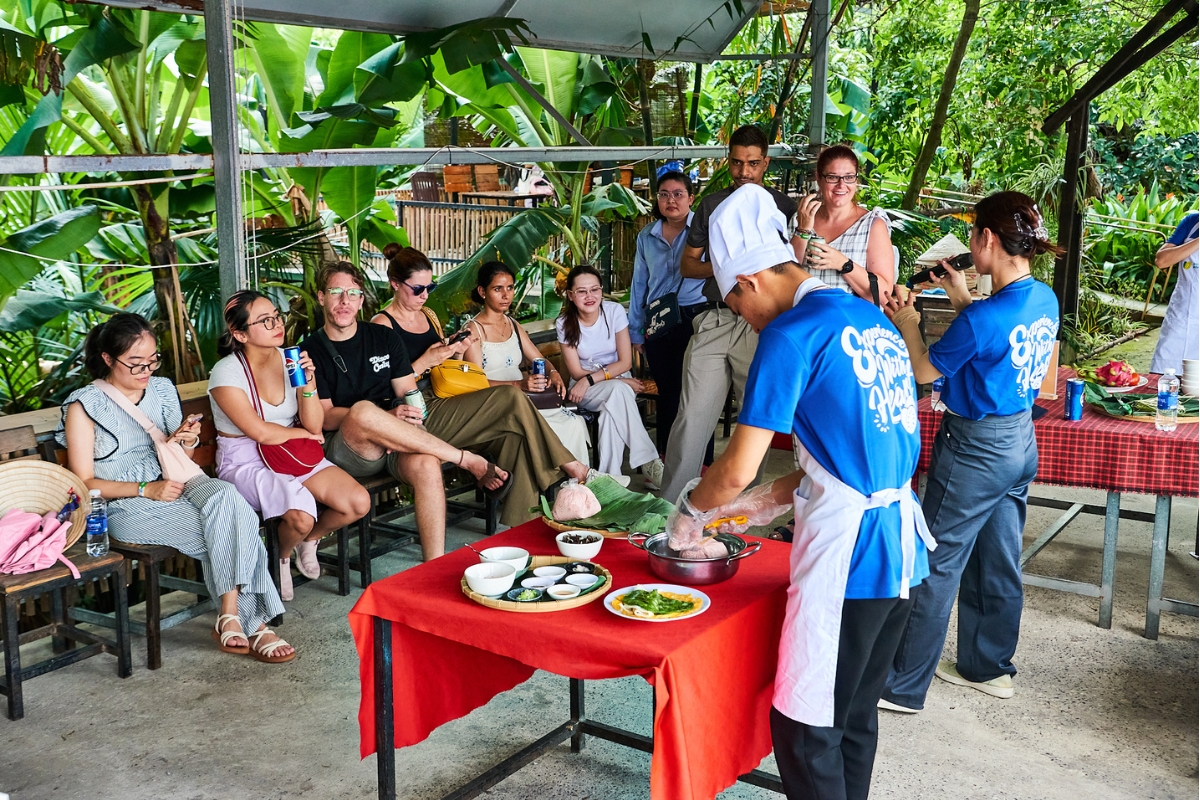
- Vietnamese cooking class. A guided hands-on class making local classics like pho, spring rolls or banh xeo.
- Market-to-table challenge. Teams shop for ingredients in a local market, then cook what they find.
- Street-food hunt and cook. A discovery challenge that ends in a cooking round.
- Mystery-box cook-off. Teams improvise a dish from surprise ingredients.
- Regional cuisine showdown. Teams represent north, central and south Vietnam.
- Cook-for-charity edition. A meal cooked and shared with a community kitchen; see our CSR team building options.
For the wider menu of formats, see our team building games ideas pillar; for a city-based culinary team building HCMC program, our Saigon team building activities pair perfectly.
What does a cooking team building session develop?
A well-run culinary challenge builds the same skills a good project needs:
- Communication. A busy kitchen forces clear, fast coordination.
- Delegation and roles. Teams that assign tasks well plate on time.
- Time management. The clock is real, and so is the pressure.
- Creativity. Presentation and flavour reward original thinking.
- Shared ownership. Everyone contributes to a single, edible result.
Research bodies such as SHRM link shared, hands-on experiences to stronger engagement — and few experiences are as shared as a meal a team cooked together.
What group sizes suit cooking team building?
Cooking scales well with the right setup. Small teams of 10 to 30 work beautifully in a single kitchen or class. Mid-size groups of 40 to 100 split into competing teams at parallel stations for a MasterChef-style cook-off.
For 100-plus, multiple stations run simultaneously with a shared judging finale — a strong option for a conference dinner with a twist. See our guides to team building for small teams and large groups for format detail.
Where can you run cooking team building in Vietnam?
Vietnam’s food culture makes almost any city a strong setting:
- Ho Chi Minh City — markets, cooking studios and rooftop kitchens.
- Hanoi — northern cuisine and Old Quarter food culture; see Hanoi team building.
- Da Nang and Hoi An — central specialities and famous cooking schools; see Da Nang team building.
- Resorts — chef-led challenges as part of a company trip.
How much does cooking team building cost?
Cost depends on the format, ingredients, venue and group size. A guided cooking class is mid-range; a full MasterChef challenge with judging, styling and a competitive setup costs more but delivers more energy.
Per-person rates fall as groups grow. Because the session doubles as a meal, cooking team building often replaces a separate group dinner — good value on a company trip. Model it inside a wider program with our company trip budget guide.
MasterChef challenge or cooking class: which should you choose?
Both work; the choice depends on your goal. A cooking class is relaxed and inclusive — ideal for bonding a new team or a gentle offsite. A MasterChef team building challenge is competitive and high-energy — better for cross-team rivalry and a bit of adrenaline.
| Aspect | Cooking class | MasterChef challenge |
|---|---|---|
| Energy | Relaxed, social | Competitive, timed |
| Best for | New teams, bonding | Rivalry, big energy |
| Skill focus | Learning together | Delegation under pressure |
A short example: when Aldridge & Co ran a MasterChef cooking team building Vietnam challenge for 60 staff, the quietest analyst on the team turned out to be a confident home cook and naturally took charge of her station. Her colleagues saw a side of her the office never had — exactly the kind of shift these programs are designed to create.
How do you run a cooking team building session step by step?
A smooth session has a clear arc, so teams feel the momentum from apron to plate. A typical cooking team building Vietnam program runs in five stages.
- Briefing. Teams form, meet the chef, and hear the challenge and judging criteria.
- Planning. Teams assign roles and plan their dish against the clock.
- Cooking. The hands-on heart of the session, with the chef supporting each station.
- Plating and judging. Teams present their dish; judges score taste, teamwork and creativity.
- The shared meal. Everyone eats together — the bonding peak of the day.
That final shared table is what sets cooking team building Vietnam apart from a game that simply ends. The team does not just compete; it breaks bread together.
What cuisines and dishes work best?
Vietnamese classics are ideal because they are hands-on, forgiving and iconic. Fresh spring rolls, banh xeo, pho and regional specialities give teams plenty to divide and coordinate around.
For international groups, a cooking team building Vietnam session doubles as a cultural experience — learning to balance the sweet, sour, salty and spicy of Vietnamese food is a memorable takeaway in itself. A mystery-box or fusion twist adds creativity for teams that want a competitive edge.
Competitive cook-off or collaborative class: how to decide?
Match the format to the mood you want. A competitive MasterChef-style cook-off suits teams that thrive on rivalry and energy, with judging and a clear winner. A collaborative class suits new or merged teams that need to relax and connect first.
Many programs blend the two — a relaxed guided start, then a competitive plating finale — so the session builds from bonding to friendly rivalry without ever feeling like pressure for its own sake.
Why is cooking team building Vietnam so popular right now?
Two trends have pushed it up the shortlist. First, companies increasingly want experiences that are inclusive and low-pressure rather than physically demanding, and a kitchen welcomes everyone. Second, food-led experiences travel and photograph well, giving teams a warm, shareable memory.
Vietnam is an ideal setting because its cuisine is world-renowned, hands-on and affordable, so a cooking team building Vietnam session delivers a premium experience at sensible cost. Visiting international teams get a genuine cultural immersion into the bargain.
The format also flexes to almost any brief — a relaxed class for bonding, a competitive cook-off for energy, or a cook-for-charity edition for a values-led program. That versatility is why cooking team building Vietnam suits everything from a startup offsite to a 100-person conference dinner, and why we run it year-round.
Can cooking team building replace a group dinner?
Yes, and that is one of its smartest uses on a company trip. Because the session ends with the team eating the meal it just cooked, it doubles as both the activity and the evening’s dinner — two budget lines in one.
That combination makes it excellent value. Instead of paying separately for an afternoon activity and a restaurant booking, a single cooking session covers both and delivers more bonding than either would alone.
It also solves the awkwardness of a formal group dinner, where people sit in their usual cliques. After cooking together, teams arrive at the table already relaxed and mixed, so the meal feels like a celebration rather than an obligation. For a company trip, it is one of the most efficient evenings you can plan.
What is the best city for cooking team building?
Every major Vietnamese city offers strong options, and the best choice depends on where your team is. Ho Chi Minh City has the widest range of studios, markets and rooftop kitchens for a culinary team building HCMC program.
Hanoi brings northern cuisine and deep Old Quarter food culture; Da Nang and Hoi An offer central specialities and famous cooking schools that pair beautifully with a company trip. Resorts everywhere run chef-led challenges on site. Wherever your team gathers, the local food culture ensures the session is authentic rather than generic.
Frequently asked questions about cooking team building in Vietnam
Do participants need cooking experience?
No. Chefs and facilitators guide every step, and the challenge is about teamwork, not culinary skill — mixed-ability teams do best.
How long does a cooking team building session take?
Most run two to three hours, including cooking, a judged finale and eating the meal together. Market-to-table formats add time for shopping.
How many people can join a cooking challenge?
From 10 to 100-plus. Small groups share a kitchen; larger groups compete at parallel stations with a shared judging finale.
Can cooking team building be run at our hotel or resort?
Yes. Chef-led challenges run in hotel and resort kitchens, making cooking team building Vietnam a natural fit for a company trip.
Is cooking team building good for international teams?
Yes. Food is a universal language, and a Vietnamese cooking class doubles as a cultural experience for visiting colleagues.
How far ahead should we book a cooking team building session?
Two to four weeks is usually enough for a standard session, and longer for large groups that need multiple stations or a specific venue. Booking early secures the best chefs and kitchens, especially in peak summer season.
Cook up a stronger team
Ready to bond your team over a meal they make together with cooking team building in Vietnam? Request a free proposal and we will design the format around your group size and city — or explore our team building service and past success stories.
“