Amazing Race team building drops your people into a real city or resort with clues, checkpoints and a countdown — so collaboration stops being a slide and becomes the only way to win. It is the single most requested corporate format we run in Vietnam, because it works for 20 people or 300, in a city or on a beach, and it produces the stories teams retell for months.
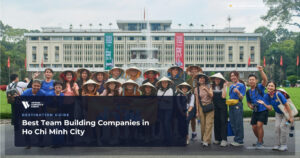
The format is popular for a simple reason: it is a favourite everywhere, and in Vietnam it doubles as a way to experience the culture while competing. An amazing race Ho Chi Minh City route through District 1 is as much a discovery of the city as a team challenge.
What is Amazing Race team building?
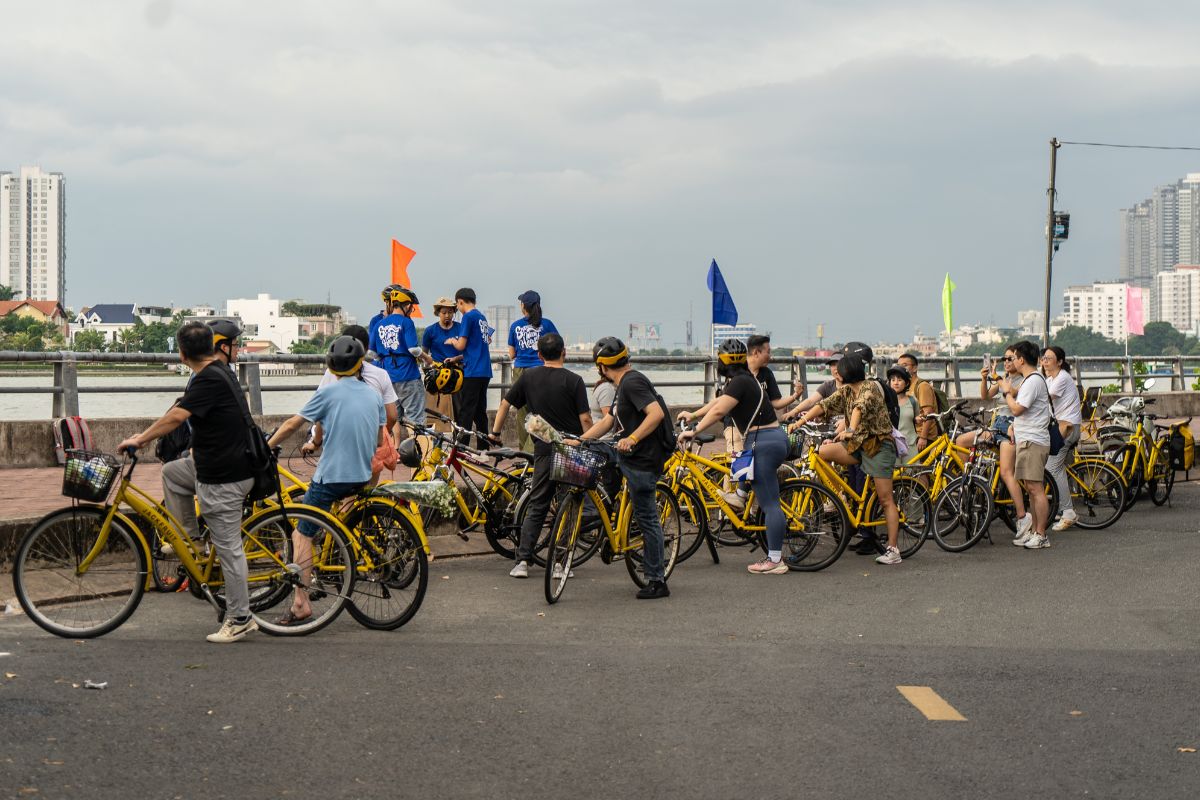
Amazing Race team building is a timed, checkpoint-based challenge inspired by the TV format. Teams receive clues that lead them to locations where they complete tasks — physical, mental, cultural or creative — before racing to the next point. Facilitators track progress, score challenges, and manage safety, while a leaderboard drives friendly competition.
The magic is in the constraints. A countdown forces fast decisions, limited information forces communication, and mixed challenges force teams to use every member’s strengths. Nobody wins an amazing race corporate game alone — which is precisely the lesson.
How does a corporate Amazing Race work, step by step?
- Briefing. Teams form, receive the rules, kit and first clue at a start point.
- Clue-solving. Each clue reveals the next checkpoint — a landmark, market or beach.
- Challenges. At each point, teams complete a task to earn points and unlock the next clue.
- Racing. Groups navigate between checkpoints on foot, by cyclo, or by transport.
- Finish and scoring. The leaderboard combines speed and challenge points.
- Debrief and awards. A facilitator ties the race back to teamwork lessons, then prizes.
That final debrief is what turns a fun run-around into genuine team development — the reflection is where the learning lands.
8 Amazing Race route ideas across Vietnam
- District 1 Saigon race. Clues at Ben Thanh Market, Notre Dame and the alleys — the classic amazing race Ho Chi Minh City route. Pair it with our Saigon team building activities.
- Hanoi Old Quarter race. A cultural sprint through the 36 streets and around Hoan Kiem Lake.
- Da Nang beach-to-city race. A route linking My Khe beach challenges to riverside landmarks.
- Hoi An lantern-town race. Craft and cultural tasks in the UNESCO ancient town.
- Phu Quoc resort-to-beach race. An island edition — see our company trip to Phu Quoc guide.
- Beach race edition. A shoreline version with water and sand challenges; more in our beach team building playbook.
- Mekong Delta race. Boats, markets and village tasks for a rural twist.
- CSR race. A hunt that ends in donated goods for a cause; see our CSR team building options.
What group sizes suit Amazing Race team building?
This is one of the most scalable formats there is. Small teams of 20 to 40 run a single tight route. Mid-size groups of 50 to 150 split into 8 to 20 teams on the same course with staggered starts. For 150-plus, multiple parallel routes feed one grand finale. Because teams move independently, an amazing race Vietnam program rarely creates the bottlenecks that plague station-based games.
How much does an Amazing Race cost?
Pricing depends on route complexity, duration, number of checkpoints and group size, with per-person rates dropping as headcount rises. A half-day city race is mid-range among team-building formats; adding transport, more elaborate challenges or a gala finale raises it. A local organiser quotes by objective and headcount rather than a flat figure. To budget it inside a wider trip, use our company trip budget guide.
Why does Amazing Race team building build better teams?
Because it mirrors real work. Teams get incomplete information, a deadline, and a mix of tasks nobody can master alone — so they delegate, communicate and adapt in real time. Research bodies such as SHRM repeatedly link shared, active experiences to stronger engagement, and a race compresses a quarter’s worth of collaboration lessons into an afternoon.
A short example: when Lumera, a software firm, ran an amazing race corporate game across District 1, the winning team was not the fastest — it was the one that split into pairs to solve clues in parallel. In the debrief, that became a lasting metaphor for how the company tackled projects: divide, trust, reconverge.
Tips for running a successful corporate Amazing Race
- Balance challenge types — mix physical, mental, cultural and creative so every personality contributes.
- Keep routes safe and walkable, with facilitators at key checkpoints.
- Build in one cultural task so the race also teaches something about Vietnam.
- Protect the debrief — it is where the teamwork lesson actually lands.
- End with a gala or awards moment to bank the shared high.
Amazing Race team building versus a treasure hunt: what is the difference?
Planners often use the terms interchangeably, but the two formats do different jobs. A treasure hunt is usually location-fixed — teams solve clues within a defined area to find items or answers. Amazing Race team building is route-based and time-driven — teams travel between checkpoints, completing varied challenges against the clock.
| Aspect | Amazing Race | Treasure hunt |
|---|---|---|
| Movement | Race across a route | Search within an area |
| Pace | High, time-pressured | Moderate, exploratory |
| Best for | Energy, decision-making | Detail, collaboration |
| Scale | 20 to 300-plus | Smaller groups |
If you want adrenaline and fast decision-making, choose the Amazing Race format. If you want a calmer, puzzle-led experience, a treasure hunt fits better. Many of our programs blend the two — a treasure-hunt challenge embedded as one checkpoint within a larger race.
Popular Amazing Race themes for corporate groups
A theme sharpens the experience and ties it to your objectives. The Amazing Race themes we run most include:
- Cultural discovery — challenges centred on Vietnamese food, craft and history.
- Brand and values — checkpoints built around company values, ideal for onboarding.
- CSR race — a route that ends in a community give-back.
- Spy or mission — a narrative overlay that adds drama and role-play.
- Foodie trail — a street-food-led route for teams that bond over eating.
The theme is not decoration — it is what makes an amazing race corporate game feel bespoke rather than off-the-shelf, and it gives the debrief a clearer link to your goals.
How to measure success after an Amazing Race
A race is only worth the budget if it changes something. Measure it on three levels. Immediately, capture energy and enjoyment through a quick pulse survey. In the following weeks, watch for the behaviours the race rehearsed — faster delegation, clearer communication, more cross-team trust. Over a quarter, track whether engagement scores move.
The debrief is the bridge between the fun and the outcome. A skilled facilitator turns what happened on the route — who led, who solved, how the team split the work — into concrete lessons the group carries back to the office. Without that reflection, an Amazing Race team building day is a great memory; with it, it is a genuine development tool.
Indoor and rainy-season Amazing Race options
Vietnam’s summer brings afternoon rain, so a good provider always has a weather plan. An Amazing Race program adapts indoors to malls, convention centres or a resort, with checkpoints reworked around the available space. The format’s energy survives the move because the engine — clues, challenges, a countdown and a leaderboard — does not depend on being outside.
How to plan a corporate Amazing Race step by step
Behind every smooth race is a detailed plan. Here is the sequence we follow when designing an Amazing Race for a corporate client, from brief to finish line.
- Set the objective. Onboarding, cross-team alignment or pure reward changes the route and the challenges.
- Scout the route. Checkpoints are chosen for safety, distinctiveness and walkability, with facilitators positioned throughout.
- Design the challenges. A balanced mix of physical, mental, cultural and creative tasks so every personality contributes.
- Build the scoring. Speed plus challenge points, weighted so the fastest team is not automatically the winner.
- Brief and run. Teams form, receive kit and clues, and race with live facilitator support.
- Debrief and reward. Tie the day back to teamwork lessons, then celebrate at a finish-line gala.
What roles emerge during an Amazing Race?
One reason the format reveals so much about a team is that natural roles surface under pressure. A navigator emerges to plan the route, a strategist decides which challenges to prioritise, a communicator keeps the group aligned, and a morale-keeper holds energy when a clue stumps everyone. Watching who steps into which role — and how the team distributes work — is exactly what makes the debrief valuable for managers.
Because the challenge is short and stakes are low, people try roles they might avoid at work. That safe experimentation is where quieter team members often surprise everyone, themselves included.
Why Vietnam is a standout setting for an Amazing Race
Few countries suit the format as well as Vietnam. Dense, walkable city centres put landmarks close together; vibrant markets and street life make for unforgettable checkpoints; and the culture — food, craft, history — gives challenges genuine substance rather than generic filler. A race through District 1, the Hoi An old town or a Da Nang beachfront doubles as a cultural discovery, so the team bonds and experiences the destination at the same time.
That dual payoff — teamwork plus travel experience — is why the Amazing Race has become the most requested corporate format we run in Vietnam, for local teams and visiting international groups alike.
Frequently asked questions about Amazing Race team building
How long does an Amazing Race take?
Most corporate races run three to four hours, plus a debrief and awards. Half-day formats are the most popular for amazing race team building programs.
Is the Amazing Race suitable for large groups?
Yes — it is one of the most scalable formats, running from 20 people to 300-plus using staggered starts or parallel routes into one finale.
Can we run an Amazing Race indoors or in bad weather?
Yes. Routes can move to malls, resorts or convention spaces, and challenges adapt to indoor checkpoints without losing the format’s energy.
What cities can host an Amazing Race in Vietnam?
Ho Chi Minh City, Hanoi, Da Nang, Hoi An and island resorts like Phu Quoc all support strong amazing race Vietnam routes.
Do participants need to be fit?
No. Routes and challenges are designed for mixed fitness levels, and teams choose how they tackle each task.
Run your Amazing Race
Ready to put your team on the clock with an Amazing Race team building program? Book a free discovery call and we will design a route around your city, group size and goal — or see past races in our portfolio.