

Planning and conducting a successful corporate meeting involves understanding key legal requirements and best practices. In this comprehensive guide, we cover what a corporate meeting is, why it matters, and how to execute one correctly.
You’ll learn about different meeting types (board, shareholder, special meetings), essential procedures (notice, quorum, minutes), and see a corporate meeting example to illustrate the process. This corporate meeting guide equips business leaders with the knowledge to run compliant, productive meetings.
What Is a Corporate Meeting?
A corporate meeting is a formal gathering of a company’s decision-makers—typically the board of directors or shareholders—where key business matters are discussed and decisions are made. Certain meetings, such as annual shareholder sessions, are legally required to maintain compliance and good standing.
These meetings usually follow a structured agenda and are governed by corporate bylaws and relevant regulations. For example, during an annual session, leadership may present performance reports, review financials, and vote on major resolutions. Even routine board discussions fall under this category.
Beyond compliance, these gatherings play an important role in aligning leadership, approving budgets, and documenting official decisions. They differ from everyday team meetings by requiring clear preparation, formal procedures, and accurate record-keeping.
A common corporate meeting example is an annual general meeting (AGM), where shareholders review company performance and elect directors. Understanding how these meetings function is the foundation for planning them effectively.

Types of Corporate Meetings
Corporations commonly hold several types of meetings, each serving a distinct purpose. Here are the main types of corporate meetings and when they occur:
- Annual Shareholders’ Meeting: A legally required meeting of all shareholders (owners) held at least once a year. Shareholders receive reports on company performance, elect the board of directors, and vote on major issues.
- Board of Directors Meeting: A meeting of the company’s directors, usually held quarterly or monthly to oversee management and make strategic decisions. The board may approve budgets, policies, and major contracts.
- Special (Extraordinary) Meeting: A meeting called between regular meetings to address urgent business, such as mergers, changes to bylaws, or unexpected opportunities. These can involve shareholders or directors as needed.
- Committee Meeting: Smaller groups of board members or executives meet to focus on specific areas (e.g. audit or compensation committees). These are technically corporate meetings of a subset of the board.
Each corporate meeting type follows rules set by the corporation’s bylaws and applicable law. For example, the bylaws define who can call a meeting, how much notice to give, and who can vote. Corporate meeting example: A corporation might call a special board meeting (often the CEO or board chair) when an urgent decision is needed before the next regular meeting.

Key Legal Requirements
Properly conducting a meeting requires compliance with legal standards. Key requirements include issuing notice, ensuring a quorum, and maintaining accurate records. These steps ensure the meeting is valid and enforceable.
Notice Requirements
Before holding a meeting, organizations must provide notice to eligible participants. For shareholders’ meetings, this typically involves sending a notice 30–60 days in advance, including the date, time, location, and agenda. Directors’ meetings usually require a shorter notice period (often around 10 days).
The notice process is generally defined in corporate bylaws. Failing to meet notice requirements can invalidate decisions made during the meeting. As a best practice, send notices via certified mail or approved digital channels and track delivery to ensure compliance.
Quorum and Participation
A quorum is the minimum number of participants required for a meeting to proceed legally. Bylaws define quorum rules—commonly a majority of directors for board meetings or a percentage of shareholders for general meetings.
If quorum is not reached, the meeting cannot move forward. For example, in a board of nine directors, at least five may be required. Attendees should verify quorum at the start, and in some cases, meetings may be adjourned and reconvened later if quorum is not met.
Meeting Minutes
Recording minutes is essential. Meeting minutes serve as the official record of discussions, attendance, decisions, and voting outcomes. A designated secretary typically documents the session.
Afterward, draft minutes should be reviewed and approved in the next meeting. Accurate documentation helps ensure compliance and reduces the risk of disputes. In many jurisdictions, maintaining meeting records is a legal requirement.
How to Conduct a Corporate Meeting
Running a meeting smoothly requires preparation, structure, and clear execution. Key steps include:
Set a Clear Agenda
Outline the objectives and timetable in advance. A strong agenda typically includes approval of previous minutes, review of reports, discussion topics, and voting on resolutions. This keeps the session focused and productive.
Assign Roles
Designate a chairperson to lead the discussion and a secretary to record notes. Clear roles help maintain order and ensure the meeting runs efficiently.
Use Templates
For consistency, use standardized templates for notices, agendas, and minutes. These should align with corporate branding and include all essential fields such as meeting name, date, participants, and agenda items.
Recommended tools: Microsoft Word / Google Docs templates – for customizable meeting agendas and minutes
Follow Formalities
Begin by calling the meeting to order and recording attendance. Use structured procedures, such as Robert’s Rules, when handling motions and voting. Following a clear sequence ensures all topics are addressed effectively.
Recommended tools & resources: Meeting management tools (e.g., Fellow, MeetingBooster) – support structured, compliant, and professional meeting execution.
Record Decisions
Document all motions, votes, and resolutions clearly. Confirm each motion before voting and record outcomes accurately. For example:
“Motion to approve budget passed with 5 in favor and 2 abstentions.”
Distribute Minutes Promptly
After the session, circulate draft minutes for review. Once approved, store them as part of official company records. Timely documentation supports accountability and alignment.
By following these steps, meetings become more organized, compliant, and outcome-driven. A structured approach ensures each session delivers clear decisions and actionable results.
Choose the Right Venue for Your Corporate Meeting
Beyond structure, the success of a corporate meeting also depends heavily on the environment. A well-designed venue enhances focus, engagement, and professionalism.
For companies planning meetings in Vietnam, you can explore Jackfruit’s recommended venues in Hanoi, including premium conference hotels, boutique meeting spaces, and integrated event venues tailored for different corporate meeting sizes and objectives.
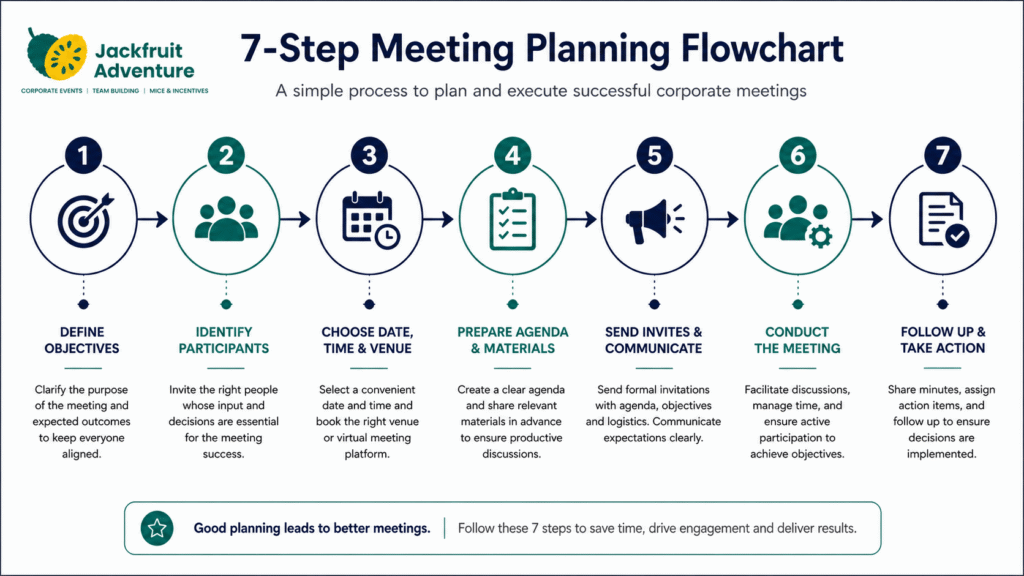
7-Step Meeting Planning Flowchart
Conclusion & Next Steps
Corporate meetings are essential for making key business decisions in a formal, legal setting. By understanding the types of meetings (annual, board, special), fulfilling requirements (notice, quorum, minutes), and following a clear plan, your company can hold effective corporate meetings every time. Remember, thorough preparation and documentation are the hallmarks of a well-run corporate meeting.
Ready to plan your next corporate event or strategy session? Contact Jackfruit Adventure to help coordinate every detail of your corporate meetings and retreats, ensuring a smooth and impactful experience for your team.